Expedition Log: Cook Islands – Day 4
It is always exciting to visit a new place and to dive on new reefs. What I find remarkable is that you can tell so much about the state of a reef, the habitat, fishing pressure, algal levels and even tourist influence from the reef fish assemblage.
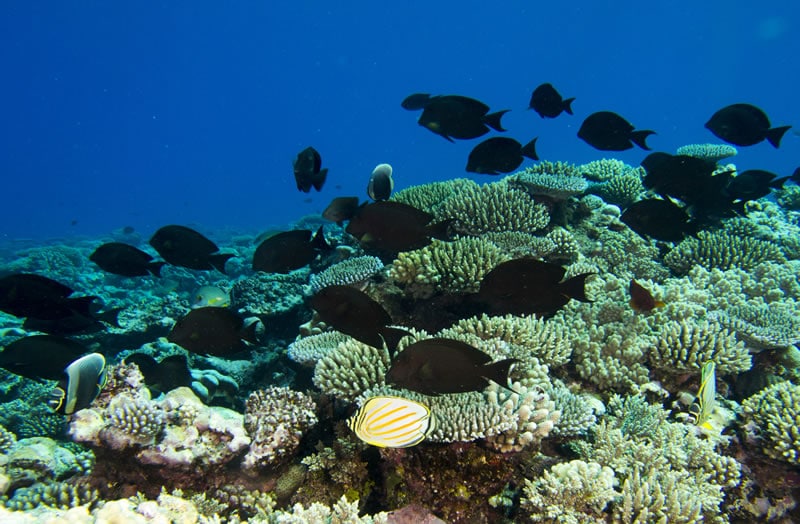
Bristletooth surgeonfish (Ctenochaetus striatus) among healthy acropora (left).
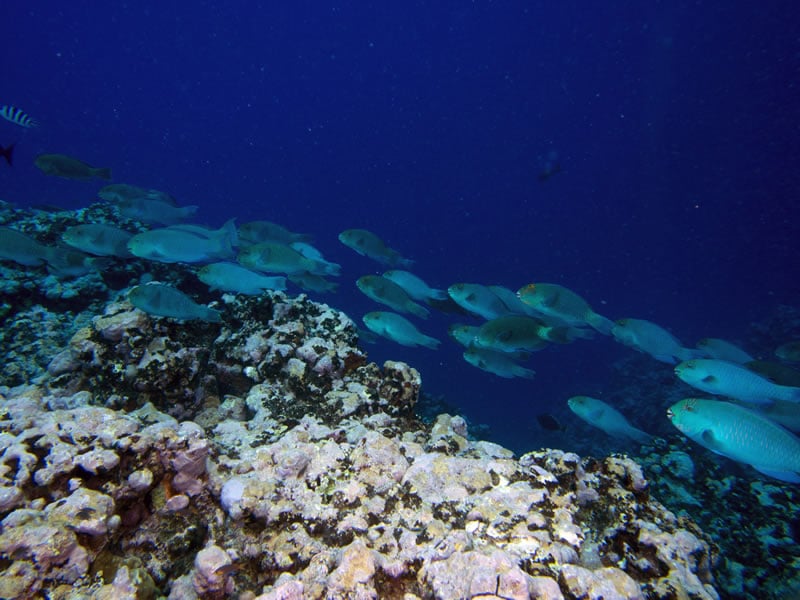
School of parrotfish (right).
(click-thru on images for greater detail)
Here in Aitutaki, it was noticeable from the start of our research that these reefs are dominated by herbivorous reef fish. Most of my fish transects are made up of surgeonfish and several prominent parrotfish species. During a dive it is not uncommon to see big schools of surgeonfish (Acanthuridae); sometimes with up to 500 convict tangs (Acanthurus triostegus), 50-80 lined bristletooths (Ctenochaetus striatus) and on one dive we even saw a school of around 80 of my favourite surgeonfish, the whitespotted surgeon (Acanthurus guttatus). Parrotfish (Scaridae) are less abundant than the surgeonfish, although the palenose parrotfish (Scarus psittacus) tends to school with the surgeonfish listed above.
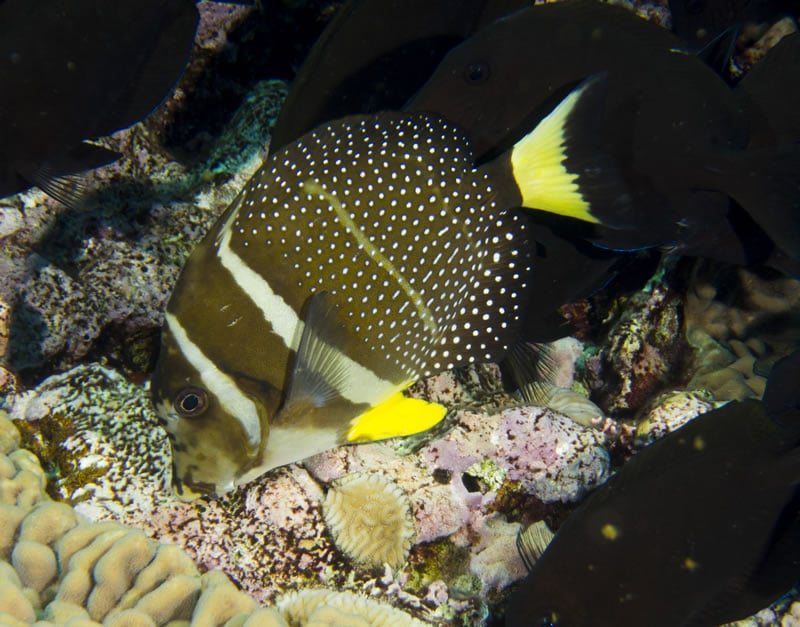
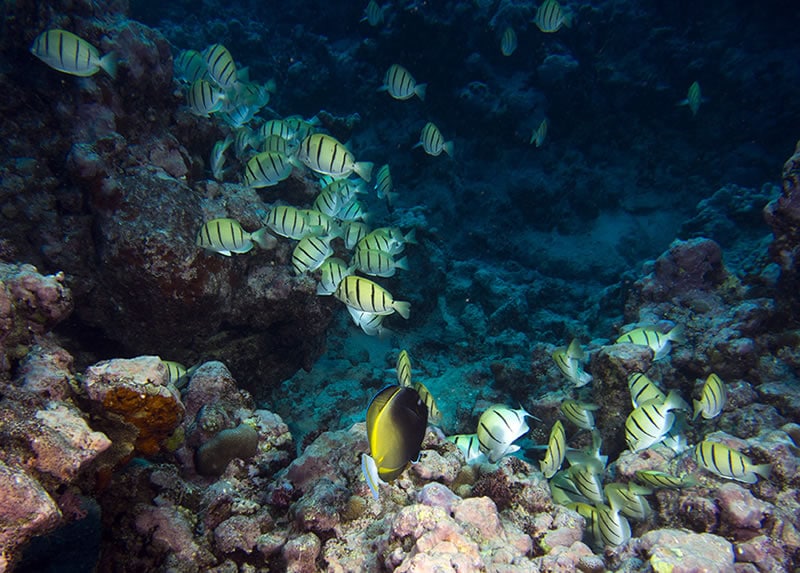
Whitespotted surgeon, Acanthurus guttatus (left).
Convict tangs feeding on algae (right).
(click-thru on images for greater detail)
These schools of herbivores form clouds on the reef, darting from one area to another to graze on the turf algae that is covering the reef framework.
The dominance of herbivores here in Aitutaki indicates a high level of algae on the reefs. A proliferation in algae provides an abundance of food for these grazers and has resulted in this population boom of herbivorous reef fish. The low coral cover in these reefs has made large areas of substrate available for this algae to grow. It is likely that the lack of coral in Aitutaki is linked to the crown-of-thorns (COTS) outbreaks which started in 2009. By resurveying the reefs visited by LOF in 2013, we can really understand the changes in fish populations, the level of damage COTS caused and the rate of recovery.
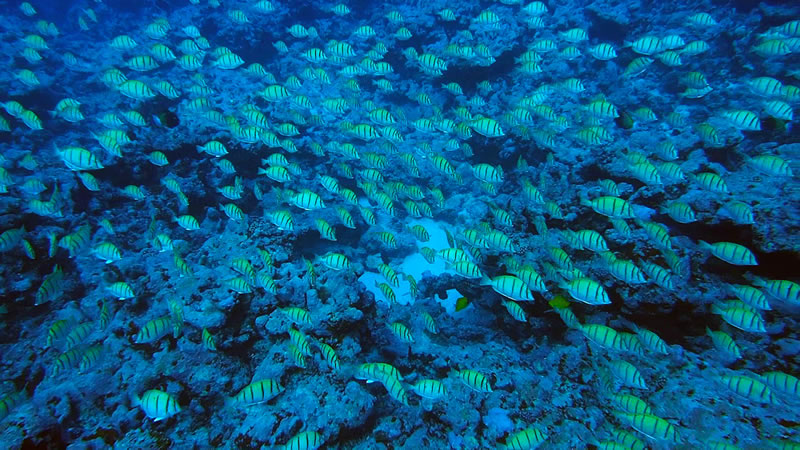
Large school of convict tangs, Acanthurus triostegus.
Herbivorous reef fish play an important role on reefs, regulating competition for space between corals and algae. We are hopeful that these bountiful herbivore populations might aid in the recovery of Aitutaki’s reefs.
Photos: Andrew Bruckner