Mangrove Education and Restoration Program Blog
As I exited the airplane on Abaco Island in the Bahamas, I felt the warmth of the sun and a cool breeze hit my face. It is spring in the Caribbean and according to locals, it is windy and cool for this time of year, but I do not mind. It is still warmer than our offices in Annapolis, Maryland.
I’ve returned to the Caribbean to implement the second phase of the Bahamas Awareness of Mangroves (B.A.M.) and the Jamaica Awareness of Mangroves in Nature (J.A.M.I.N.) programs. It has been almost five months since I’ve seen the students, teachers, and our partners in The Bahamas and Jamaica and I am anxious to see everyone!
The last time I was here, we taught the students about mangroves and we even took a field trip to explore this unique ecosystem more closely. The students learned about the various types of mangroves in the Caribbean and the global threats they are faced with, as well as the benefits of this ecosystem.
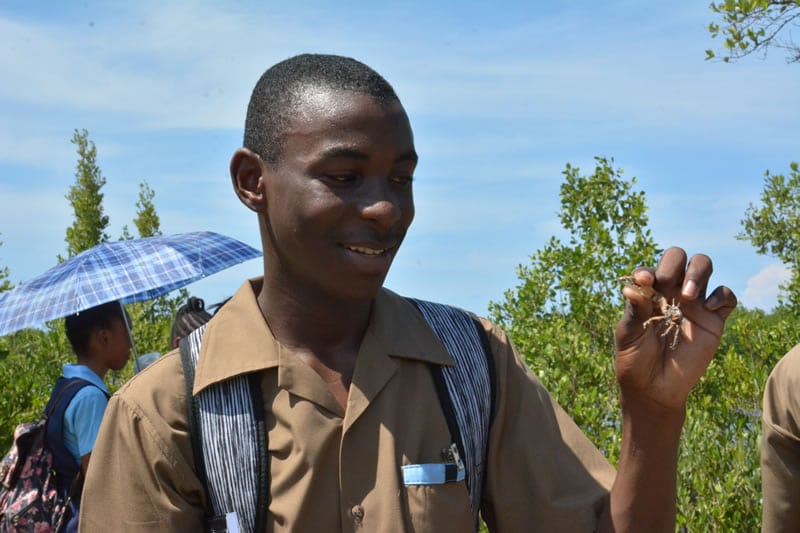
Jamaica’s Holland High School student holding up a fiddler crab during mangrove field trip.
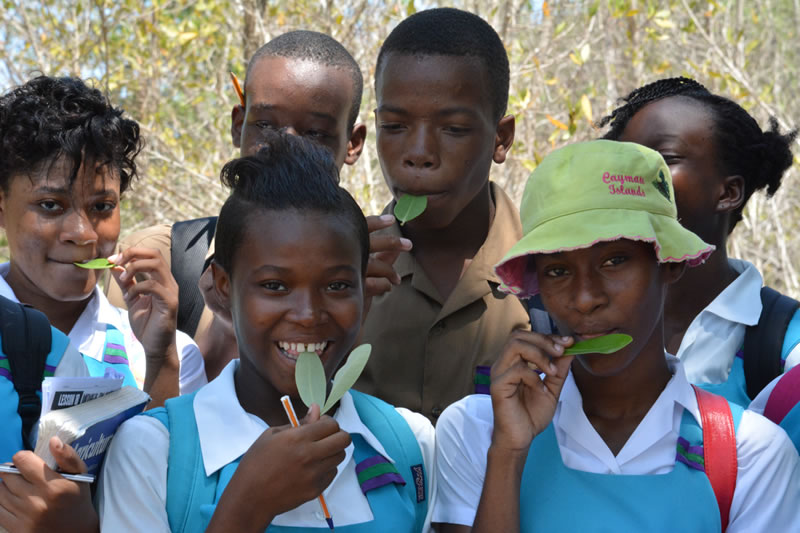
Students at William Knibb High School in Jamaica, taste the salty leaves of the black mangrove tree.
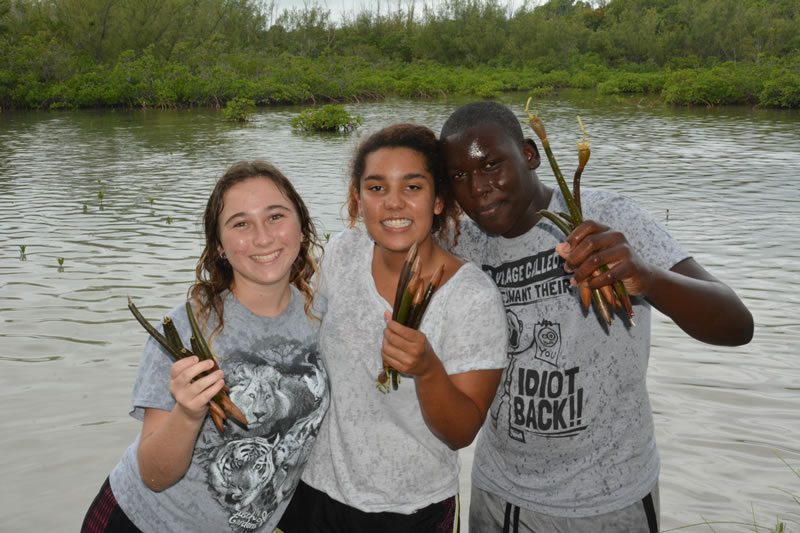
Bahamian students at Forest Heights Academy hold up the red mangrove propagules that they collected during the field trip.
We also started a scientific investigation using the red mangrove propagules or seedlings. Each student was given three mangrove seedlings planting one in sand, mangrove mud, and pebbles. The students came up with a hypothesis answering this question, “Which type of substrate will the red mangrove propagules grow best in – sand, mangrove mud, or pebbles?” For eight months, students will collect growth measurements and make observations about each seedling. Then after those eight months they will analyze their data to find out whether their hypothesis was right or wrong. Finally, we will return to the mangroves to plant the propagules and restore this ecosystem.
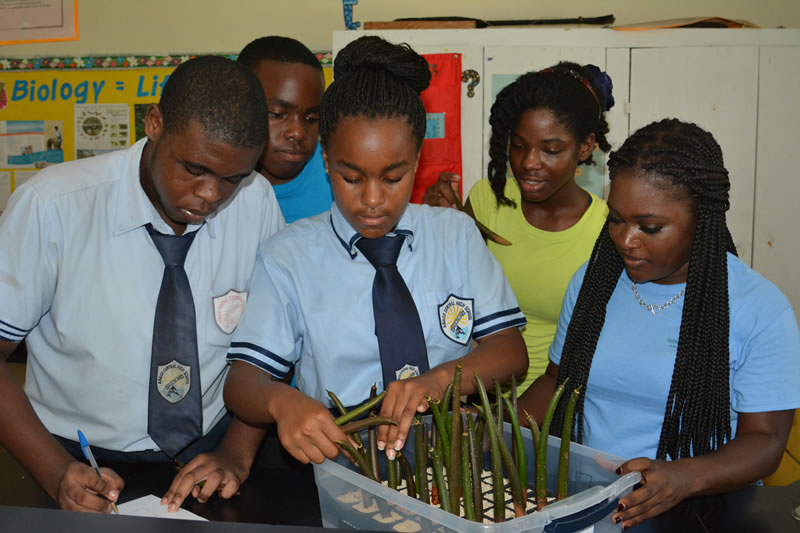
Students at Abaco Central High School in the Bahamas, planting mangrove propagules.
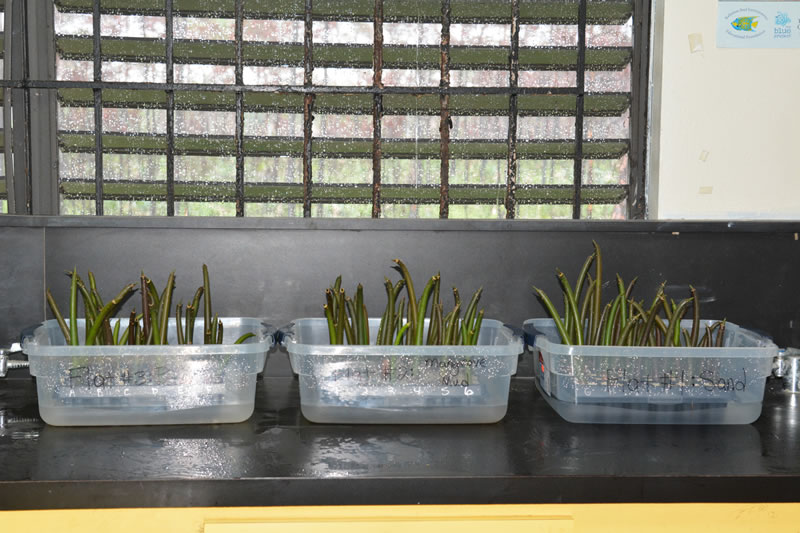
Red mangrove propagules that were planted in September 2015.
Over the past five months, the seedlings should have been growing tall and they ought to have several leaves that have emerged. I can’t wait to see how large the mangrove propagules have grown!
Throughout this phase of the project, we will focus on the mangrove food web. Students will learn what types of organisms live in the mangroves, how these organisms are classified, and where they fit in the food web. As part of the hands-on learning component, we will even bring some of these organisms into the classroom.
Stay tuned for more information about the progress of the mangrove seedlings and phase two of the mangrove education and restoration programs.
Photos by Amy Heemsoth