search-icon
Mangrove Forests | The world’s protector against climate change

Mangrove Forests Coverby Jan Lee
Saving Earth Magazine
Winter 2020 Issue

Mangrove Forests

“From the tropical bays of Indonesia to the embattled intertidal shorelines of the disappearing Amazon, mangroves were once emblematic of an ecosystem that could adapt its survival to just about any crisis. Their broad, leafy trunks and complex root systems gave them the ability to survive in conditions that most terrestrial plant systems cannot endure: the brackish waters and muddy coastlines that frame the world’s densest tropical regions. Their adaptability also made them one of the most prolific ecosystems in the world. Mangroves can still be found on almost every continent on Earth.  

Today however, the mangroves are in decline. Half of the world’s mangrove forests have disappeared in the last half century, driven chiefly by human expansion in commercial development. Just as concerning, tropical and subtropical regions have seen a staggering loss of the wildlife that depend upon mangroves for survival. The Bengal tiger, pygmy three-toed sloth, mangrove finch and roughnose Stingray are all examples of endangered species that rely upon this ecosystem.”

Read the full story in SAVING EARTH MAGAZINE on pg.46:
Related Posts

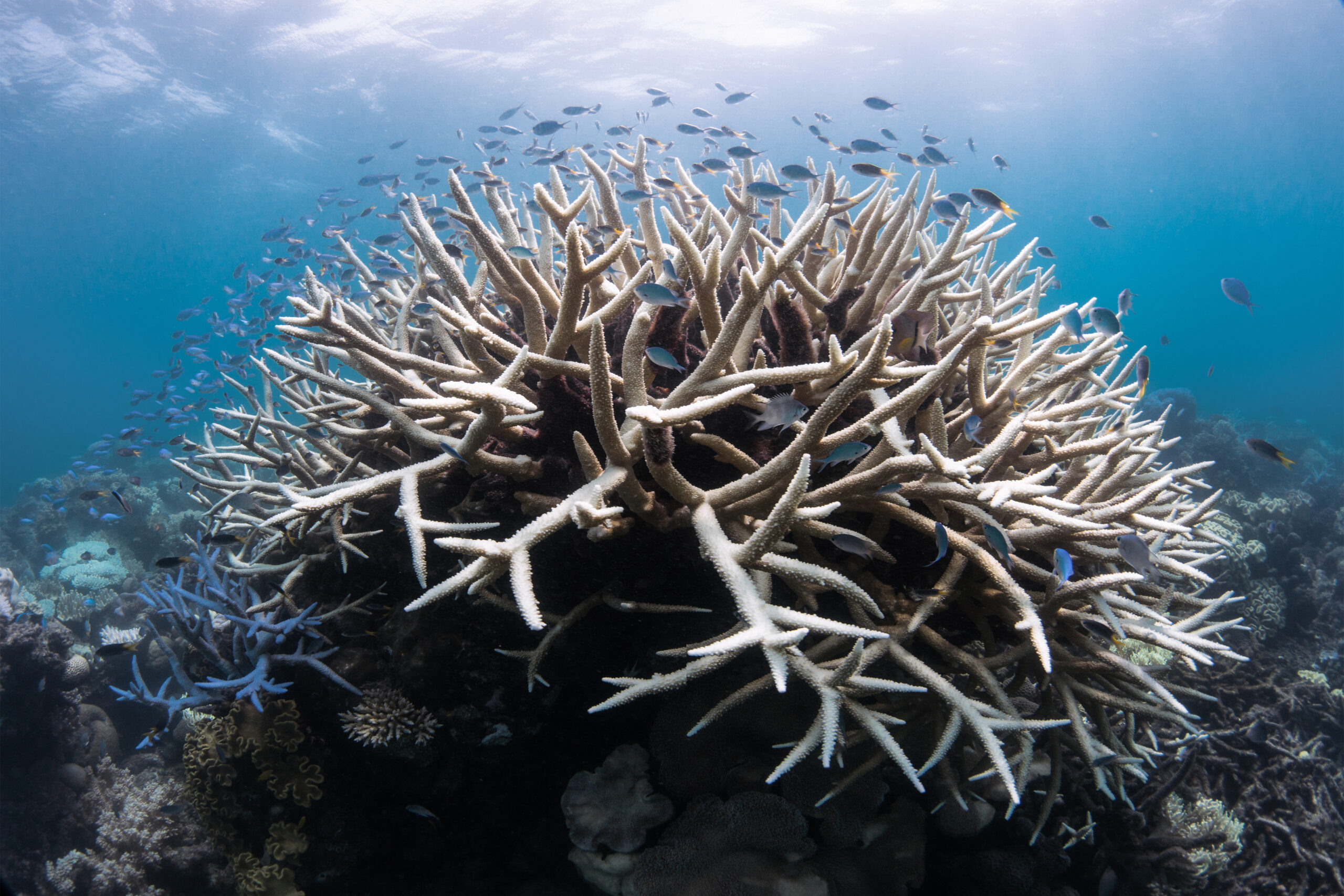
OceanImageBank_TheOceanAgency_Bleaching_16-scaled-1

Coral Bleaching Awareness Month: Giving Coral Reefs a Chance to Recover

For hundreds of millions of years, coral reefs have supported life in our oceans. Although they cover less than 1% of the ocean floor, they provide habitat for at least 25% of all marine species. They also support people around the world by sustaining fisheries and tourism, providing food and livelihoods, and helping protect coastlines from waves and storms.

But coral reefs are under increasing pressure. Pollution, overfishing, coastal development, physical damage, and increasingly warm ocean temperatures can all affect reef health. One of the most visible signs that a coral reef is under stress is coral bleaching.

This September, in recognition of Coral Bleaching Awareness Month, we’re taking a closer look at what happens when corals bleach, why bleaching matters, and what scientists around the world are doing to better understand, protect, and restore coral reefs.

Read More

Everything You Need to Know About the 2027 Science Without Borders® Challenge

Are you ready to combine your creativity with ocean science?

The 15th Annual Science Without Borders® Challenge is now open! Whether you’re participating for the first time or returning for another year, this guide will help you get started.

This year’s theme, Navigate With Care, invites students to explore how responsible navigation helps protect both people and life in the ocean. Through your artwork, you can compete for scholarships and international recognition while inspiring others to protect both people and life in the ocean.

Read More
Privacy Overview

This website uses cookies so that we can provide you with the best user experience possible. Cookie information is stored in your browser and performs functions such as recognising you when you return to our website and helping our team to understand which sections of the website you find most interesting and useful.  You can view our complete Privacy Policy here.

Strictly Necessary Cookies

Most of our cookies are used to improve website security and reduce spam. These cookies should be enabled at all times. They also enable us to save your preferences for cookie settings.

3rd Party Cookies

This website uses Google Analytics to collect anonymous information such as the number of visitors to the site, and the most popular pages. Keeping this cookie enabled helps us to improve our website.