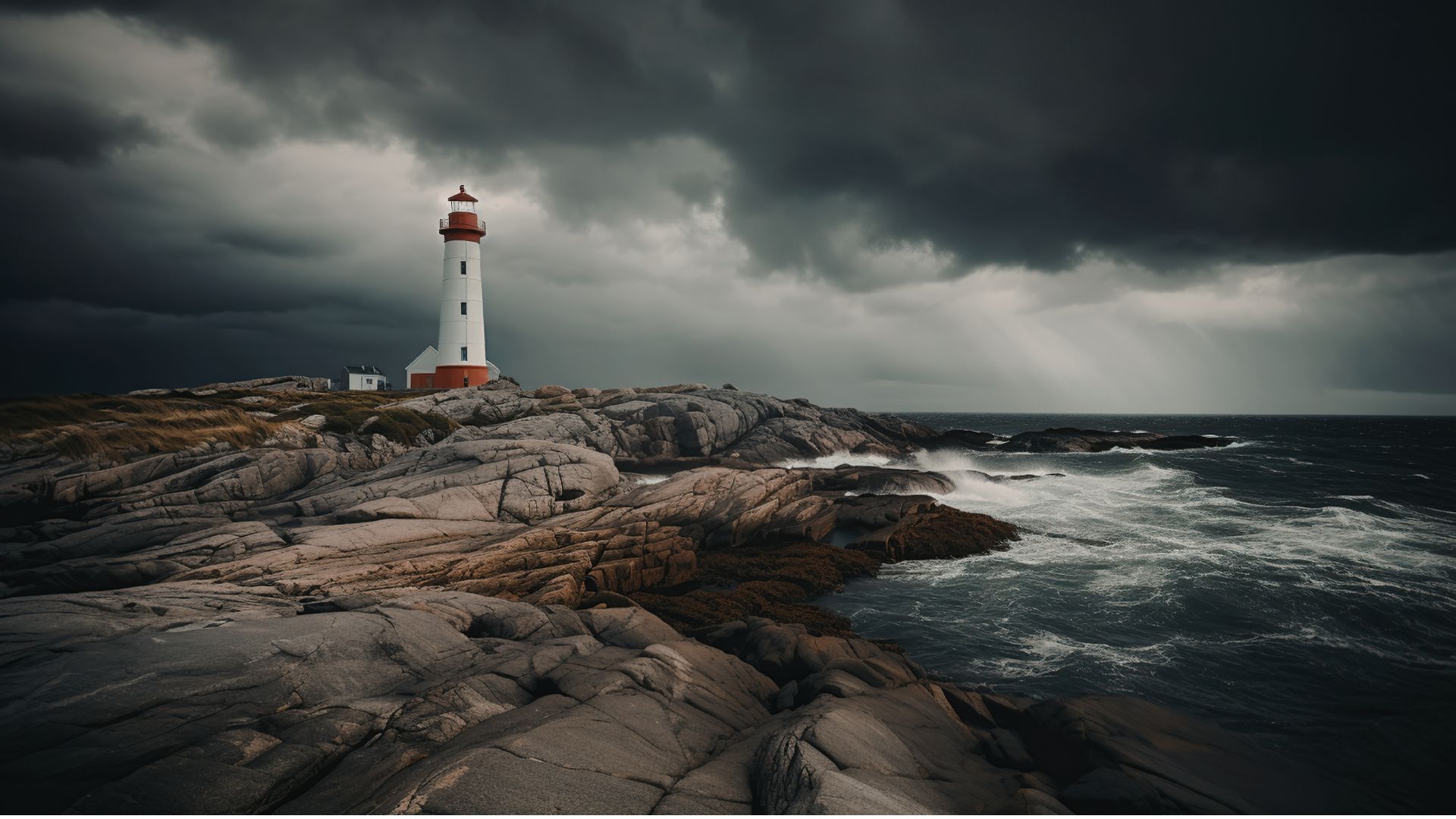
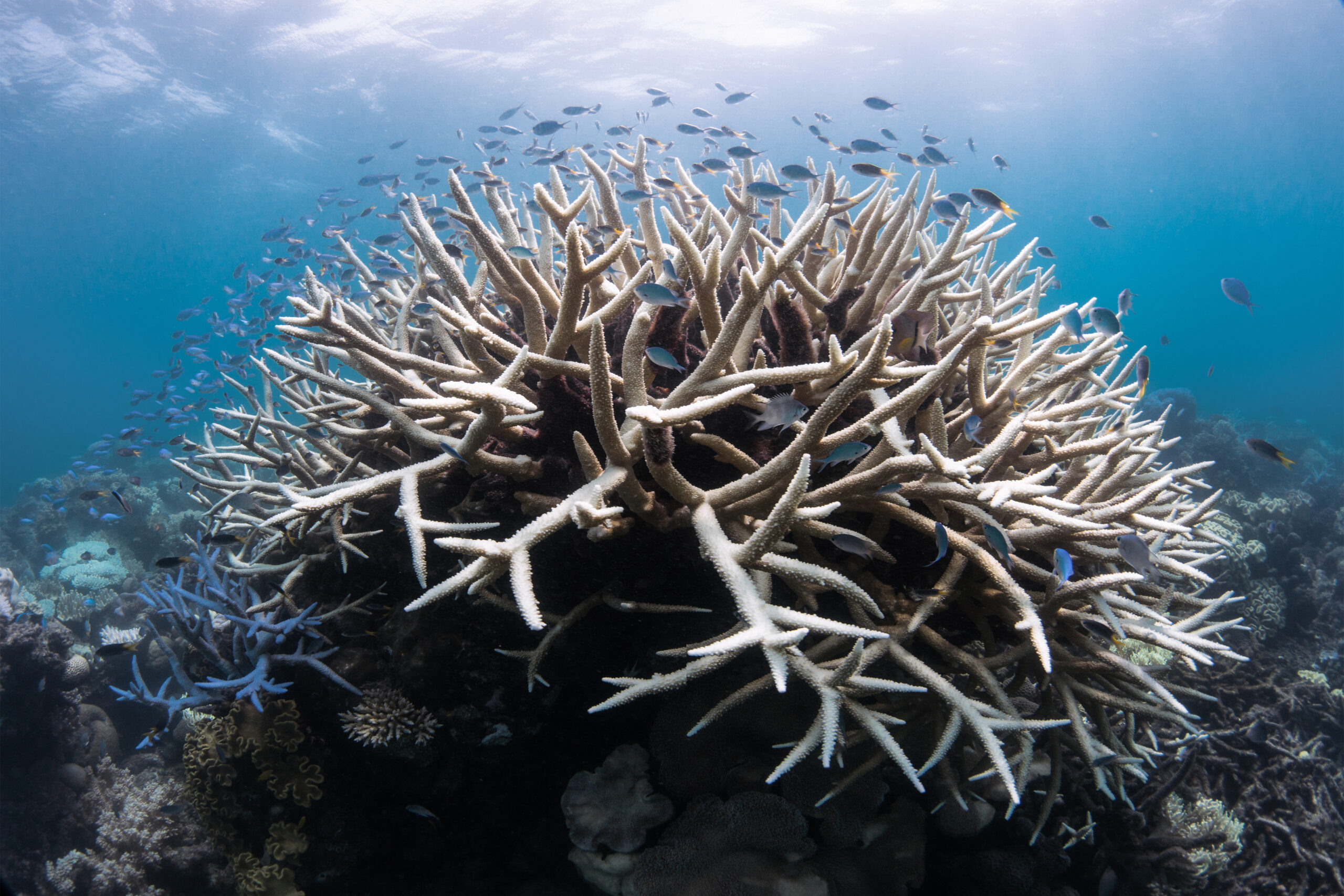
Late last night, as the research team slept, the Golden Shadow’s crew was moving the research vessel east. By dawn, we were back at Bajo Nuevo with weather conditions dramatically improved.
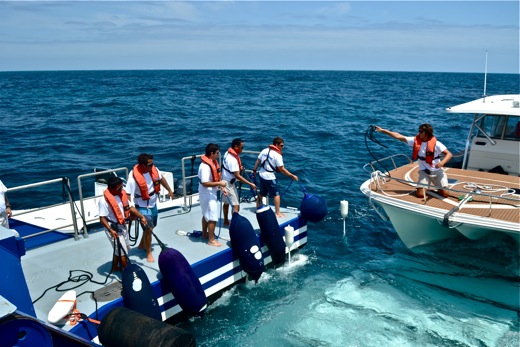
Scuba diving might seem the most essential activity on a coral reef expedition, but just getting to all these reefs and diving them safely is no simple task. It takes expert seamanship and countless hours making sure engines and other systems are running properly. A healthy supply of Twix bars doesn’t hurt either.
The Golden Shadow’s crew really is the first essential element in making this Colombia mission and the multi-year expedition a success. Everything else stops without them. It has been truly impressive watching these people, who hail from countries like South Africa, the U.K., and Indonesia, do their work–especially earlier in the trip when the winds and seas were so challenging.
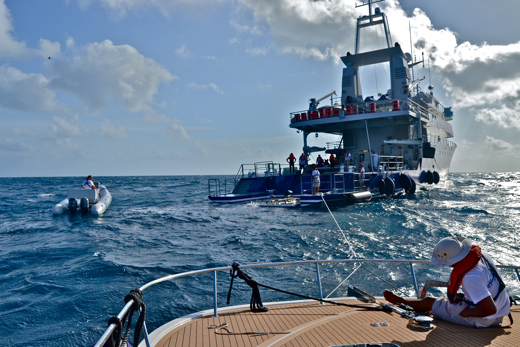
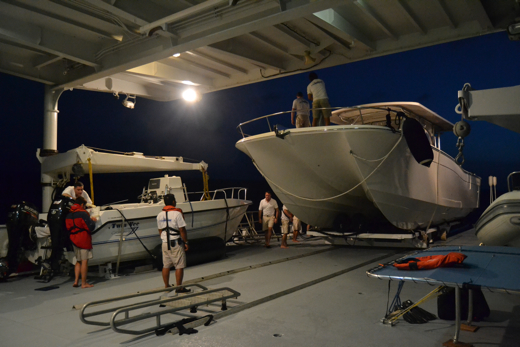
The crew worked masterfully to get boats in and out of the water and to get dive teams and their endless lines of tanks on and off the boats safely, even when the boat was rising and falling a couple of meters as the Golden Shadow and the Calcutta rolled with the seas.
When things were at their most hectic, the Golden Shadow’s crew would load one of the smaller boats on deck. Then, using a moon pool platform on the stern they would lower that boat into the water with its props spinning so that as soon as it was down a crewman could back the boat quickly away from the ship. In the morning they’d have to do this a couple of times to ferry all the divers and gear out to the larger Calcutta. They raise the Calcutta on that platform too, but in rough seas they leave it tied safely behind the ship.
And as mentioned in previous posts, even without seas, getting us to dive spots can be a challenge. With charts limited, they sometimes have to navigate by sight to get through shallow areas while hunting for a suitable dive site.
Thankfully, for this mission at least, the worst conditions are behind us. Today we were able to get to the second of Bajo Nuevo’s two main lagoons, which are cut by a deep channel. The dives, in the 20 to 25-meter range, had plenty of corals and fish to keep everyone busy, though the reefs were fairly flat and mostly unremarkable.
But when the satellite ground truthing team came back to the ship this afternoon, they arrived with news that they’ve found a spectacular reef area. “You guys are going to lose your minds when you go there,” Anesti Stathakopoulos promised. They were only able to get in the water briefly, but Jeremy Kerr said it was the best spot he had ever seen in the Caribbean. Needless to say, we’ll be on our way there first thing in the morning. Check back in tomorrow for a report.
(Photos/Images by: 1-4 Mark Schrope)
To follow along and see more photos, please visit us on Facebook! You can also follow the expedition on our Global Reef Expedition page, where there is more information about our research and team members.