Our afternoon dive today was more surreal than most. We were on the far side of the lagoon here exploring Bajo Nuevo’s corals and instead of a large, defined reef mound, we were wandering through what looked like a field of monuments. They were coral pillars, some two or three meters high.
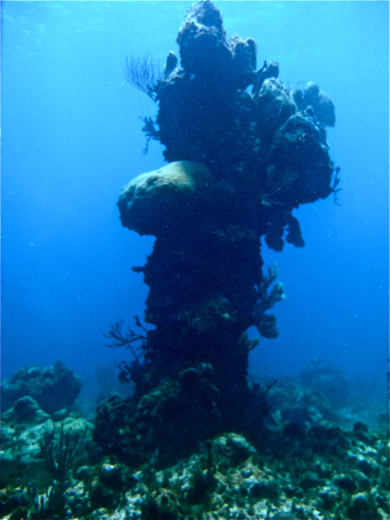
The water was a little on the murky side, and it was late afternoon, so it seemed as if we were swimming through a foggy morning. To add to the surreal effect, there were two nurse sharks that seemed to be everywhere I looked, usually on the edge of our visibility range, but once poking her head around one of those pillars right in front of me
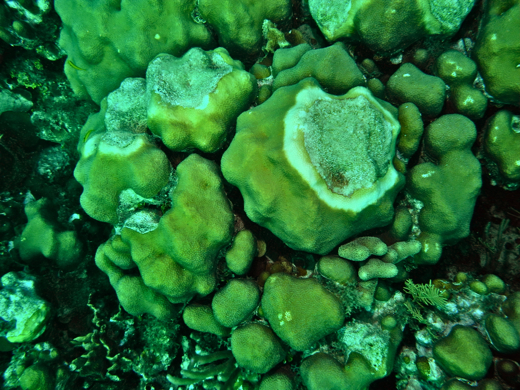
Bajo Nuevo’s corals are extensive, but there’s much more disease than we were expecting to find at such a remote locale. Researchers are still working to understand exactly what causes these diseases. In simplest terms bacteria seem to be the culprit. The disease-causing bugs are probably always present in small numbers in the mucous on the outside of corals. But when the corals are stressed it gives the bacteria a window of opportunity to kick into a harmful stage and multiply.
Some diseases such as white plague, which we’ve seen plenty of, can attack numerous coral species. This is a relatively quick spread that can kill in the space of days or weeks. Other diseases are a little more creeping. Yellow band disease, which we’re also seeing, attacks mainly the star corals that are the primary reef builders, killing more slowly over a span of months or even years. These diseases are often fatal for a coral colony, but sometimes bits of tissue survive.
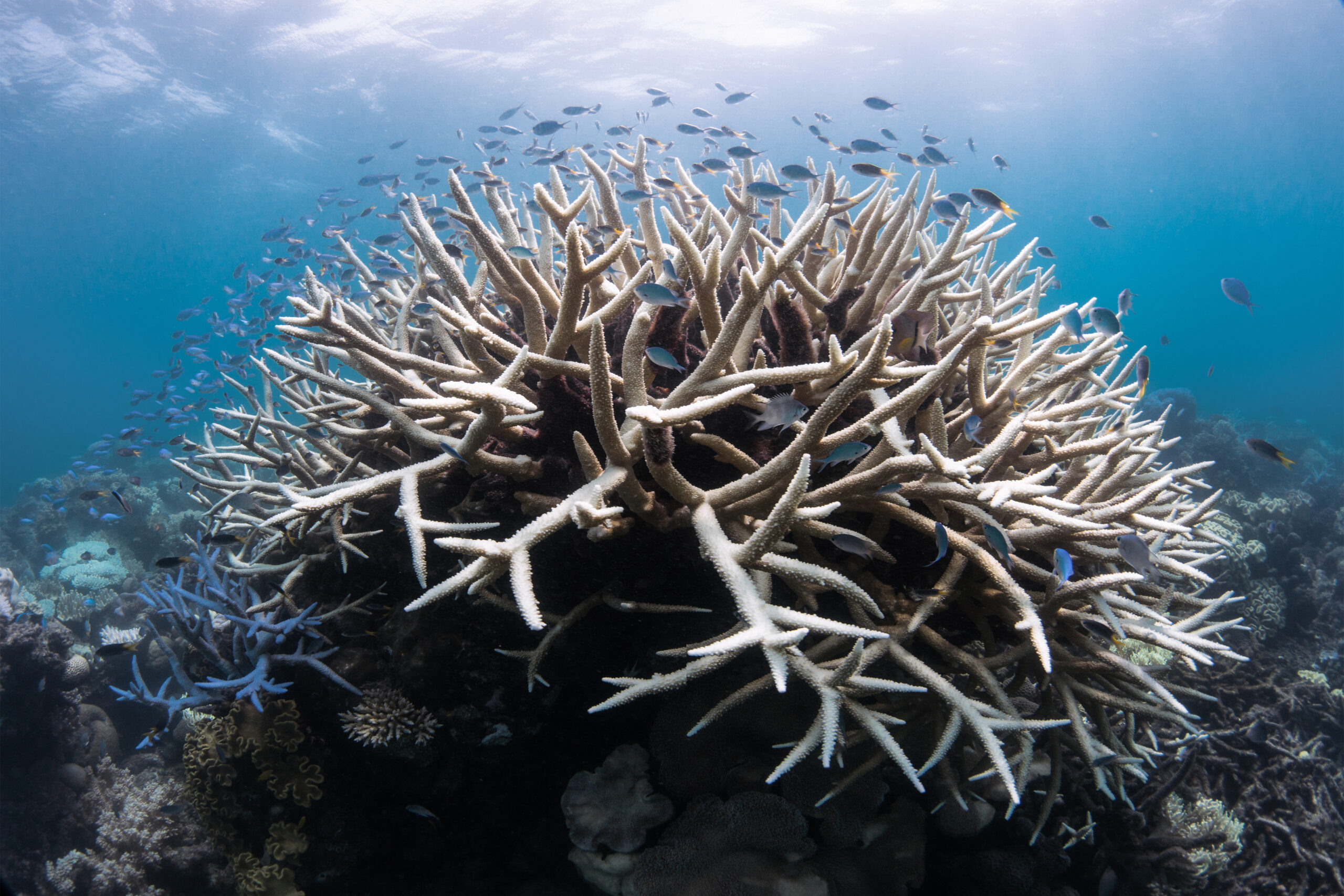
The reefs here don’t have to deal with much direct stress from humans as there are no inhabited islands around, and fishing seems reasonably minimal. But increasing temperatures are hitting corals everywhere, causing bouts of bleaching where corals lose their algal partners, or symbionts, that provide most of the corals’ food.
As mentioned in an earlier post, the corals at Alice Shoal showed very few signs of disease, but this might be easily explained. Corals there are sparse, so it’s harder for disease to spread, much people who avoid crowded places are less likely to pick up infections.
Just to be clear, though, all is certainly not lost out here at Bajo Nuevo’s corals. Yes, we’re seeing diseased corals, but we’re also seeing huge mounds of star corals, for instance, that are much larger and healthier than you’re likely to find almost anywhere else in the Caribbean.
As the Global Reef Expedition proceeds the team hopes to identify reefs with abundant healthy corals, or that seem especially resistant to stress, so that countries might consider setting aside at least portions of them as reserves.
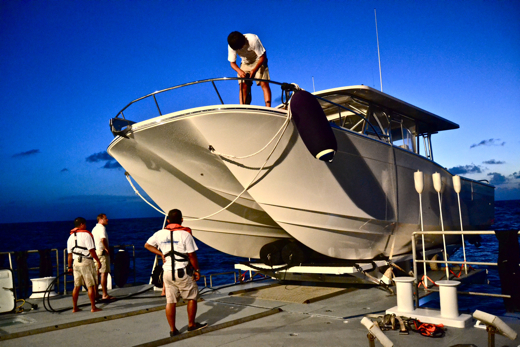
Late tonight we head for Serranilla where we hope to find more shelter for the ship behind the islands there. The winds are howling, but the forecast still says weather will improve in a couple of days and if that happens we’ll return to Bajo Nuevo’s corals for more exploring.
There’s more video on the way, but for now, we’ve just posted a highlights clip from one of yesterday’s most scenic lagoon dives.
(Photos/Images by: 1 Brian Beck, 2-4 Andy Bruckner, 5)
To follow along and see more photos, please visit us on Facebook! You can also follow the expedition on our Global Reef Expedition page, where there is more information about our research and team members