search-icon
Warm Fijian Welcome in Totoya

As the sun began to set on the second day of our Fiji research mission, many different colors and patterns of sulus, traditional Fijian sarongs, emerged from the M/Y Golden Shadow. The crew and scientific team were invited by Roko Sau (Roko Josefa Cinavilakeba) to join the chiefly village of Tovu for a welcome ceremony and dinner. This is one of four villages on Totoya and Roko Sau’s birth place.
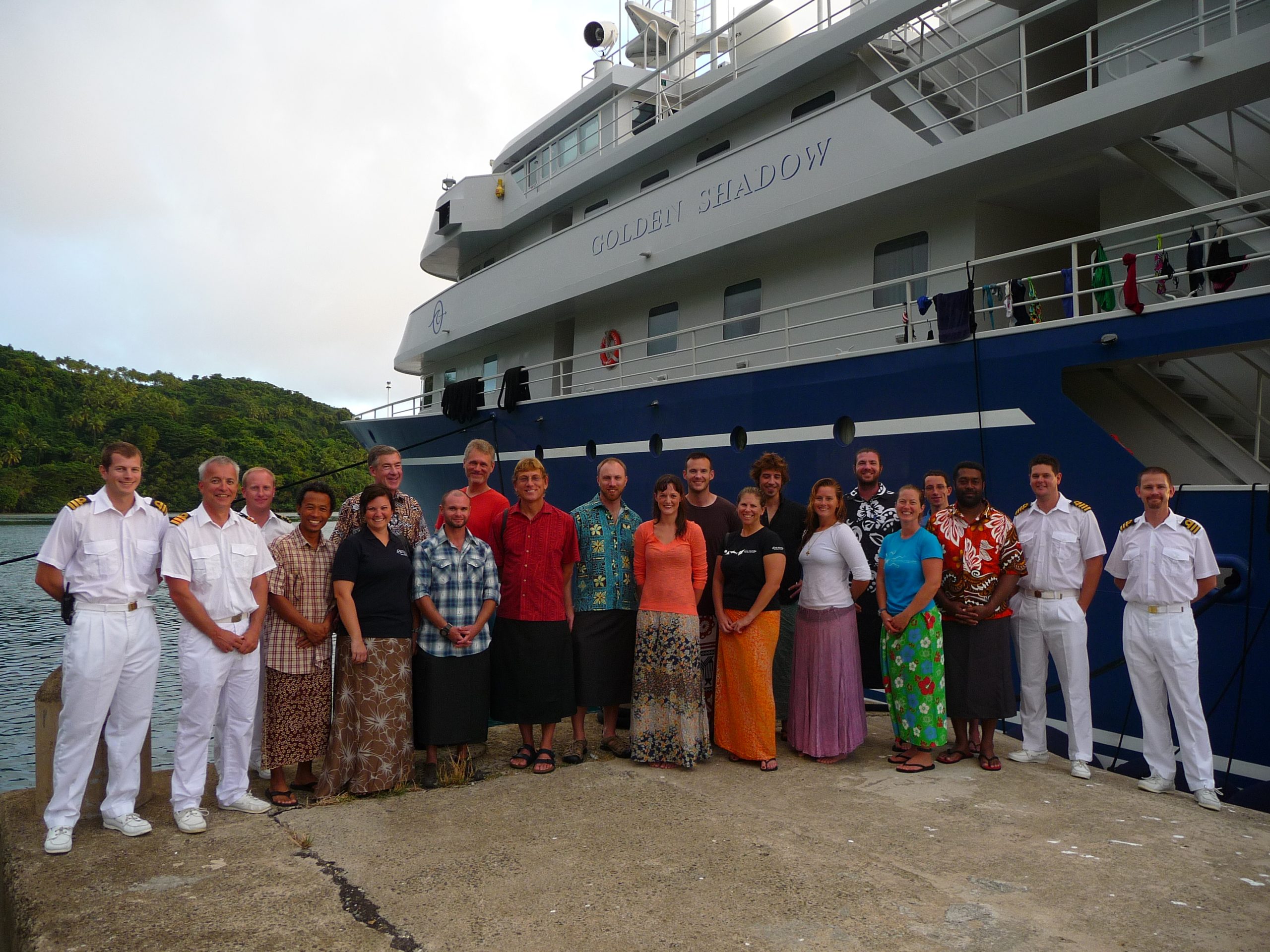
Fiji Welcomes Global Reef Expedition: The M/Y Golden Shadow crew and Global Reef Expedition team ready to attend Totoya welcoming ceremony.
Fiji Welcomes Global Reef Expedition: The M/Y Golden Shadow crew and Global Reef Expedition team ready to attend Totoya welcoming ceremony.

Fiji Welcomes Global Reef Expedition

The evening began with a village tour. We were shown buildings such as the village hall, post office, and church while Fijian children gathered around giggling and entertaining us even with the language barrier. We were also shown where the villagers dry coconuts to make products such as coconut oil. Coconut farming is the main economic source in Totoya.

The smiley faces of Totoya.

After the tour, we were invited into the village hall for a traditional welcoming ceremony. The village master of ceremony (MCE) thanked us. He further explained, “We are not wealthy people, but we have traditions and customs and we are sharing them with you.”
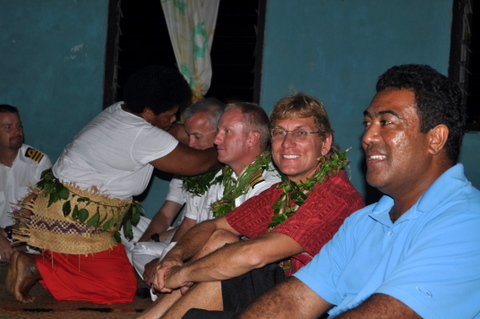
Dr. Andy Bruckner, CAPT Steve Breen, Dr. Phil Hormbrey, and CAPT Phil Renaud (not pictured) were presented with salusalu.

Our Executive Director, Phil Renaud, responded, “We are humbled and honored to be so warmly welcomed into your village and we hope that our scientific surveys of your beautiful coral reefs will be of great value to you in your efforts to preserve them for generations to come.”

We presented the village a gift of kava or yaqona, a drink made from the root of a pepper plant, which is presented at most Fijian ceremonies. In turn, the village invited us to drink kava with them. Afterwards customary songs and dances or meke were performed. In a meke, there are two groups. The first are the dancers or matana that dress in traditional Fijian clothes, and the second is the orchestra or vakatara. To add to the excitement, a few of our team members were also chosen to dance.
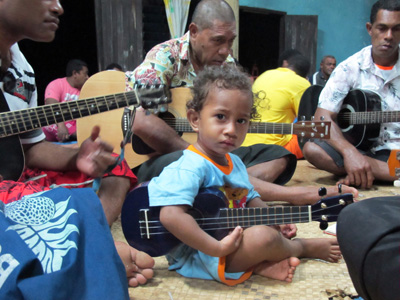
Young Fijian boy practicing with the vakatara.

For dinner, we were invited into the chief’s home. Sitting side-by-side on the floor, we all stared at the magnificent feast in front of us. Much of the food was cooked in the earth oven called a lovo. We tried a variety of foods including land crab, fish, clams, taro (tubers), yams, and coconut milk.
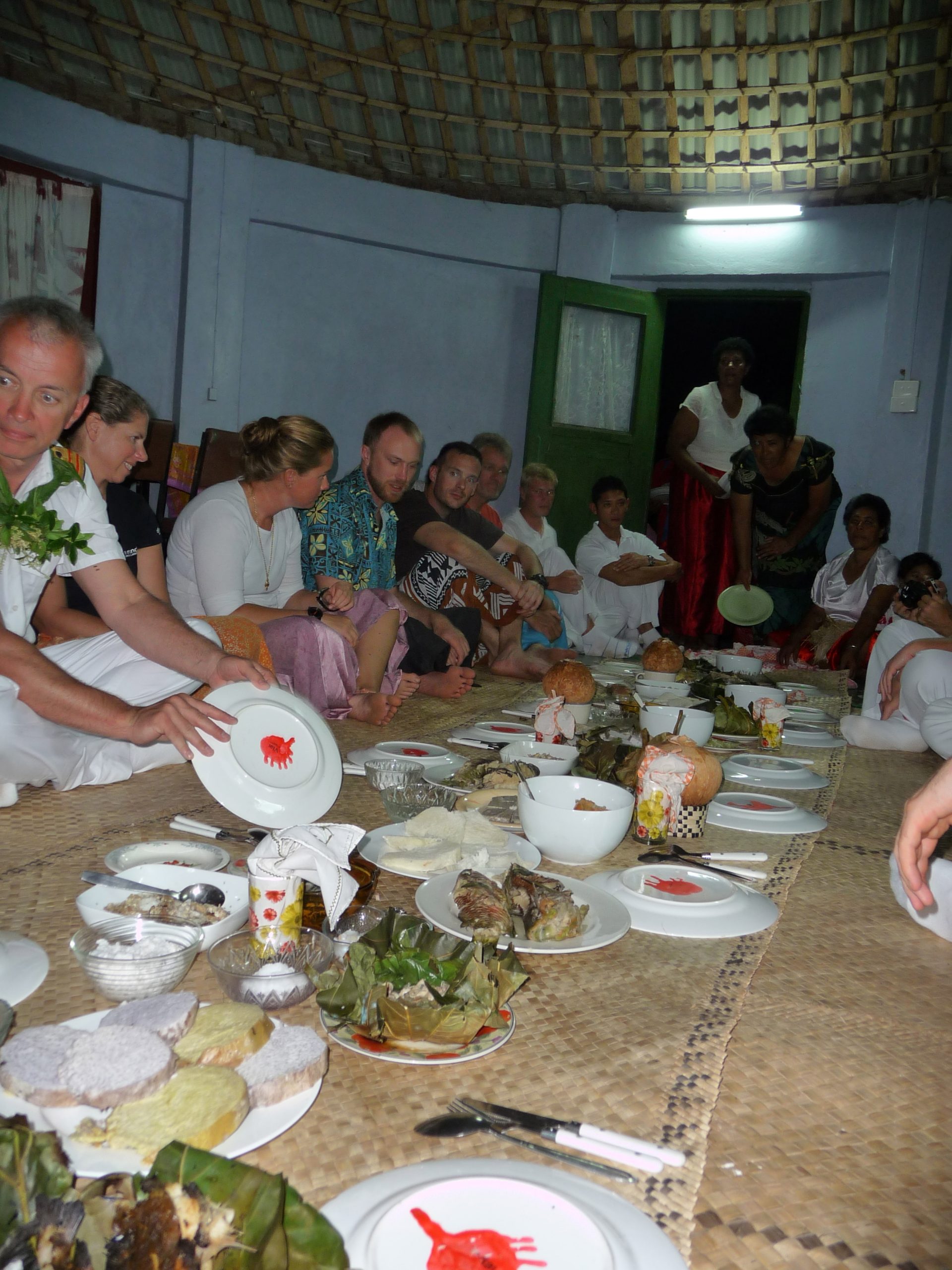
The feast prepared by the village.

Ending the night, a formal goodbye ceremony or Tatau was performed. We all said our goodbyes and thanked the Fijians who warmed our hearts.
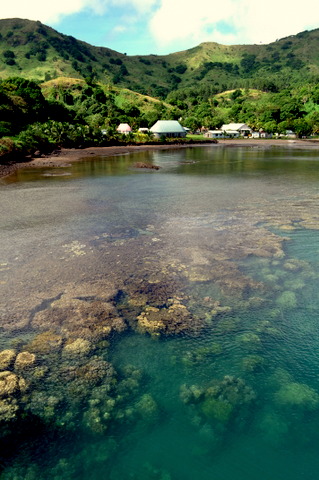
Tovu Village on the island of Totoya.

(Photos/Images by:1,5 Katie Hillyer; 2,3,6 Amy Heemsoth; 4 Stacy Jupiter)

To follow along and see more photos, please visit us on Facebook!
Related Posts

After the Storm: Standing with Our J.A.M.I.N. Family in Jamaica

There are moments in this work that feel heartbreakingly familiar.

Two weeks after we completed our Jamaica Awareness of Mangroves in Nature (J.A.M.I.N.) programming, Hurricane Melissa made landfall. A powerful Category 5 hurricane, Melissa is now tied with Hurricane Allen in 1980 for the strongest winds ever recorded in an Atlantic storm. Like Hurricane Dorian, which devastated The Bahamas in 2019, Melissa will be remembered as one of the strongest hurricanes on record in the region.

For 11 years, the University of the West Indies Discovery Bay Marine Laboratory and William Knibb Memorial High School have been more than program partners. They have welcomed us into their classrooms and labs, shared meals and laughter, and committed themselves to educating their students about mangroves and coastal resilience. These colleagues and students are not distant collaborators. They are family.

And they were hit hard…

Read More

B.A.M. Turns 10: A Year of Milestones, Resilience, and Growth

The 2025–2026 academic year was one of those defining years for our Bahamas Awareness of Mangroves (B.A.M.) and Jamaica Awareness of Mangroves in Nature (J.A.M.I.N.) programs. It was a year marked by celebration, challenge, growth, and powerful full-circle moments, and a reminder of why mangrove education matters.

In The Bahamas, B.A.M. reached a major milestone: ten years of partnership and environmental education in Abaco. Since 2015, in collaboration with Friends of the Environment, we have worked alongside Patrick J. Bethel High School and Forest Heights Academy to bring hands-on mangrove science into classrooms and into the field. This year, we were proud to expand the program to S.C. Bootle High School, increasing access for students who live…

Read More
Privacy Overview

This website uses cookies so that we can provide you with the best user experience possible. Cookie information is stored in your browser and performs functions such as recognising you when you return to our website and helping our team to understand which sections of the website you find most interesting and useful.  You can view our complete Privacy Policy here.

Strictly Necessary Cookies

Most of our cookies are used to improve website security and reduce spam. These cookies should be enabled at all times. They also enable us to save your preferences for cookie settings.

3rd Party Cookies

This website uses Google Analytics to collect anonymous information such as the number of visitors to the site, and the most popular pages. Keeping this cookie enabled helps us to improve our website.