search-icon
Sneaky Minke

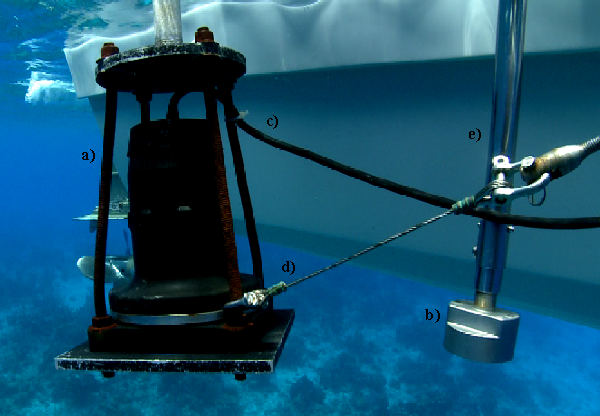
After the usual teething problems setting up electronic equipment at the start of a research mission, we (Gwilym and Jeremy (scientists) and Ade (boat driver)) finally made it away from the M/Y Golden Shadow to begin the Fiji ground truthing survey. As part of our work, we collect depth data continuously underneath the survey vessel. We slipped into the familiar routine – I was attaching the transducer(see photo below) to the transom of the boat, while Jeremy set up the computer and activated the sounder. Ade, in his usual, understated manner calmly stated “look a whale”. “Yeah Right!” I said completely engrossed with tightening down a couple of nuts with a spanner. But all of us are fallible – it wasn’t a Right whale, it was a dwarf minke (Balaenoptera acutorostrata)! The dwarf minke whale circled the boat for ten minutes, occasionally blowing at the surface and rolling as it swam under; it was completely unperturbed as we slipped into the water to get a few photographs. What a way to start the expedition!

Why are Dwarf Minke Whales in Fiji?
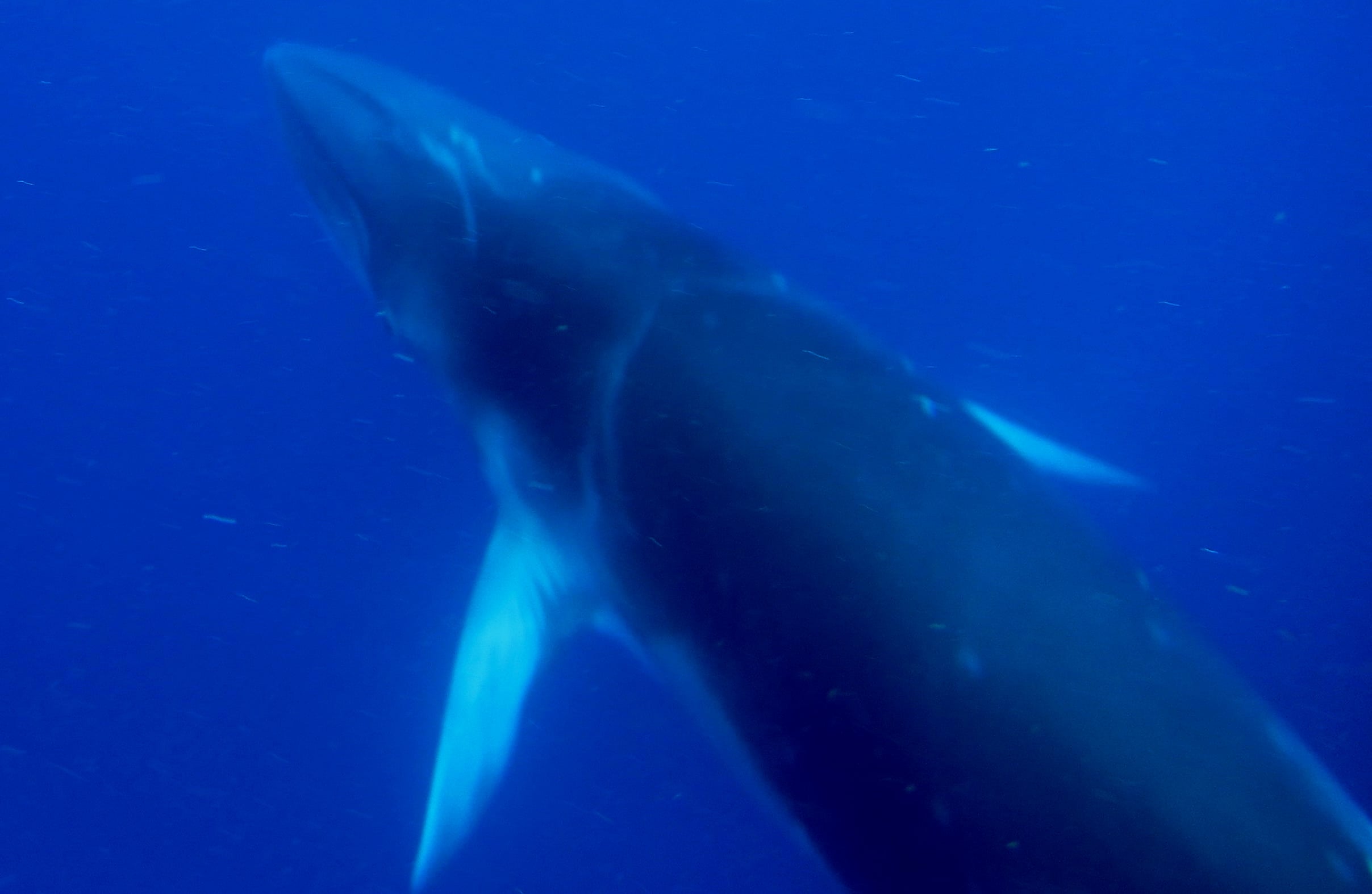
Dwarf minke whale swimming with our ground truthing team.
Acoustic sub-bottom profiler (a) and acoustic depth sounder (b) deployed from survey vessel’s side. For the sub-bottom profile, a cable (c) transmits data to a laptop aboard the boat while a second cable (d) stabilizes the transducer during travel along the transect line. The cable for the acoustic depth sounder is housed within the metal pipe (e) attached to the boat.


So why are dwarf minke whales in Fiji anyway? There are no definitive answers. Some scientists suggest that dwarf minke whales migrate to Fiji’s tropical waters during the winter where they give birth to calves then return to their feeding grounds in Antarctic waters in the spring. Others believe that there may be local resident whales. We won’t know the answer without further research.
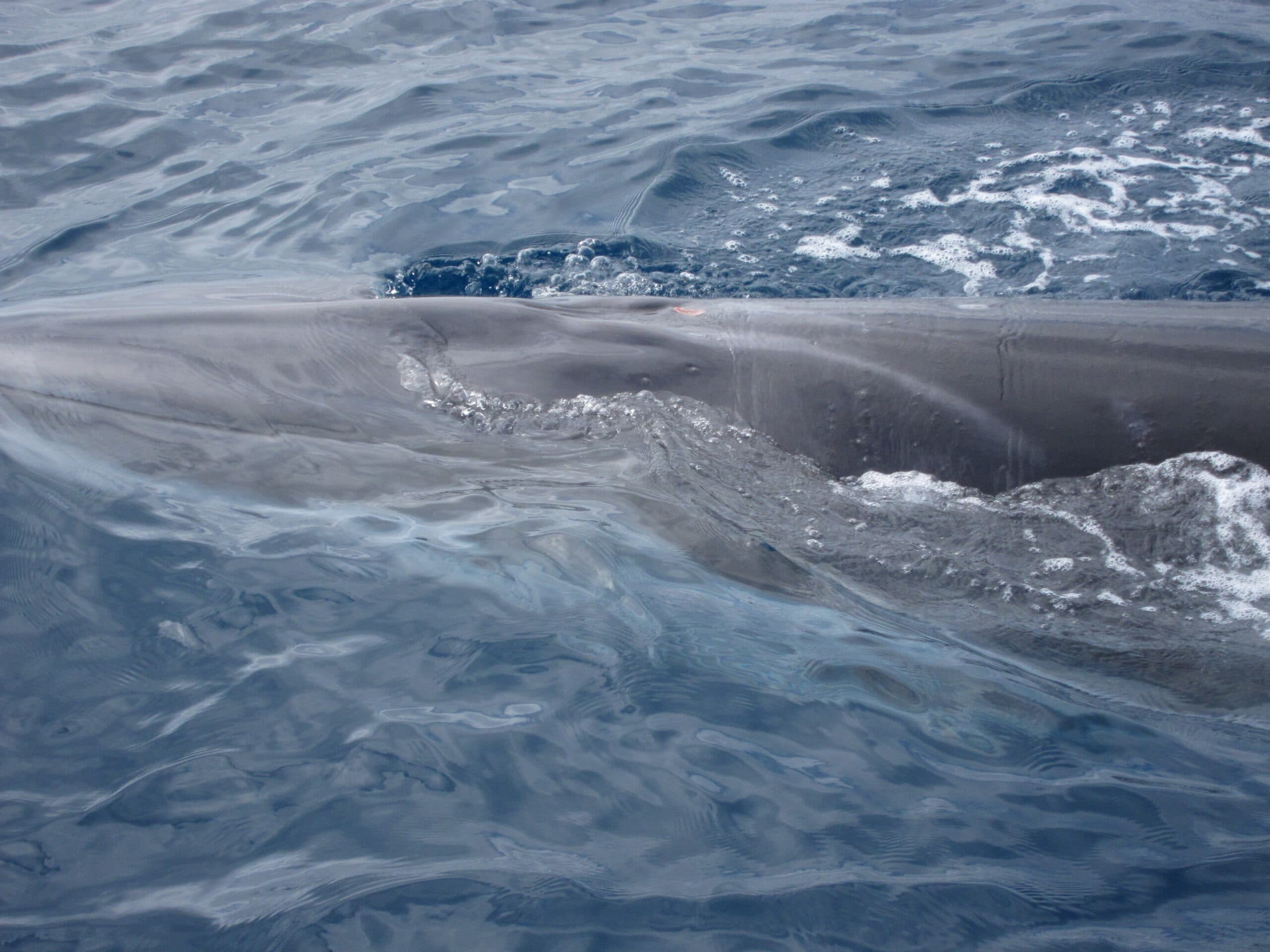
Dwarf minke whale surfacing for air.

(Photos/Images by: 1,3 Gwilym Rowlands; 2 Andy Bruckner, PhD)

To follow along and see more photos, please visit us on Facebook


Related Posts

Connecting People, Art, and Oceans: Championing Conservation at the 2025 IUCN Congress

The IUCN World Conservation Congress brings together thousands of leaders and decision-makers from governments, non-profit organizations, civil society, Indigenous groups, and the private sector to shape global conservation policy and action. This influential gathering serves as a platform to share knowledge, build partnerships, and advance initiatives that protect our planet’s biodiversity.

As a member of the International Union for Conservation of Nature (IUCN), the Khaled bin Sultan Living Oceans Foundation was honored to take part in the Congress, joining a global community of leaders, organizations, and changemakers committed to protecting nature and advancing sustainable futures.

Read More

Take the Pledge to Navigate with Care

Every voyage leaves a mark. Whether you’re steering a small recreational boat, running a dive operation, or captaining a commercial vessel, the way you navigate the seas matters—not just for your safety, but for the health of our oceans. The Khaled bin Sultan Living Oceans Foundation, in partnership with the International Foundation for Aids to Navigation (IFAN), launched the Navigate with Care campaign to help mariners around the world protect what matters most: our safety, our vessels, and the marine ecosystems that sustain life on Earth.

Read More
Privacy Overview

This website uses cookies so that we can provide you with the best user experience possible. Cookie information is stored in your browser and performs functions such as recognising you when you return to our website and helping our team to understand which sections of the website you find most interesting and useful.  You can view our complete Privacy Policy here.

Strictly Necessary Cookies

Most of our cookies are used to improve website security and reduce spam. These cookies should be enabled at all times. They also enable us to save your preferences for cookie settings.

3rd Party Cookies

This website uses Google Analytics to collect anonymous information such as the number of visitors to the site, and the most popular pages. Keeping this cookie enabled helps us to improve our website.