Between October 26, 2014, and November 24, 2014, the Khaled bin Sultan Living Oceans Foundation conducted a coral reef research, outreach, and education mission to map and characterize the shallow marine habitats and assess the status of coral reefs and coral reef species in the Solomon Islands. On the last days of the mission, the team of divers was able to dive on an active volcano, Tinakula.
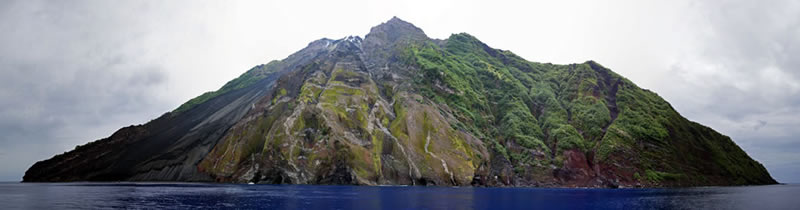
Tinakula is an unpopulated island, although there was once a small settlement which left in the wake of a major eruption and related tsunami in 1971. A major eruption of Tinakula began on September 6, 1971, when a large explosion occurred from the summit crater that produced two pyroclastic flows on the east and west sides of the volcano and was followed by a tsunami 30 minutes later. The explosive activity at the summit was followed by an opened fissure vent about halfway up in the western wall of the landslide scar below the summit craters. A lava flow from this fissure reached the sea. The “conical stratovolcano” last erupted in 2012, but sulfur clouds and mist can still be seen at its summit, which is just shy of 3,000 feet.
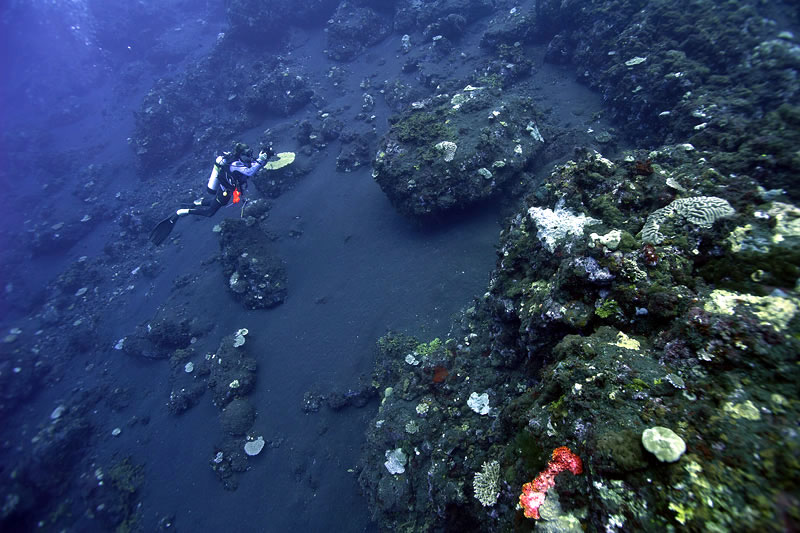
The team’s first dive was in a location away from the most recent eruption. But underwater was a seascape like I have never experienced before. It resembled how I would imagine swimming on another planet would be like. High coral cover was recorded in areas that were far from recent lava flows, and uncolonized basaltic substrates were located closest to recent lava flows. The seafloor consisted of beautiful black sand slopes, large boulders in shallow water, cobble, and vertical sloping pinnacles. At 80 feet deep on the steep slope, rocky outcrops were interspersed with chutes of loose volcanic gravel and sand, which would slide toward the deep like an avalanche with even the slightest of disturbance. The divers had to take precautions when running transects to be sure not to disturb the seafloor.
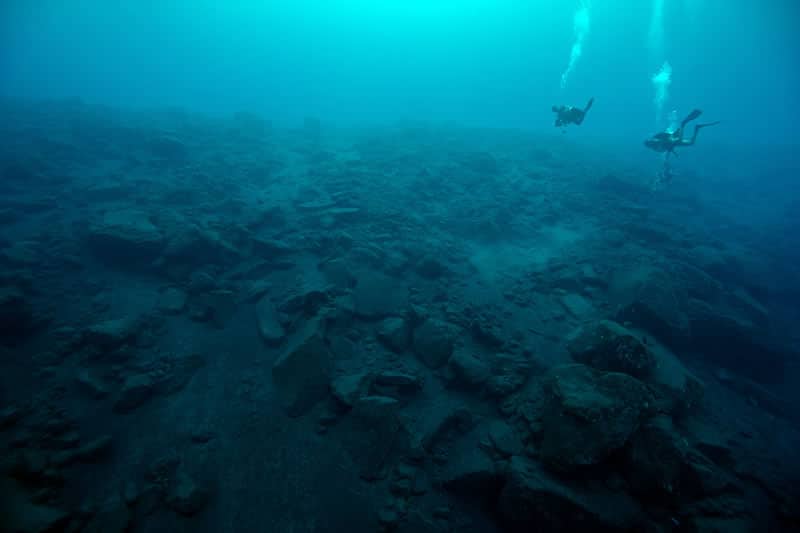
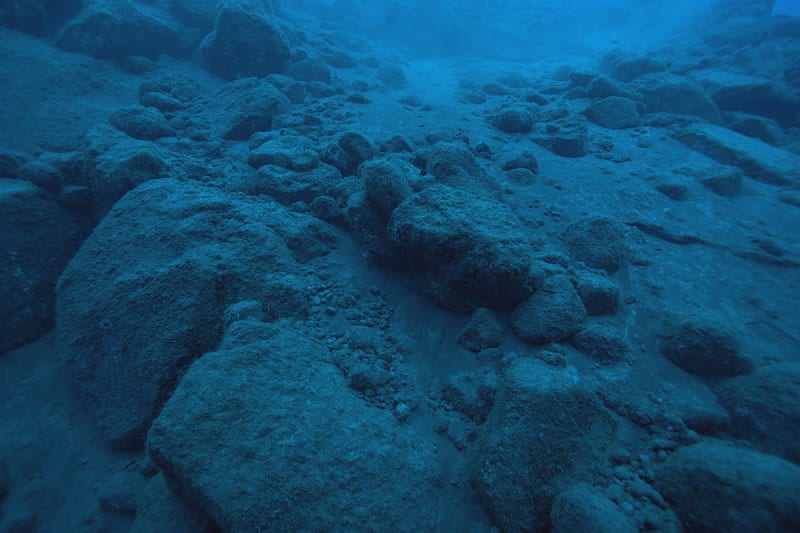
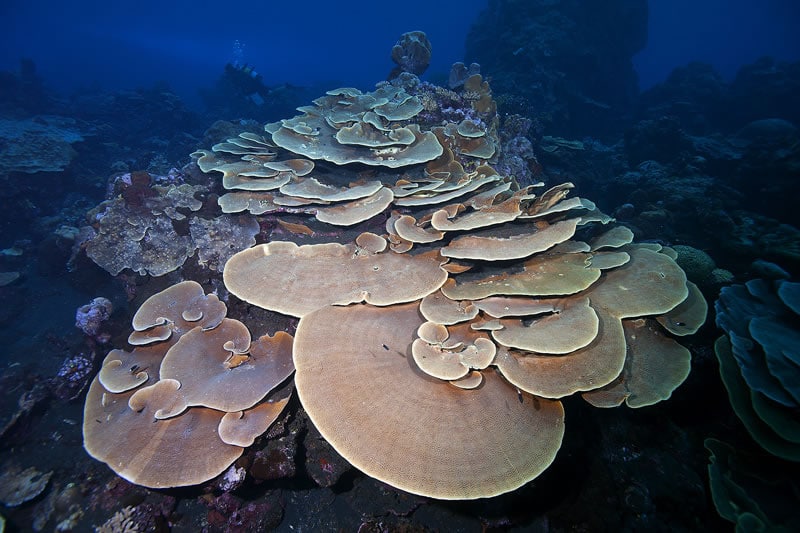
It’s likely that heavy rains would cause the ash and cinder slopes above the surface on the volcano to send down clouds of fine material, blanketing the bottom and making for hostile conditions in which to get a reef restarted. Therefore, it was surprising to see some successful coral recruitment (baby corals), with boulders covered in tiny corals, depending on the amount of time since the rock was deposited. However, because of the shifting landscape and seismic activity, it would be difficult for corals to colonize a large portion of the substrate. But despite this on older basaltic surfaces, there were extensive fine branching corals in shallow water and deeper areas with massive brain corals, plating corals. Astonishingly, the live coral cover exceeded 50% in some areas, while algal cover was exceedingly low. Scientists also noticed a fine assortment of sponges encrusting the rock boulders and ridges as well as many unusually shaped sponges.
Diving on Tinakula was an incredible and definitely a once-in-a-lifetime experience. Especially since activity at the volcano started to heat up again in December 2018 and is still ongoing to this day. Who knows how the most recent volcanic activity has affected the surrounding reef community, but needless to say, Tinakula will not become a sleeping giant any time soon.
Photos by Ken Marks.
Learn More
For more information on our research in the Solomon Islands, read our latest publication, the Global Reef Expedition: Solomon Islands Final Report.