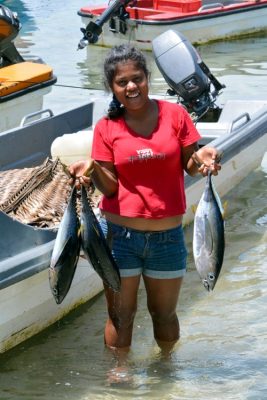
Subsistence fishing provides food for billions of people around the world. As human populations continue to rise, fishing technology becomes more efficient and advanced, and demand for fish increases, many of the nearshore fish become vulnerable to over-fishing. Coral reefs are home to many commercially important fish species such as grouper, snapper, and parrotfish, among many others. In some cases, fishers will preferentially target species of fish because they can sell them for higher profits or are the preferred fish to eat in the area.

Management of the nearshore fish populations usually falls under the jurisdiction of the national government, however, in some cases, it is left to the smaller communities to manage their marine resources. In the case of the Solomon Islands, it is customary for the villages to have tenure over their adjacent reefs and they regulate who has access to fish in their waters. With proper education about factors to be considered when managing fish populations, this more traditional management can be effective when the communities actively try to conserve their marine resources for the long-term. However, often times the basal knowledge of managing marine resources is not sufficient and the management suffers as the demand for fish increases.
This is what appears to be happening in the Solomon Islands. On the Global Reef Expedition mission to the Solomon Islands, we observed very few large commercially important fish. Fish we considered commercially important were not only consumed by and sold to locals but were sold at markets and exported to other countries. The lack of large fish, both in density and biomass, indicates the reefs are being overharvested by local fishers and without strong management, could lead to a total fisheries collapse.
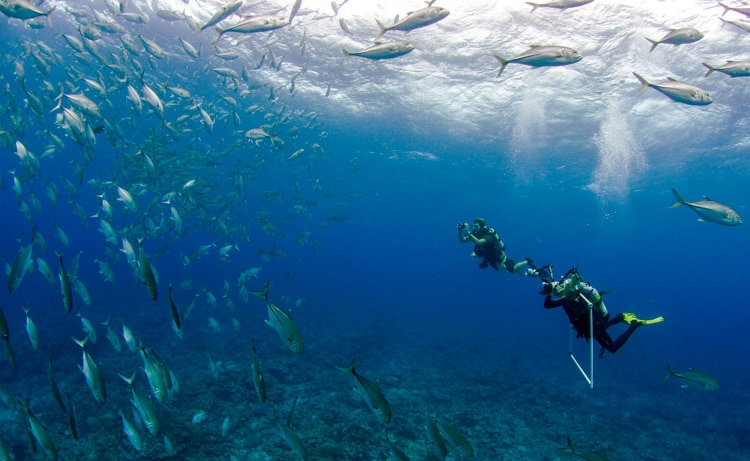
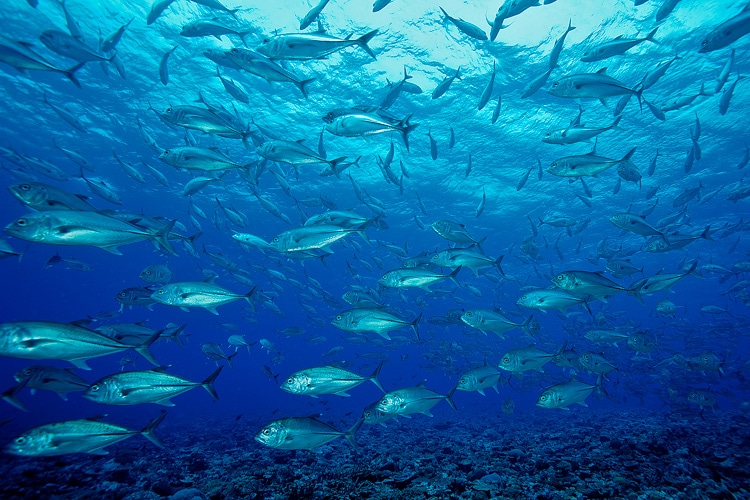
One of the best ways to combat overfishing is to establish strong management practices that are supported by local communities and backed by education and science. Many fisheries management plans include monitoring commercially important species through field surveys and fisher catch monitoring. Most managers suggest using catch size and quantity limits to help regulate the fish populations. Many of the large fish species must be a certain size to reach reproductive maturity. If too many of the large fish are caught—as is the case in the Solomon Islands—this not only reduces the number of mature fish able to reproduce, but could also have long term repercussions on the sustainability of the fish populations. Without establishing catch size limits, many fishers begin to collect smaller, immature fish, therefore prohibiting the replenishment of the fish population. Limits on the number of fish caught also helps to reduce the pressure on the fish populations. The combination of these two factors allows for more mature fish to survive and reproduce, helping sustain the population for generations.


Besides specific species benefitting from fisheries management, this will have ecosystem-wide benefits as well. The success of a coral reef relies heavily on the diversity of the species found there. Organisms in every trophic level, from corals and algae on the sea floor, to fish of all sizes, have evolved to be highly interdependent on each other. It is important that each group has a stable community and population to maintain this fragile balance. If one group is overfished or lost, the entire ecosystem risks collapse.
Learn More…
For more information on our research in the Solomon Islands, and recommendations on how to preserve coral reefs and nearshore fisheries, read our latest publication, the Global Reef Expedition: Solomon Islands Final Report.