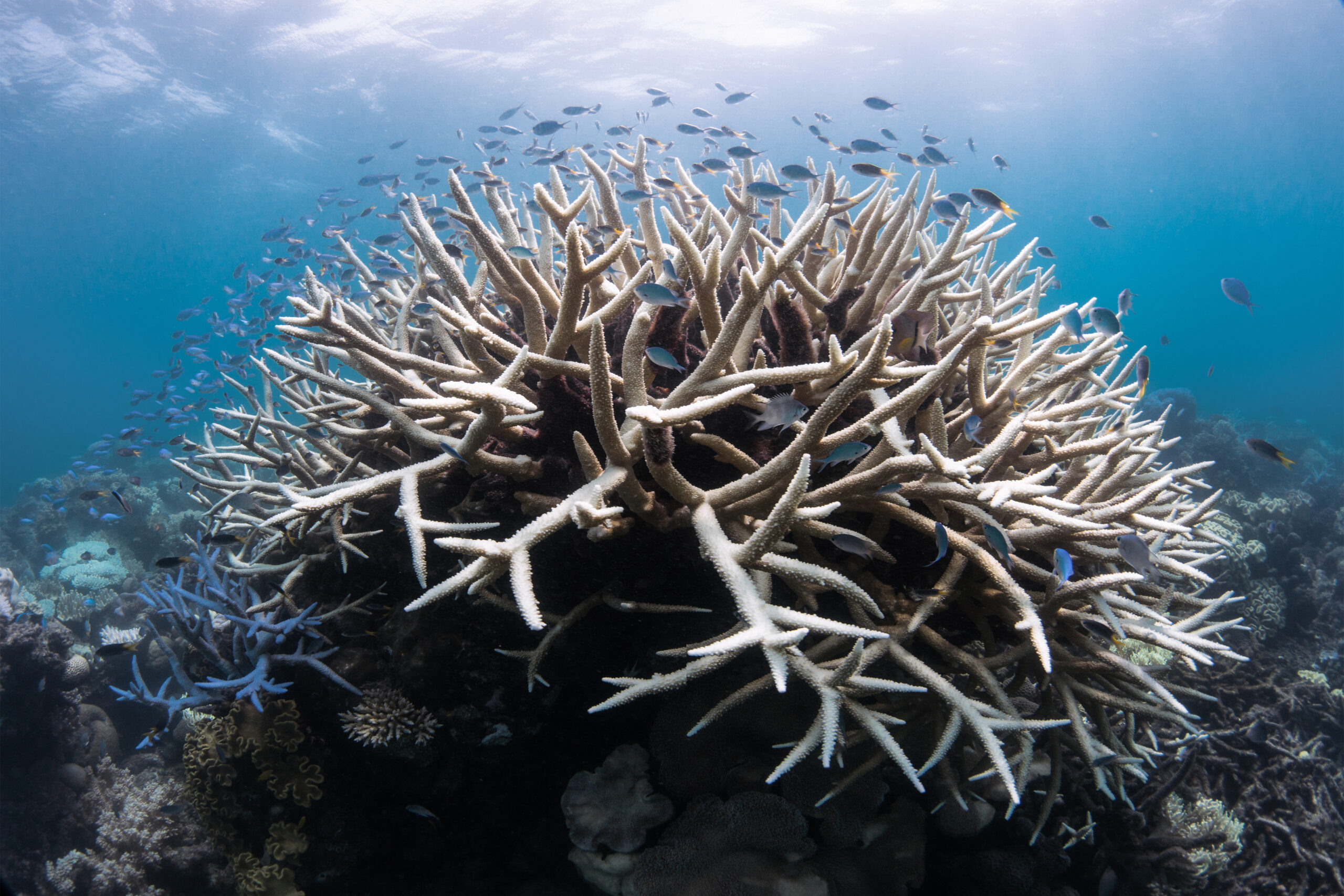
Iliana Baums, a marine biologist at Penn State University, explained her research last night after dinner. She’s looking at Porites lobata, a major reef-building coral in the Pacific and Indian Oceans, and its identical-looking relative P. evermanni, and how they fit into the greater reef ecosystems. (These are what’s known as cryptic species, meaning they look the same morphologically but are genetically distinct.) She described the three-way interaction between the Porites corals, the mussels that bore into them, leaving distinctive keyhole-shaped holes, and the triggerfish that bite the coral trying to get at the mussels inside.
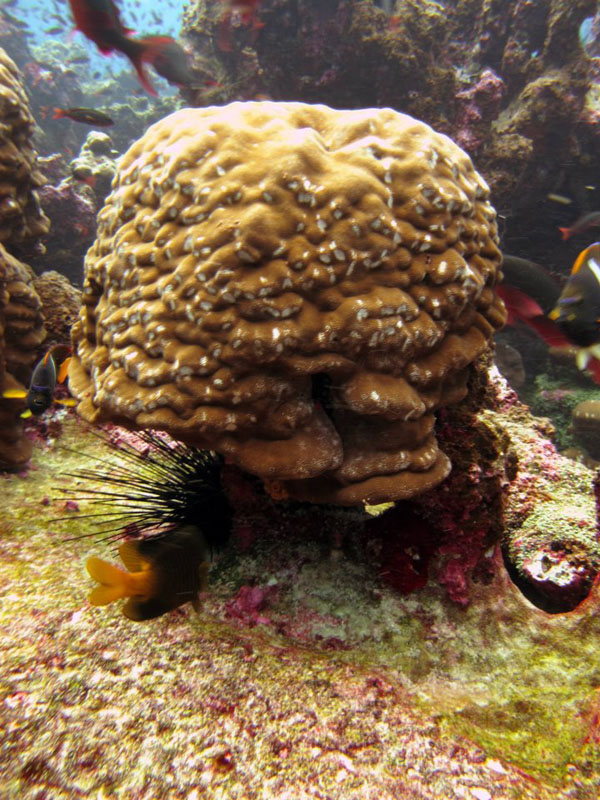
Porites evermanni seems generally hardier; it lives in harsher environments and doesn’t bleach as often as P. lobata. One of the hypotheses Baums is testing on this trip is whether P. evermanni reproduces asexually more frequently than P. lobata because of this interaction. Coral can reproduce either sexually, by releasing sperm and/or eggs into the water, or asexually, which includes new colonies starting from broken pieces. If P. evermanni attracts more mussels, which then attract more triggerfish, the broken pieces of coral the fish bite off (already weakened by the mussels’ drilling) could start new coral colonies more often. If this is true, it’s an example of how cryptic species, even if they look identical, can play a very different role in their ecosystem.

(Photos/Images by: 1 Brian Beck, 2 Julian Smith)
To follow along and see more photos, please visit us on Facebook! You can also follow the expedition on our Global Reef Expedition page, where there is more information about our research and team members.