search-icon
Marine Scientists Comings and Goings

Our time in Cay Sal Bank is going fast – we’ve already reached our halfway point, marked by a short trip back to Freeport today. We’ve covered a lot of ground on the East side of the bank in a short time. The AGRRA coral and fish teams have completed 22 total dives on 18 survey sites, and the groundtruthing team has traveled over 240 miles collecting video of the seafloor at nearly 200 separate survey sites.

On this map, the M/Y Golden Shadow’s two anchorage points are labeled with anchors and our dive survey sites appear as red squares. The yellow dots represent our ADCP current profiler sites, and the green dots represent the groundtruthing team’s tracks.

Before leaving our second anchorage at Damas Cays for Freeport, the expedition team gathered on the bridge deck to take a quick group photo. A couple of marine scientists would be returning to shore once we arrived, and we were sad to see them go. Many thanks to Leno Davis, Lindy Knowles, Indira Brown, Alex Henderson and Dr. Skinner for their work on the first leg of our journey!

The Cay Sal Bank Expedition Team - First Leg Marine Scientists
The Cay Sal Bank Expedition Team – First Leg Marine Scientists


Once in Freeport, we said hello to our new marine scientists shipmates as they came aboard. We now have Tavares Thompson from the Bahamas National Trust and Bahamian students Alannah Vellacott and Alexio Brown aboard. They’ll be joining our survey teams on our afternoon dives tomorrow. AGRRA data manager Ken Marks and Dave Grenda from the Reef Environmental Education Foundation (REEF) briefed the new team members this evening on coral and fish survey techniques, so they’ll be ready to dive right in.

Ken Marks prepping our newest team members on AGRRA survey methods.


Last, but certainly not least, Sam Purkis from the National Coral Reef Institute and the leader of our groundtruthing team had a fantastic run-in with one of the locals out on the bank… we’re really glad he didn’t attempt to get an even closer shot!

A Hammerhead shark swims up to check out Sam.


Don’t forget to follow along on Facebook to get blog updates and see more photos! You can also follow the expedition on our Global Reef Expedition main page, where there is more information about our research and our team members.

Post by Liz Smith

(Image credit: 1. Amanda Williams; 2. Dan Catcheside; 3. Liz Smith; 4. Sam Purkis)
Related Posts

From Dialogue to Action: Ocean Foundations Gather in Stockholm

What can philanthropy accomplish when foundations working across ocean science, conservation, and sustainable development come together around a shared purpose?

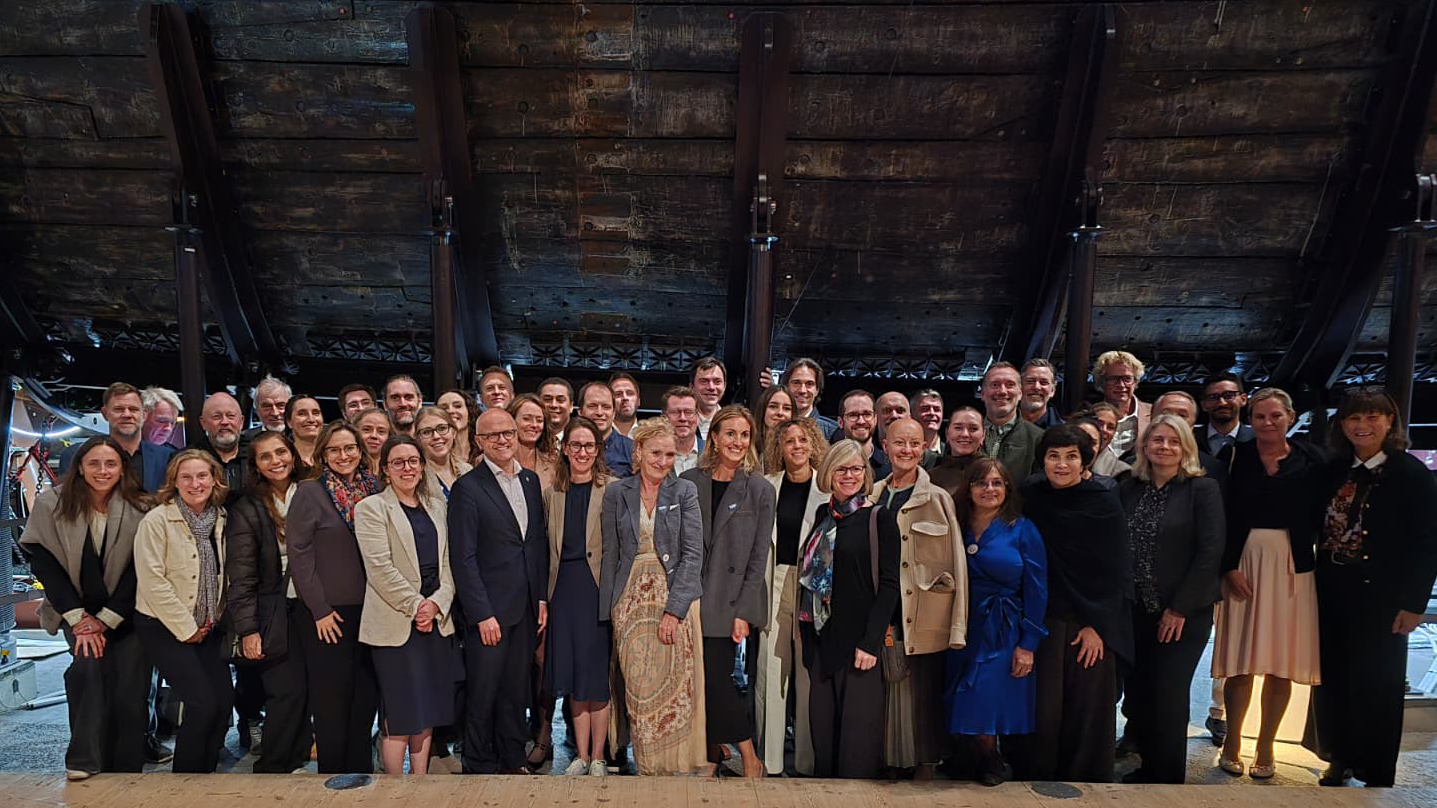
That question was at the heart of the 6th UN Ocean Decade Foundations Dialogue, held September 7–9 in Stockholm, Sweden. The Khaled bin Sultan Living Oceans Foundation joined philanthropic organizations from around the world for three days of discussion, collaboration, and planning focused on accelerating progress during the second half of the UN Decade of Ocean Science for Sustainable Development.

Facilitated by UNESCO’s Intergovernmental Oceanographic Commission (IOC), the UN Ocean Decade Foundations Dialogue is a growing network of more than 30 philanthropic organizations committed to advancing ocean science, collaboration, and action. Since its creation within the framework of the Ocean Decade, the Dialogue has provided foundations with a space to exchange ideas, develop partnerships, and explore how philanthropy can help advance a healthy and resilient ocean.

Hosted by the Voice of the Ocean Foundation (VOTO), this year’s gathering began with From Depth to Action, an Opening Forum that brought nearly 100 leaders from the Swedish and international ocean community together at…

Read More

Meet IFAN: Helping Bring Navigate with Care to the Next Generation

If you’ve ever seen a lighthouse flashing from the shore or a brightly colored buoy bobbing in the water, you’ve seen Aids to Navigation at work.

Aids to Navigation, often called AtoNs, help mariners navigate safely. They can mark channels, warn of hazards, help vessels determine their position, and provide other information people need to make safe decisions on the water. Around the world, these systems help guide everything from small recreational boats to large commercial or container ships. 

But safe navigation isn’t only about protecting vessels and the people aboard them. The choices mariners make can also affect the animals and ecosystems beneath and around them.

That connection between maritime safety and ocean conservation is at the heart of this year’s Science Without Borders® Challenge—and of our partnership with this year’s theme sponsor, the International Foundation for Aids to Navigation (IFAN).

Read More

Privacy Overview

This website uses cookies so that we can provide you with the best user experience possible. Cookie information is stored in your browser and performs functions such as recognising you when you return to our website and helping our team to understand which sections of the website you find most interesting and useful.  You can view our complete Privacy Policy here.

Strictly Necessary Cookies

Most of our cookies are used to improve website security and reduce spam. These cookies should be enabled at all times. They also enable us to save your preferences for cookie settings.

3rd Party Cookies

This website uses Google Analytics to collect anonymous information such as the number of visitors to the site, and the most popular pages. Keeping this cookie enabled helps us to improve our website.