
search-icon
Advances in management of precious corals in the family Corallidae: are new measures adequate?

Highlights

  • A recommended minimum harvest size of 80 mm was not adopted.
  • Corallium rubrum resources above 50 m, instead of 80 m, are protected but enforcement is inadequate.
  • Deep C. rubrum resources are being exploited without prior stock assessments.
  • Inshore Pacific Corallidae are still primarily harvested with dredges.
  • Pacific Corallidae landings have doubled and are dominated by dead colonies.
  • Advances in management of precious corals in the family Corallidae: are new measures adequate?

Advances in management of precious corals in the family Corallidae: are new measures adequate?

Current Opinion in Environmental SustainabilityCurrent Opinion in Environmental Sustainability
December 20, 2013
By Andrew Bruckner

Precious corals in the family Corallidae have a long history of exploitation characterized by boom and bust cycles. Past approaches to manage these fisheries, including gear restrictions, limits on effort, defined fishing areas, quotas, and size limits, have been ineffective at preventing overharvest. The US and EU responded in 2007 and 2009 by proposing trade restrictions through a CITES Appendix II listing. The industry vehemently opposed this, claiming that available data do not meet the criteria for a CITES listing and advocating for local management. Yet, management measures implemented since 2009 fall short of conservation needs. In the Mediterranean, a recommended 10 mm minimum diameter was not adopted. A no fishing zone extends to 50 m instead of the recommended 80 m, but poaching in shallow water is widespread; new (deeper) areas are being exploited without initial stock assessments. Also in the Pacific, disconcerting trends are observed — the size structure of populations is being altered and landings consist of declining numbers of live corals. Unless harvest guidelines are revised using models which incorporate new information on biological attributes, genetics, and stock assessments, fished areas are likely to continue to be quickly depleted.
 

Related Posts

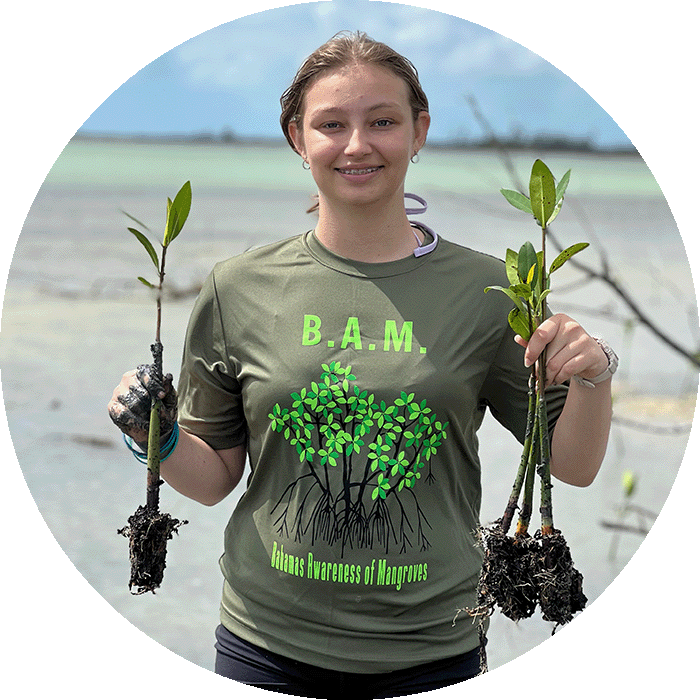
2025-2026 B.A.M. Student Voices

Throughout the Bahamas Awareness of Mangroves (B.A.M.) and Jamaica Awareness of Mangroves in Nature (J.A.M.I.N.) programs, we evaluate each phase of the mangrove education and restoration process to better understand how students are learning, growing, and connecting with their coastal environments.

Before the programs begin, students share what they already know about mangroves and how they feel about them. As the program progresses, we continue to gather feedback to see how their knowledge evolves from identifying mangrove species and understanding food webs to recognizing the role mangroves play in coastal protection and climate change mitigation.

But the surveys go beyond science content.

We also ask students…

Read More

Ten Years of B.A.M.: Rooted in Partnership, Growing in Purpose

Ten years ago, the Bahamas Awareness of Mangroves (B.A.M.) program began with a simple but meaningful commitment: to connect Bahamian students with the mangrove ecosystems that shape and protect their island home.

Since 2015, B.A.M. has been implemented in partnership with Friends of the Environment, whose dedication to environmental stewardship in Abaco has made this program possible year after year. Together, we have worked alongside Patrick J. Bethel High School and Forest Heights Academy to bring hands-on mangrove science into classrooms and out into the field.

What makes ten years remarkable is not just longevity — it is consistency…

Read More
Privacy Overview

This website uses cookies so that we can provide you with the best user experience possible. Cookie information is stored in your browser and performs functions such as recognising you when you return to our website and helping our team to understand which sections of the website you find most interesting and useful.  You can view our complete Privacy Policy here.

Strictly Necessary Cookies

Most of our cookies are used to improve website security and reduce spam. These cookies should be enabled at all times. They also enable us to save your preferences for cookie settings.

3rd Party Cookies

This website uses Google Analytics to collect anonymous information such as the number of visitors to the site, and the most popular pages. Keeping this cookie enabled helps us to improve our website.