Assessment of the Community Structure, Status, Health and Resilience of St. Kitts and Nevis Coral Reefs
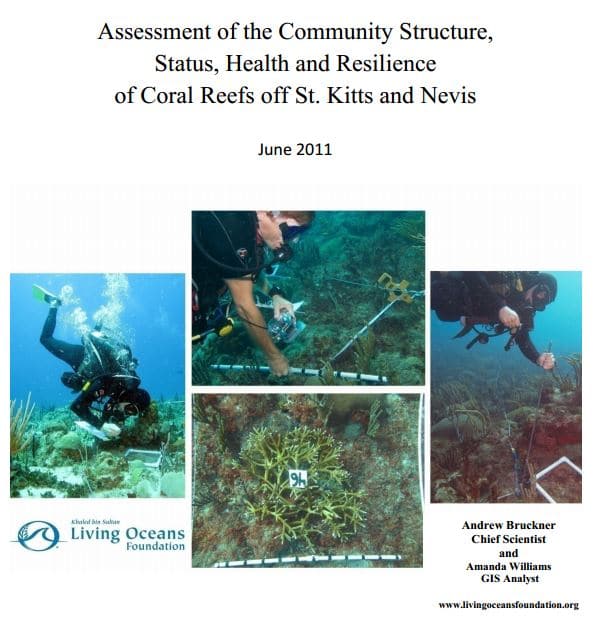 When we first began this mission in early June, several of the researchers had their first exposure to the rapid assessment protocol we were applying to assess the resilience of these St. Kitts and Nevis coral reefs. They received a compressed one day training workshop with classroom lectures, demonstrations, and field practice. Over the next 10 days, they were able to practice different aspects of the survey: benthic assessments, coral surveys, and fish assessments. By the end of the mission, most members of the research team had become experts in at least one aspect of the survey protocol. The number of transects they we able to complete on a dive and the detail of information we collected greatly improved from the start to finish. The divers worked together effectively and efficiently both in water and out, and worked diligently at night to enter their data. In addition to the standard rapid assessments, we were able to establish two permanent sites, one on the north coast within a recovering Acropora cervicornis population, and a second on the leeward reef near Bassaterre that still contained healthy Montastraea faveolata and M. franksi populations. These stations represent the start of a permanent monitoring program that will provide key information on patterns of recovery and future changes to reef communities.
It is my hope that the information we collected is the beginning of a new generation for the conservation and management of St. Kitts and Nevis coral reefs. This project was intended to be the start of a permanent monitoring effort that the local participants will spearhead. This effort can provide critical, information the government can use in marine spatial planning and zoning and the development of more sustainable fisheries measures.
The Global Reef Expedition research and educational activities represents a step forward in an ongoing collaboration between policy makers, divers and other user groups, especially the fishers. By using the information and recommendations presented here, in concert with the habitat maps created by The Nature Conservancy and the outputs of various stakeholder meetings on Marine Protected Areas and Fisheries Use Patterns, it is possible to design new conservation measures that can help the St. Kitts and Nevis coral reefs rebound from past disturbances. Promotion of healthy reefs is an imperative step all residents and visitors must take if the reefs will remain able to support healthy fish populations. In addition to future efforts to reduce pollution and implement environmentally friendly coastal development projects, it is critical that all stakeholders promote and support sustainable fishing practices. Through a concerted effort by all, local communities will be able to continue to rely on these precious resources as a source of income and food for their families and the larger populace on St. Kitts and Nevis for today and far in to the future.