
search-icon
Big data and the race to save coral reefs

JMP

June 28, 2019


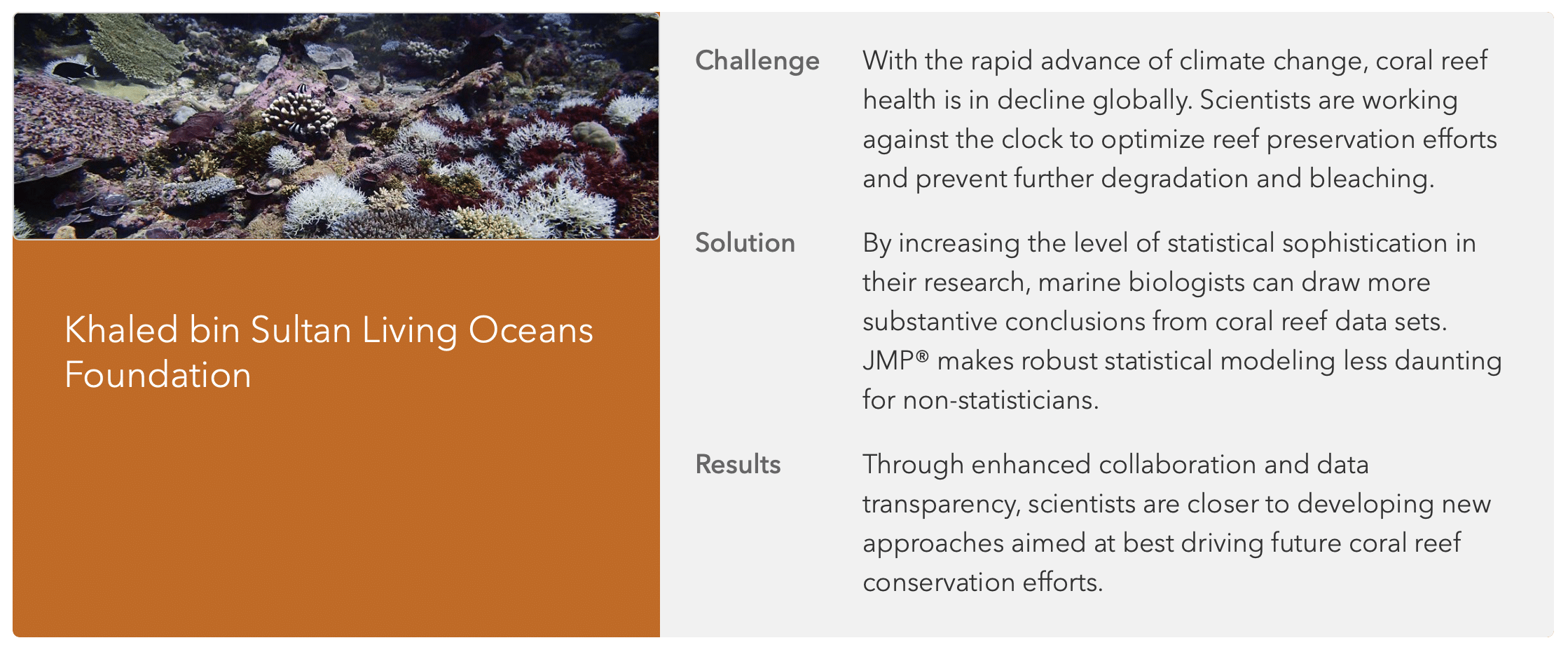
With climate change fast eliciting coral bleaching on global scales, marine biologists are using predictive modeling to help prioritize conservation efforts.
 

Big data and the race to save coral reefs

Though coral reefs constitute less than 2% of the Earth’s oceans, they play a critical part in ocean health and are among the most diverse ecosystems on the planet. Not only are they home to scores of marine species, but their immense impact extends to local economies, supporting fisheries, encouraging tourism, and protecting shorelines from erosion – an impact valued at billions of dollars each year. With an outsized role in both environmental and economic success, protecting these fragile reefs should be a global priority, yet coral reef health around the world continues to decline. Climate change, in particular, has accelerated the degradation of reefs, and scientists now estimate that more than half of the world’s coral reefs have been lost over the past four decades due to climate change and other human-associated factors. Although scientists broadly understand the causes of coral reef bleaching and (later) death, predicting specifically which reefs are most at risk, which are most resilient, and which should be prioritized for conservation continues to be among the field’s foremost challenges.

Organizations like the Khaled bin Sultan Living Oceans Foundation seek answers to these questions, and marine scientists the world over are investing in international coral reef research, conservation, and restoration efforts. With their support, Dr. Anderson Mayfield, PhD, has devoted his career to the study of reef coral physiology, arguing that scientists need a more rigorous, statistically driven approach if they are to understand – and mitigate – the breakdown of corals in response to environmental shifts before it is too late.
Related Posts

2025-2026 B.A.M. Student Voices

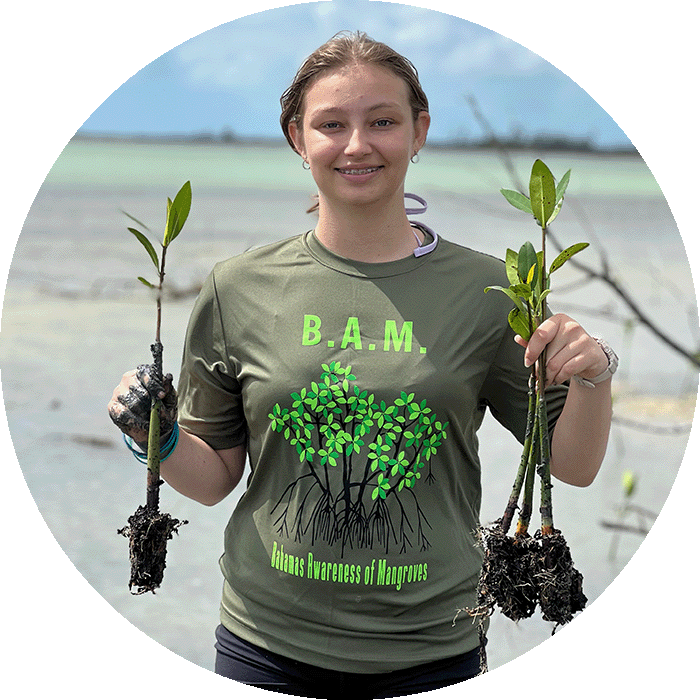
Throughout the Bahamas Awareness of Mangroves (B.A.M.) and Jamaica Awareness of Mangroves in Nature (J.A.M.I.N.) programs, we evaluate each phase of the mangrove education and restoration process to better understand how students are learning, growing, and connecting with their coastal environments.

Before the programs begin, students share what they already know about mangroves and how they feel about them. As the program progresses, we continue to gather feedback to see how their knowledge evolves from identifying mangrove species and understanding food webs to recognizing the role mangroves play in coastal protection and climate change mitigation.

But the surveys go beyond science content.

We also ask students…

Read More

Ten Years of B.A.M.: Rooted in Partnership, Growing in Purpose

Ten years ago, the Bahamas Awareness of Mangroves (B.A.M.) program began with a simple but meaningful commitment: to connect Bahamian students with the mangrove ecosystems that shape and protect their island home.

Since 2015, B.A.M. has been implemented in partnership with Friends of the Environment, whose dedication to environmental stewardship in Abaco has made this program possible year after year. Together, we have worked alongside Patrick J. Bethel High School and Forest Heights Academy to bring hands-on mangrove science into classrooms and out into the field.

What makes ten years remarkable is not just longevity — it is consistency…

Read More
Privacy Overview

This website uses cookies so that we can provide you with the best user experience possible. Cookie information is stored in your browser and performs functions such as recognising you when you return to our website and helping our team to understand which sections of the website you find most interesting and useful.  You can view our complete Privacy Policy here.

Strictly Necessary Cookies

Most of our cookies are used to improve website security and reduce spam. These cookies should be enabled at all times. They also enable us to save your preferences for cookie settings.

3rd Party Cookies

This website uses Google Analytics to collect anonymous information such as the number of visitors to the site, and the most popular pages. Keeping this cookie enabled helps us to improve our website.