
search-icon
Scientists say a plague of sea stars is devastating Pacific coral reefs

This article, featured in the Washington Post, puts national public focus on the increasing threat posed to coral reefs by crown-of-thorns starfish (COTS), as highlighted by the Foundation’s Starfish Collection and Removal (SCAR) Team work in the Maldives.

Scientists say a plague of sea stars is devastating Pacific coral reefs

WashingtonPost.com
November 16, 2015
By Darryl Fears
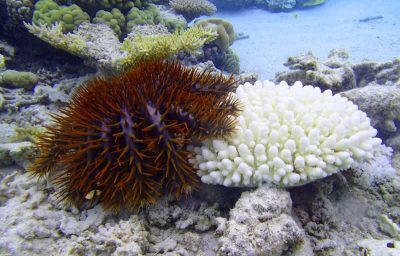
Crown of Thorns SeastarsAs if the world’s coral reefs didn’t have enough problems — killer rising ocean temperatures, crazy bleaching events and oil slicks comprised of sunscreen from sunbathers that denude them, they are now under attack by hordes of thorny sea creatures.

That’s what some scientists are calling an explosion of voracious crown-of-thorns sea stars in Maldives that are eating coral reefs with mouths in their stomachs. For some reason — no one quite knows what — their numbers have grown out of control. Where once divers would see one or two eating coral across about a mile, they’re now seeing 100. And a single sea star can produce 50 million eggs per year, scientists said.

“Their population is exploding in numbers that haven’t really been seen in the Maldives before,” said Alexandra Dempsey, a coral ecologist for the Khaled bin Sultan Living Oceans Foundation. “They can be clumped in an area with 60 to 80 animals within 20 meters, or four or five animals on one patch of coral. We’ve swam distances of 1,500 meters to collect 100 animals…”

Related Posts

From Dialogue to Action: Ocean Foundations Gather in Stockholm

What can philanthropy accomplish when foundations working across ocean science, conservation, and sustainable development come together around a shared purpose?

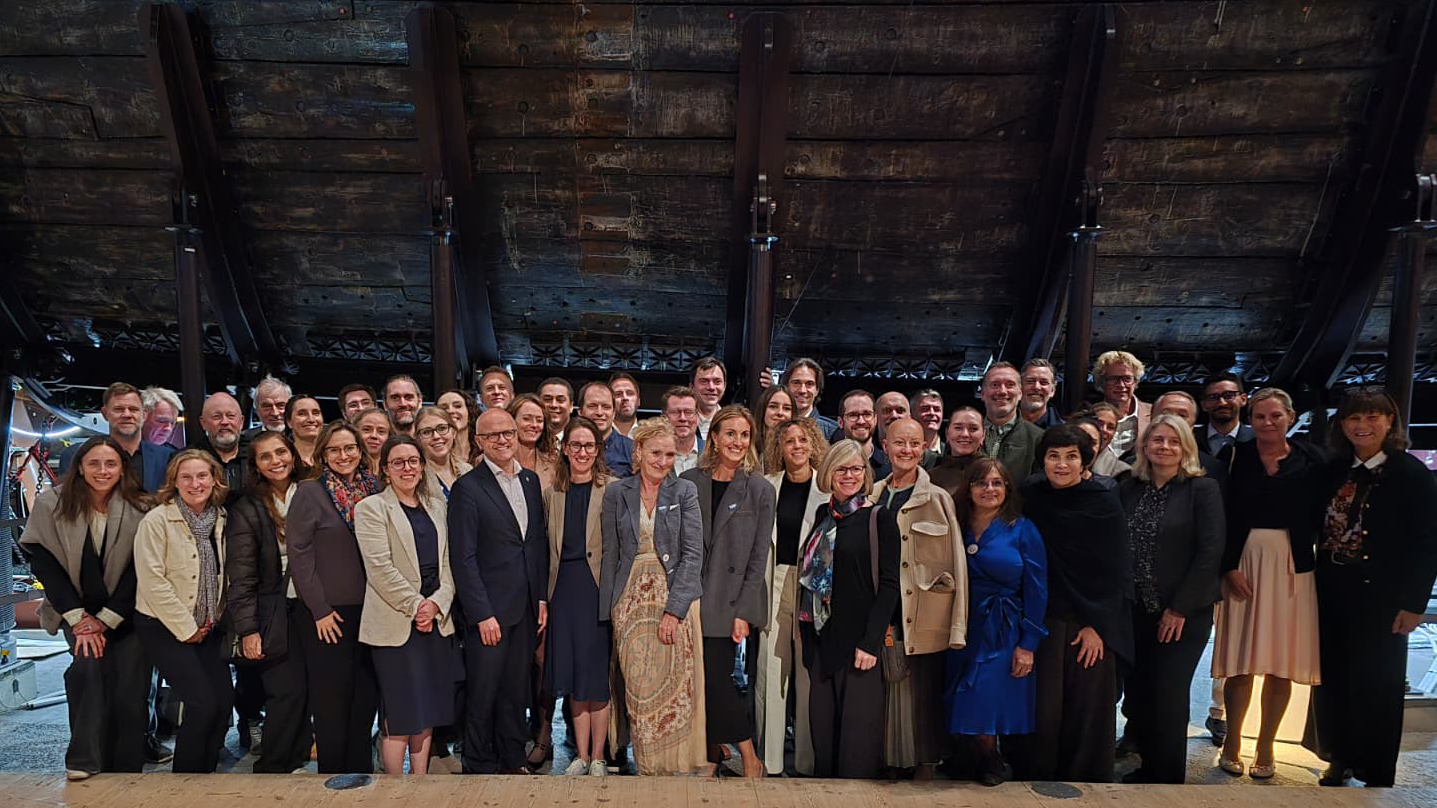
That question was at the heart of the 6th UN Ocean Decade Foundations Dialogue, held September 7–9 in Stockholm, Sweden. The Khaled bin Sultan Living Oceans Foundation joined philanthropic organizations from around the world for three days of discussion, collaboration, and planning focused on accelerating progress during the second half of the UN Decade of Ocean Science for Sustainable Development.

Facilitated by UNESCO’s Intergovernmental Oceanographic Commission (IOC), the UN Ocean Decade Foundations Dialogue is a growing network of more than 30 philanthropic organizations committed to advancing ocean science, collaboration, and action. Since its creation within the framework of the Ocean Decade, the Dialogue has provided foundations with a space to exchange ideas, develop partnerships, and explore how philanthropy can help advance a healthy and resilient ocean.

Hosted by the Voice of the Ocean Foundation (VOTO), this year’s gathering began with From Depth to Action, an Opening Forum that brought nearly 100 leaders from the Swedish and international ocean community together at…

Read More

Meet IFAN: Helping Bring Navigate with Care to the Next Generation

If you’ve ever seen a lighthouse flashing from the shore or a brightly colored buoy bobbing in the water, you’ve seen Aids to Navigation at work.

Aids to Navigation, often called AtoNs, help mariners navigate safely. They can mark channels, warn of hazards, help vessels determine their position, and provide other information people need to make safe decisions on the water. Around the world, these systems help guide everything from small recreational boats to large commercial or container ships. 

But safe navigation isn’t only about protecting vessels and the people aboard them. The choices mariners make can also affect the animals and ecosystems beneath and around them.

That connection between maritime safety and ocean conservation is at the heart of this year’s Science Without Borders® Challenge—and of our partnership with this year’s theme sponsor, the International Foundation for Aids to Navigation (IFAN).

Read More
Privacy Overview

This website uses cookies so that we can provide you with the best user experience possible. Cookie information is stored in your browser and performs functions such as recognising you when you return to our website and helping our team to understand which sections of the website you find most interesting and useful.  You can view our complete Privacy Policy here.

Strictly Necessary Cookies

Most of our cookies are used to improve website security and reduce spam. These cookies should be enabled at all times. They also enable us to save your preferences for cookie settings.

3rd Party Cookies

This website uses Google Analytics to collect anonymous information such as the number of visitors to the site, and the most popular pages. Keeping this cookie enabled helps us to improve our website.