search-icon
Coral Reef Biodiversity in the Red Sea

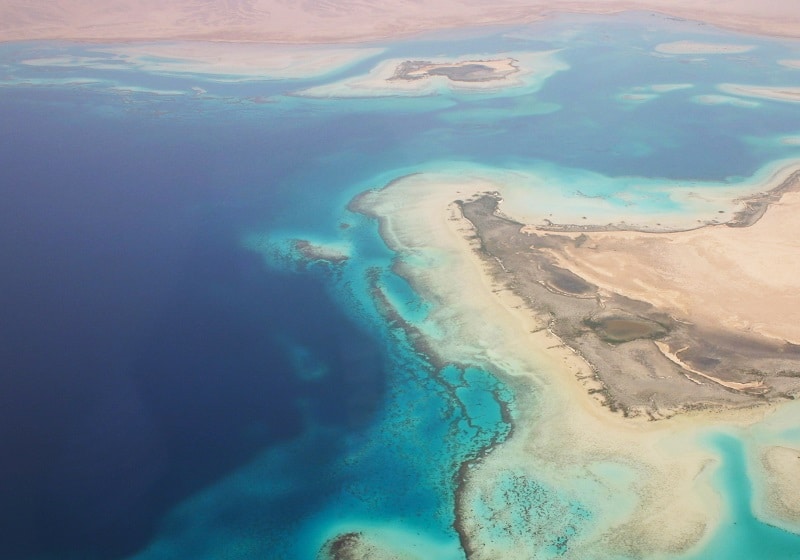
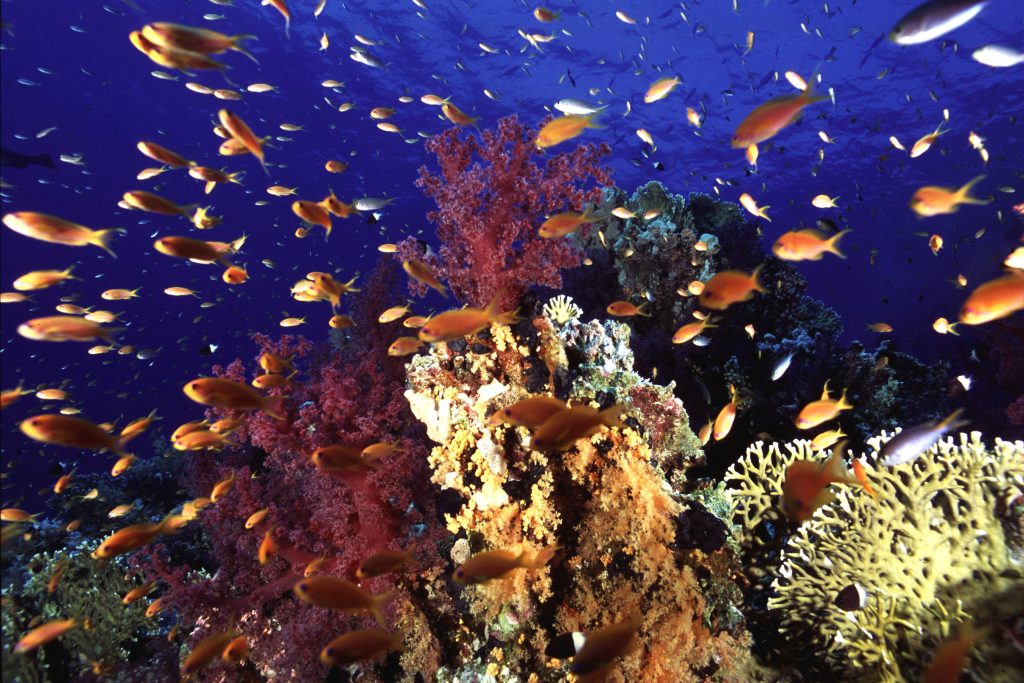
Red Sea coral reefs are known for their remarkable heat tolerance and resiliency in the face of rising sea temperatures, but many reefs are threatened by other factors such as development, overfishing, and disease. In order to assess the health and resiliency of these reefs, the Khaled bin Sultan Living Oceans Foundation (KSLOF) conducted research on coral reefs along the entire length of the Saudi Arabian coastline, surveying and mapping reefs in Ras Qisbah, Al Wajh, Yanbu, the Farasan Islands and Farasan Bank from 2006-2009. Now, researchers at the Red Sea Biodiversity Project, a research initiative to catalogue all the living organisms in the Red Sea, are looking to the Foundation’s research to see how ecological assessments of coral reefs and satellite mapping could be used to better understand patterns of biodiversity in the Red Sea.
Alexandra Dempsey, Coral Reef Ecologist at the Khaled bin Sultan Living Oceans Foundation, was invited to be the keynote speaker at the Red Sea Biodiversity Conference, where she presented the Foundation’s research on the Red Sea as well as preliminary findings from the Foundation’s Global Reef Expedition, a five-year mission to assess the health and resiliency of coral reefs around the globe. She said, ‘it was fantastic working together with other scientists to make the conservation and biodiversity of the Red Sea marine ecosystems a high priority with hopes to empower others to keep ocean resources healthy and sustainable.’
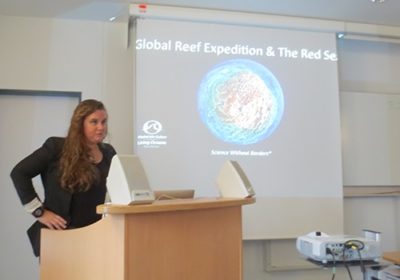
KSLOF Coral Reef Ecologist Alex Dempsey at the Red Sea Biodiversity Conference
 KSLOF Coral Reef Ecologist Alex Dempsey at the Red Sea Biodiversity Conference

The conference, held in Wilhelmshaven, Germany, was sponsored by the two primary partners in the Red Sea Biodiversity Project, Senckenberg Research Institute and King Abdulaziz University (KAU). It brought together experts from many fields to discuss findings from the first phase of research from the Red Sea Biodiversity Project, plan for the next phase of research, and discuss how to best involve other organizations and incorporate interdisciplinary research into their assessments of Red Sea biodiversity.
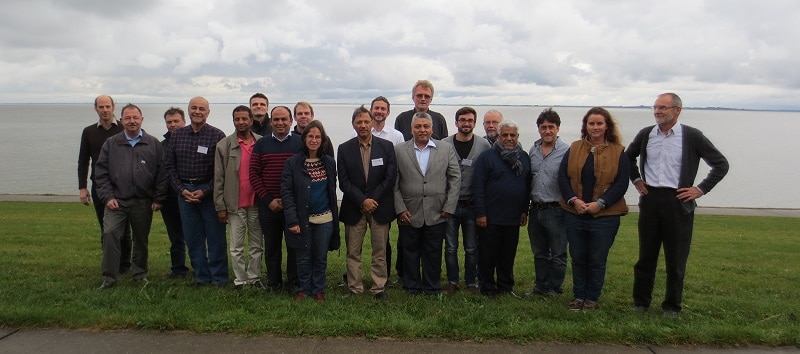
Red Sea Biodiversity Conference Participants
 Red Sea Biodiversity Conference Participants

‘The Red Sea offers a unique opportunity to study gradients in both climate and morphology of coral reefs’ says Dr. Sam Purkis, Interim Chief Scientist at the Khaled bin Sultan Living Oceans Foundation, who went on to add that given their exceptional research potential ‘the reefs of the Red Sea are some of the most understudied of those found anywhere on Earth.’ An expert on Red Sea coral reefs, Dr. Purkis pioneered new methods using the latest satellite mapping technologies and ground-truthed data from rapid reef assessments to create high-resolution maps of coral reef habitats. Published in the Atlas of Saudi Arabian Marine Habitats (which is available for download in English and Arabic), these maps open up a world of possibilities for use in coastal zone management, resource monitoring, and future scientific research. 

The Khaled bin Sultan Living Oceans Foundation was happy to share their knowledge of coral reefs in the Red Sea and looks forward to finding additional ways to collaborate with Red Sea Biodiversity Project to improve the future of coral reef monitoring and biodiversity conservation in the Red Sea.

Related Posts

From Dialogue to Action: Ocean Foundations Gather in Stockholm

What can philanthropy accomplish when foundations working across ocean science, conservation, and sustainable development come together around a shared purpose?

That question was at the heart of the 6th UN Ocean Decade Foundations Dialogue, held September 7–9 in Stockholm, Sweden. The Khaled bin Sultan Living Oceans Foundation joined philanthropic organizations from around the world for three days of discussion, collaboration, and planning focused on accelerating progress during the second half of the UN Decade of Ocean Science for Sustainable Development.

Facilitated by UNESCO’s Intergovernmental Oceanographic Commission (IOC), the UN Ocean Decade Foundations Dialogue is a growing network of more than 30 philanthropic organizations committed to advancing ocean science, collaboration, and action. Since its creation within the framework of the Ocean Decade, the Dialogue has provided foundations with a space to exchange ideas, develop partnerships, and explore how philanthropy can help advance a healthy and resilient ocean.

Hosted by the Voice of the Ocean Foundation (VOTO), this year’s gathering began with From Depth to Action, an Opening Forum that brought nearly 100 leaders from the Swedish and international ocean community together at…

Read More

Meet IFAN: Helping Bring Navigate with Care to the Next Generation

If you’ve ever seen a lighthouse flashing from the shore or a brightly colored buoy bobbing in the water, you’ve seen Aids to Navigation at work.

Aids to Navigation, often called AtoNs, help mariners navigate safely. They can mark channels, warn of hazards, help vessels determine their position, and provide other information people need to make safe decisions on the water. Around the world, these systems help guide everything from small recreational boats to large commercial or container ships. 

But safe navigation isn’t only about protecting vessels and the people aboard them. The choices mariners make can also affect the animals and ecosystems beneath and around them.

That connection between maritime safety and ocean conservation is at the heart of this year’s Science Without Borders® Challenge—and of our partnership with this year’s theme sponsor, the International Foundation for Aids to Navigation (IFAN).

Read More

Privacy Overview

This website uses cookies so that we can provide you with the best user experience possible. Cookie information is stored in your browser and performs functions such as recognising you when you return to our website and helping our team to understand which sections of the website you find most interesting and useful.  You can view our complete Privacy Policy here.

Strictly Necessary Cookies

Most of our cookies are used to improve website security and reduce spam. These cookies should be enabled at all times. They also enable us to save your preferences for cookie settings.

3rd Party Cookies

This website uses Google Analytics to collect anonymous information such as the number of visitors to the site, and the most popular pages. Keeping this cookie enabled helps us to improve our website.