Expedition Log: Palau – Day 17
On a recent dive while swimming along between coral photo transects on a patch reef in the lagoon near the tip of the Aiyasu Reef system, I spotted a Long Tentacle Mushroom Coral (Heliofungia actiniformis). Mushroom (or disk) corals are among my favorite tropical Pacific corals. They are free-living (unattached to the substrate) and in many species the disks can grow very large and yet consist of only a single polyp. We have nothing quite like them in the Caribbean so I always enjoy seeing them when diving in the Pacific. The species H. actiniformis is my favorite among this interesting group of mobile corals because of its distinctive long tentacles with bulbous whitish tips. Many people could easily mistake this large solitary coral polyp for an anemone—which it so closely resembles.
As I swam over this mushroom coral I glanced down at its tentacles that were waving about in the weak current. I noticed that one of the white “dots” that I was seeing was not the smoothly rounded tip of a tentacle but was more irregularly shaped. I instantly recognized this partial mimicry as the ragged white patch on the head of a shrimp species that calls this coral home. The Mushroom Coral Shrimp (Periclimenes kororensis) is only found in association with the Long Tentacle Mushroom Coral and this was the first one of these shrimps I had noticed—though I have seen many of these corals on the past several missions. This unusual association with a mushroom (fungiid) coral seems to have allowed it to escape detection by taxonomists till it was described as recently as 1977 from a specimen collected in 1972 from the state of Koror in Palau just a little way south from where I had spotted this one.
The novelty of spotting this species near its type locality intrigued me and I was motivated to write about it. I put the other scientists who had underwater cameras on alert to see what additional shrimp species they could find. Like the Mushroom Coral Shrimp, many species can be located by knowing the host species with which they tend to associate. It took some time to gather photos of other shrimps as their tiny size tends to make them difficult photo subjects. What follows is a gallery of some of the shrimp species we managed to see while in Palau.
(Click-thru on images for stunning detail!)
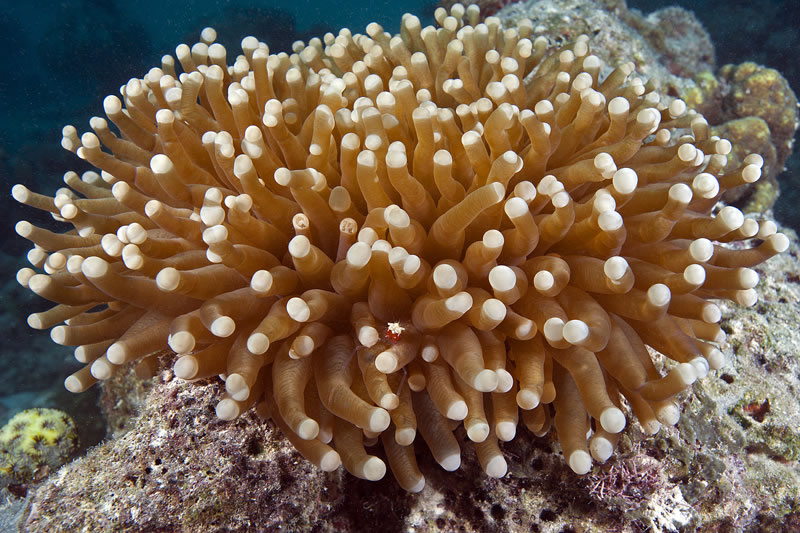
The host, Long Tentacle Mushroom Coral (Heliofungia actiniformis), with the shrimp barely visible lower center. (Ken Marks@KSLOF)
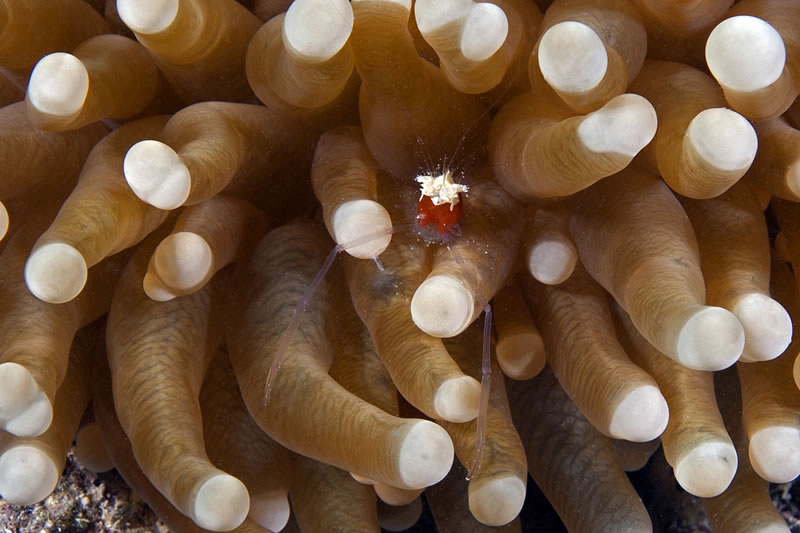
Detail of the Mushroom Coral Shrimp (Periclimenes kororensis) with the red forebody and ragged white head patch. (Ken Marks@KSLOF)
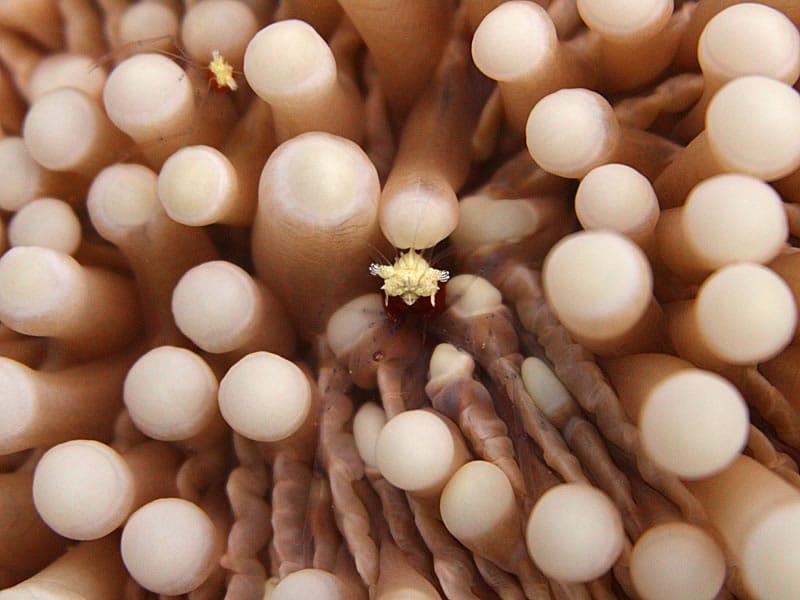
Most corals contain a mated pair of shrimp. Larger female in center with smaller male visible in upper left corner. (Grace Frank@KSLOF)
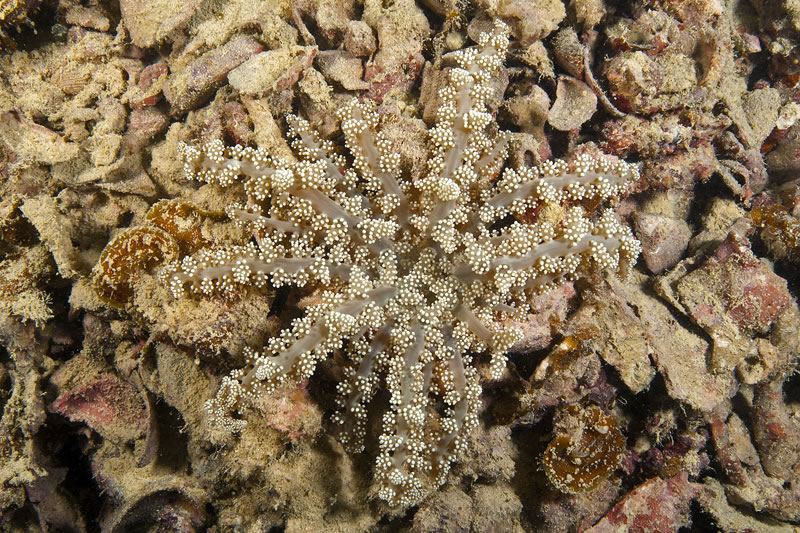
The best untouched Hell’s Fire Anemone (Actinodendron plumosum) can produce a powerful sting yet several commensal shrimp call it home. (Ken Marks@KSLOF)
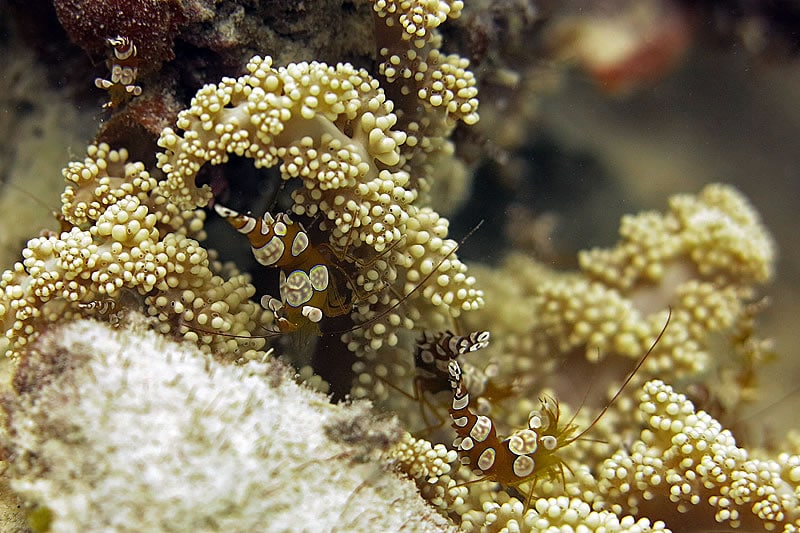
Groups of Squat Shrimp (Thor amboinensis) found within this fire anemone’s tentacles. (Samantha Clements@KSLOF)
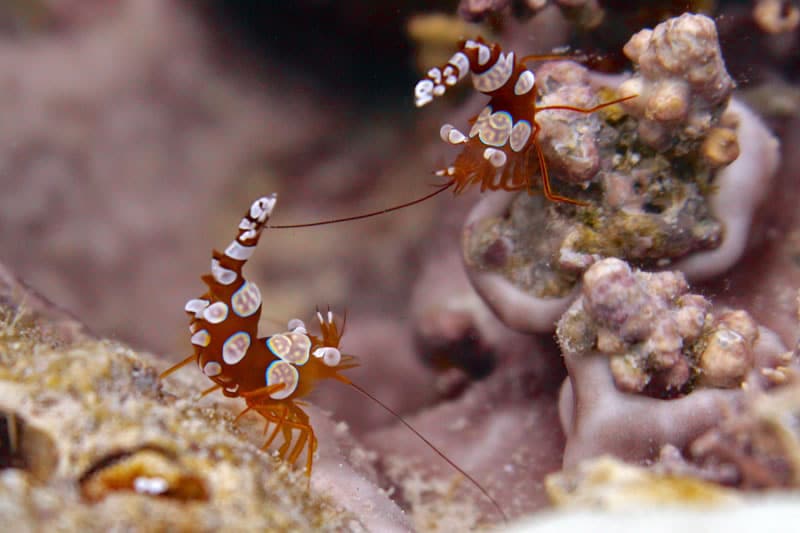
The tiny Squat Shrimp have a distinctive habit of holding their tales vertically. (Grace Frank@KSLOF)
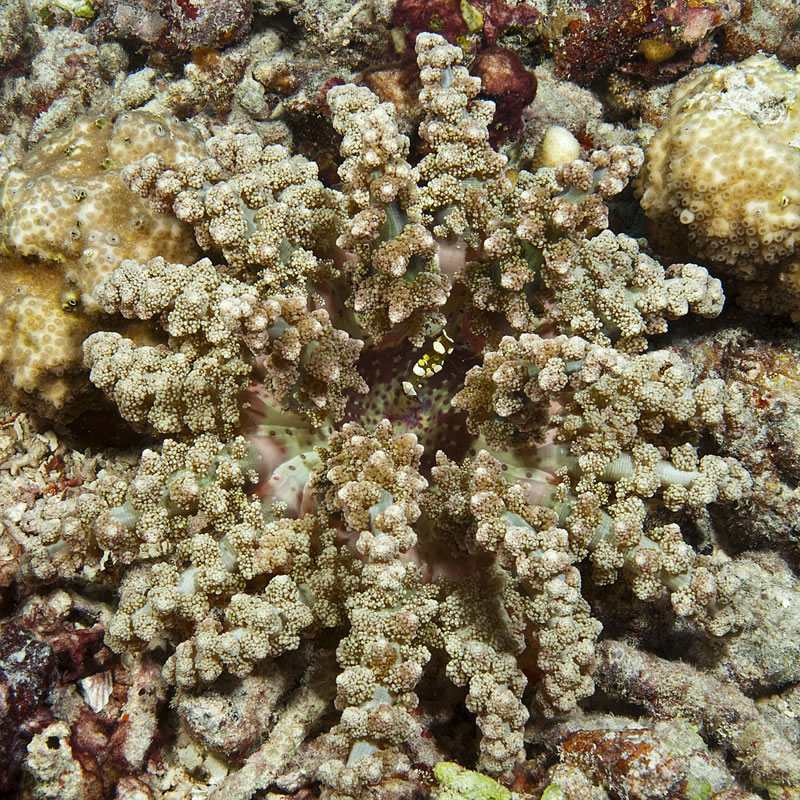
This large and colorful Hell’s Fire Anemone at home in a field of coral rubble is host to a small shrimp visible near the anemone’s mouth in the center. (Ken Marks@KSLOF)
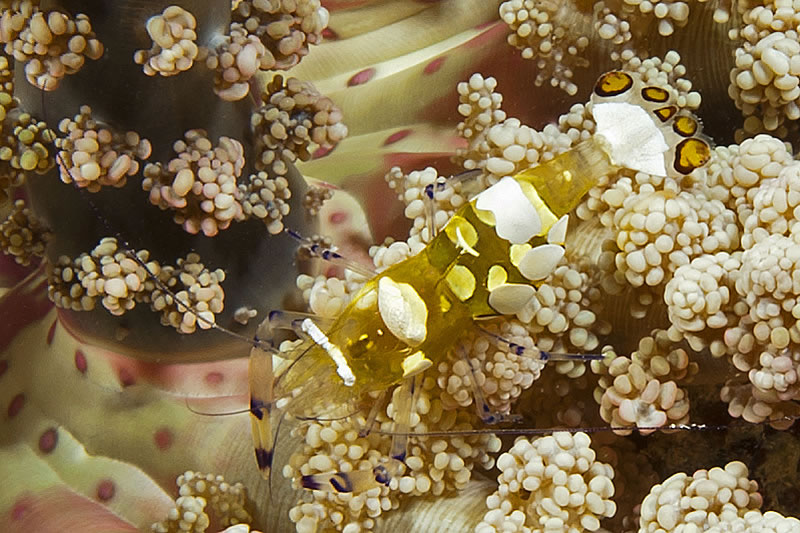
The colorful Peacock-tail Anemone Shrimp (Periclimenes brevicarpalis) finds safety among the beautiful but dangerous tentacles of this fire anemone. (Ken Marks@KSLOF)
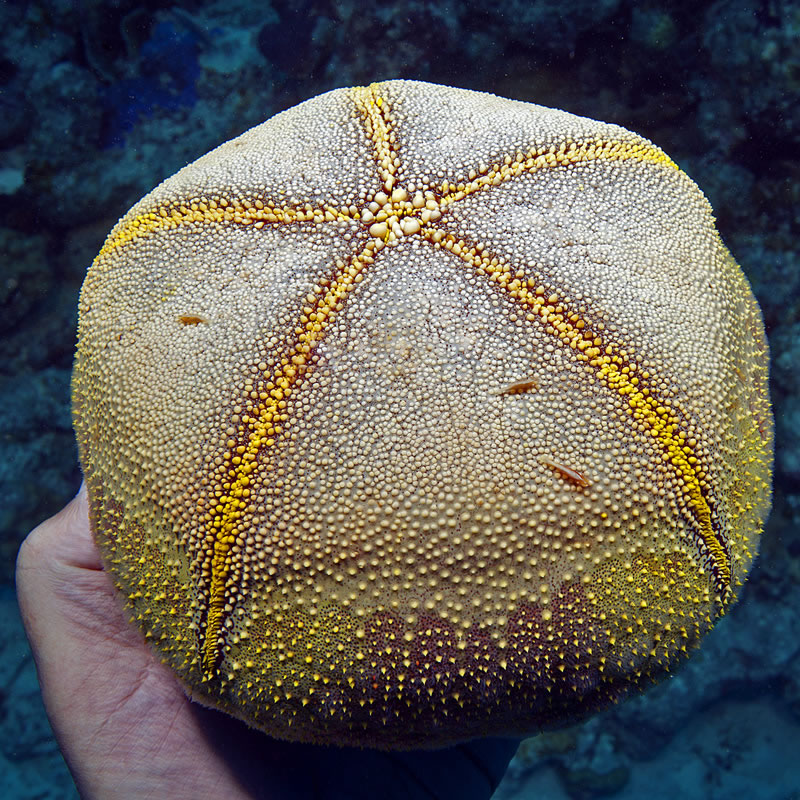
The underside of the Cushion Star (Culcita novaeguineae) is often host to a group of tiny shrimp. (Ken Marks@KSLOF)
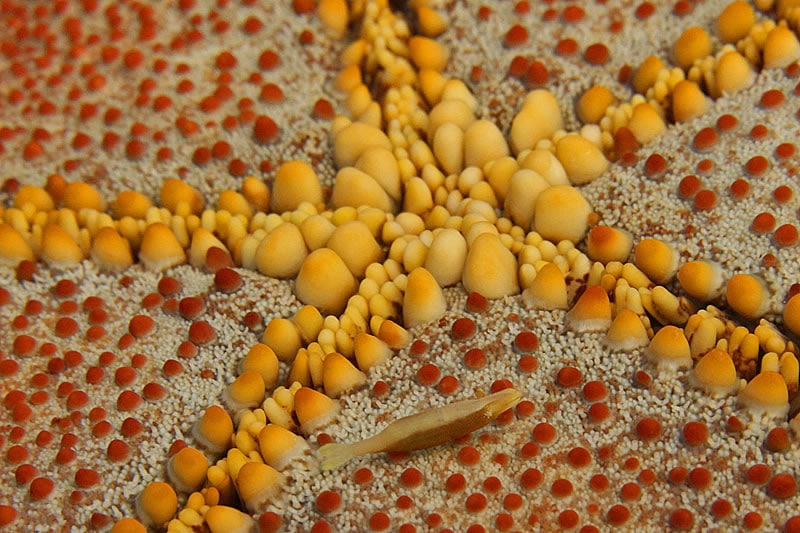
The tiny elongate Sea Star Shrimp (Periclimenes soror) finds protection, mobility and food in association with sea stars. (Grace Frank@KSLOF)
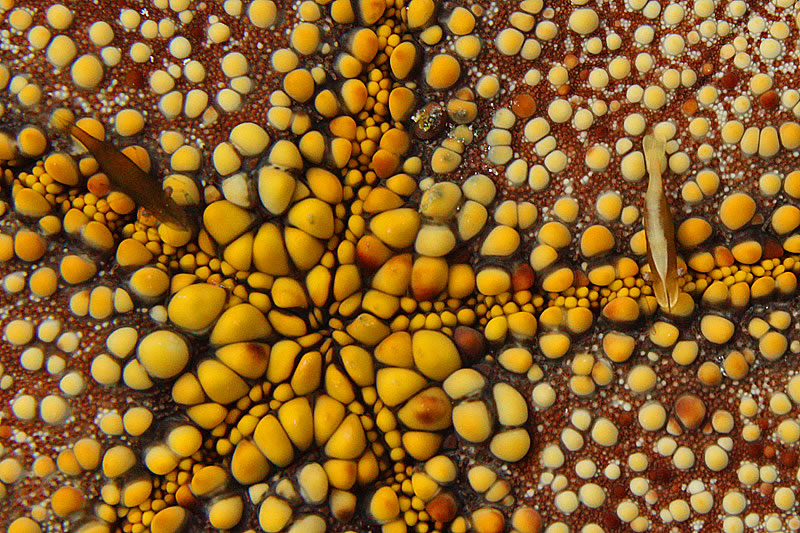
The Sea Star Shrimp come in a variety of colors often with a wide white strip down the middle of the back. (Grace Frank@KSLOF)
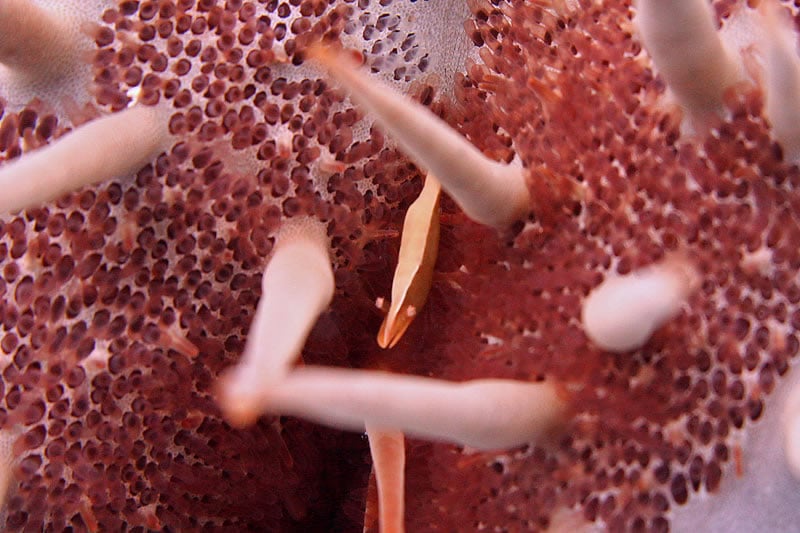
The Crown-of-thorns Sea Star (Acanthaster planci) is also host to the Sea Star Shrimp. (Grace Frank@KSLOF)
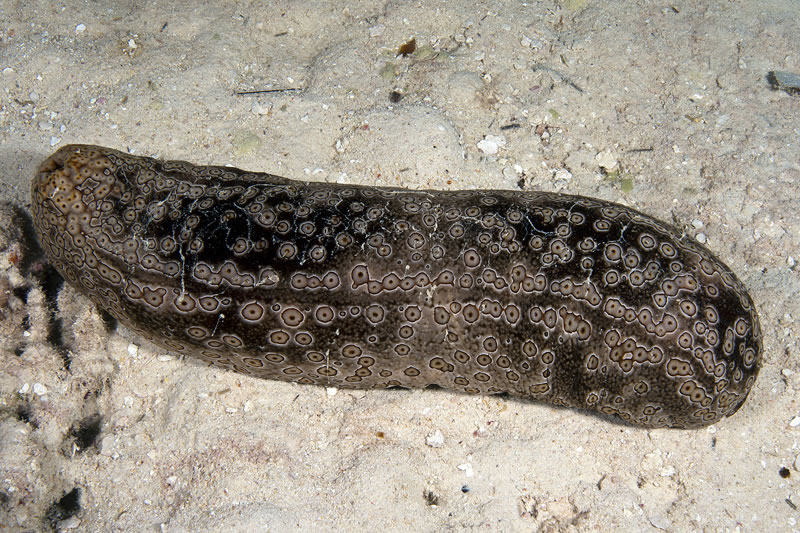
Sea cucumbers like this undescribed species of Bohadschia are often host to a number of species including shrimp. (Ken Marks@KSLOF)
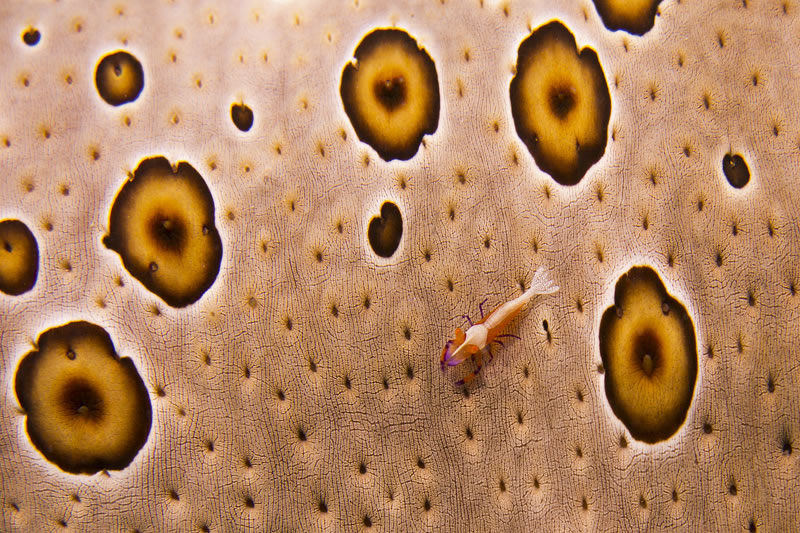
A tiny Emperor Shrimp (Periclimenes imperator) found while inspecting a sea cucumber closely. (Samantha Clements@KSLOF)
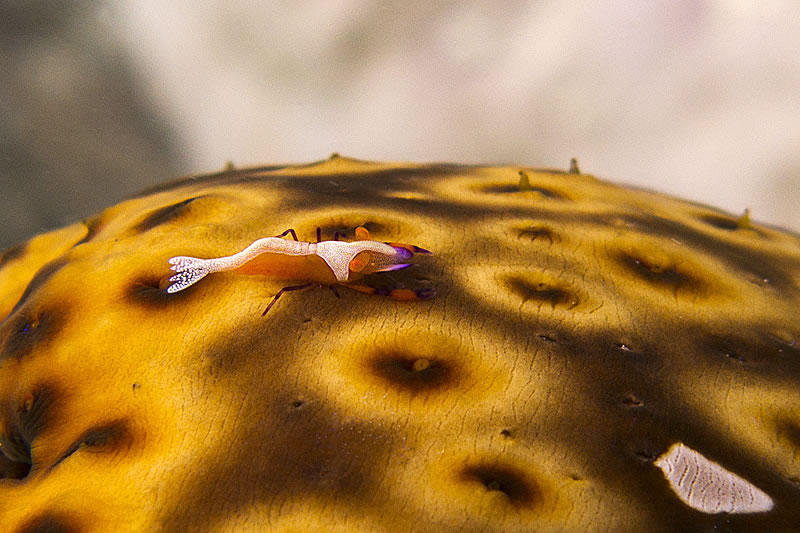
Emperor Shrimp can be distinguished from the similar appearing Sea Star Shrimp by their choice of host and the larger orange claw arms with purple joints and claws. (Samantha Clements@KSLOF)
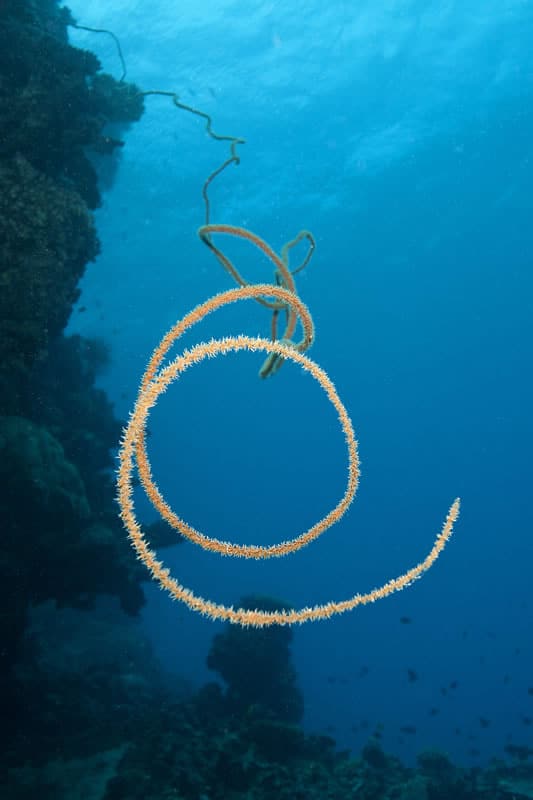
The coiled Wire/Whip Coral (Cirrhipathes sp.) is black coral which is host to several species of crustaceans and the Whip Goby (Brianinops yongei). (Ken Marks@KSLOF)
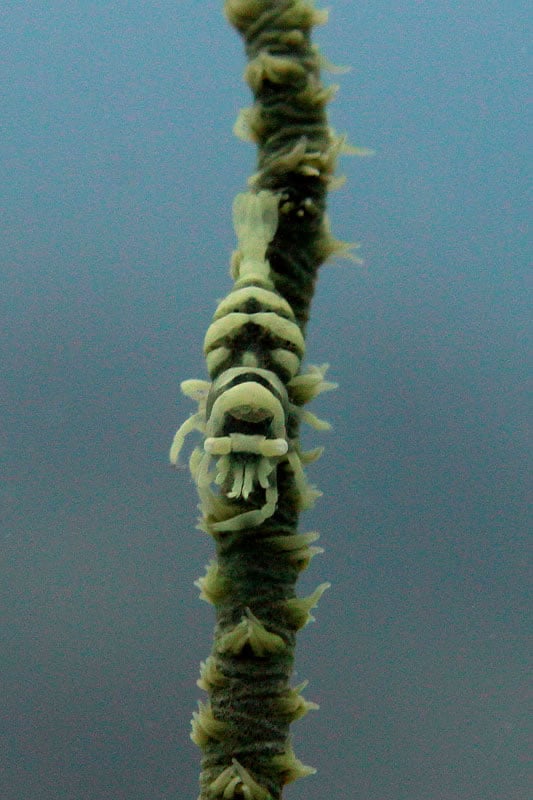
Inhabitants like this Anker’s Whip Coral Shrimp (Pontonides ankeri) can often be spotted by closely searching the whip coral from end to end. (Grace Frank@KSLOF)
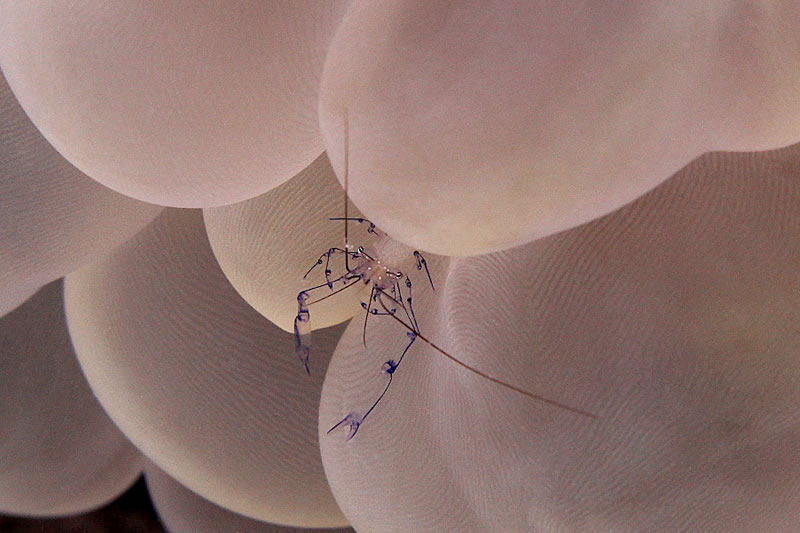
The nearly transparent Bubble Coral Shrimp (Vir philippinensis) is only visible due to its thin purplish edging while hiding within the pseudotentacles of the Bubble Coral (Plerogyra sinuosa) on which it is found. (Grace Frank@KSLOF)