search-icon
Atolls of French Polynesia

Mopelia and Scilly are beautiful coral atolls located in the Leeward group of the Society Islands. A coral atoll originally starts as a volcanic island. As the island and ocean floor subside, corals and other calcifying organisms build a near-shore reef up to the water’s surface attached to the land, a structure termed a “fringing reef”.
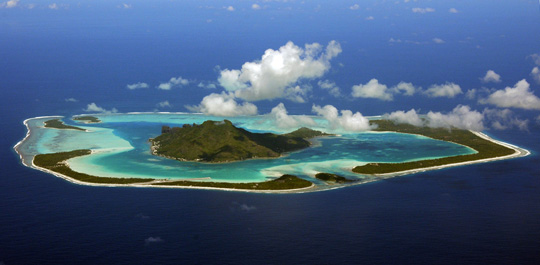
Maupiti is one of the classic coral atolls with a volcanic island in the center, and a deep lagoon enclosed within a coral reef.


There are two main components to this type of fringing reef: the reef flat and reef slope. The reef flat is just below the water’s surface and can be exposed during low tide. The reef slope occurs at the outer edge of the reef. A shallow lagoon forms between the island and the reef over time as the island subsides and the reef progrades, turning the fringing reef into a barrier reef with a wider and deeper lagoon. Eventually, the island becomes submerged below the sea, and the barrier reef becomes a coral atoll, enclosing an open lagoon.

The GRE scientists have surveyed the three distinct zones of these coral atolls: the reef slope, reef flat, and lagoon. The reef slope is densely populated with branching and encrusting corals such as Acropora, Montipora, and Pocillopora.
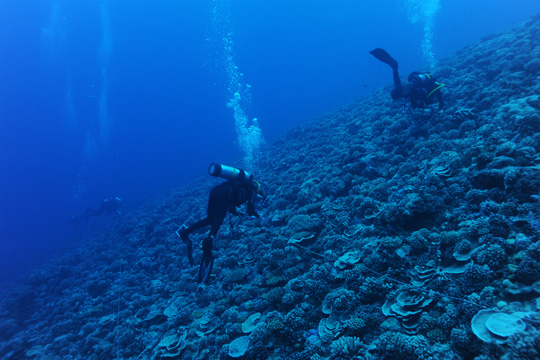
Coral community on the reef slope


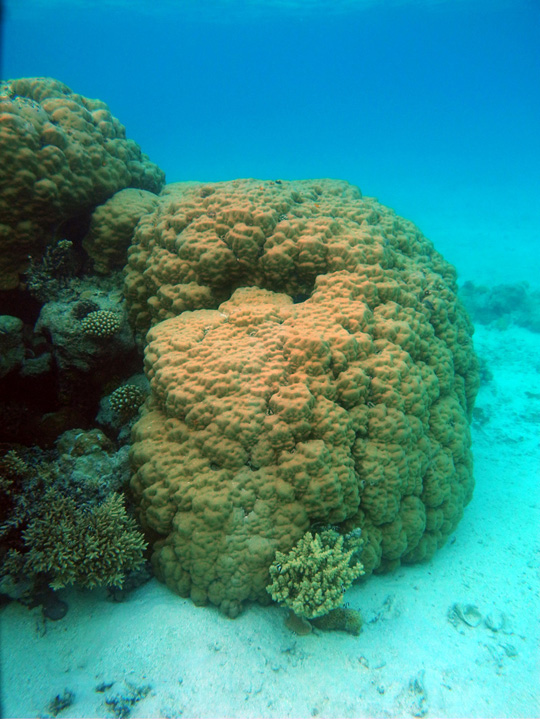
The reef flat contains similar coral species to the reef slope, but it is located in much shallower water with a lower density of coral colonies. The coral communities in the lagoon are characterized as bommies, or isolated reef patches, which are sparsely dispersed throughout the lagoon. Each bommie is usually comprised of a massive coral head, algae, rock, and the occasional branching coral.
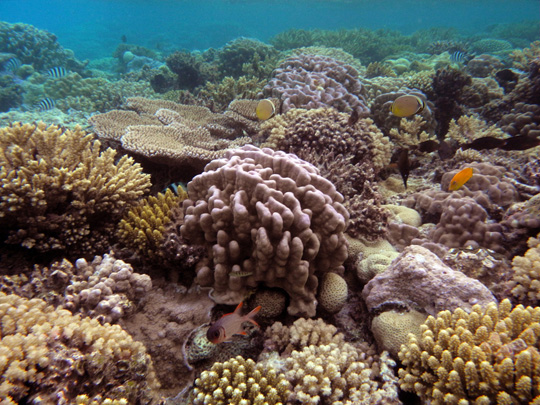
Coral colonies on the reef flat
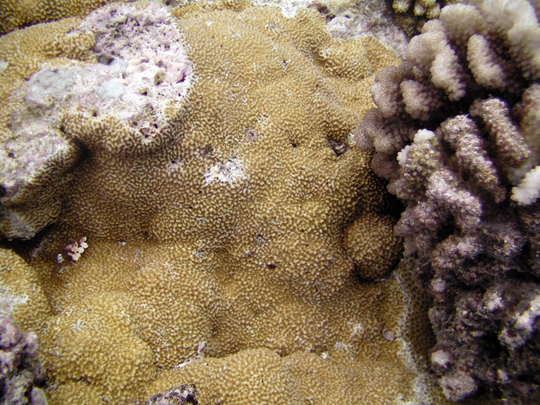
Massive coral (Porites lobata) on a lagoonal reef in Mopelia
Encrusting coral on the reef slope
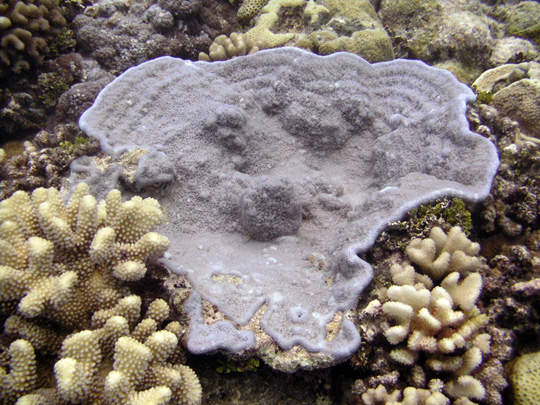
Plating coral on the reef slope
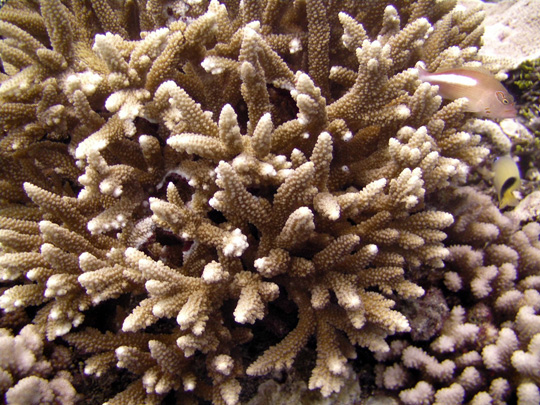
Branching coral on the reef slope

Mopelia and Scilly atolls have similar morphological characteristics. As the expedition continues throughout the Society Islands, it will be interesting to examine the different coral atolls. This cruise with the Living Oceans Foundation is anticipated to deliver what is perhaps the most comprehensive study of their remote and largely untouched coral atolls.

(Photos by: 1, 3-4 Dr. Andy Bruckner, 2 Philip Renaud, 5-7 Alex Dempsey)

To follow along and see more photos, please visit us on Facebook! You can also follow the expedition on our Global Reef Expedition page, where there is more information about our research and team members.

Related Posts

Global Reef Expedition Data Contributes to Landmark Report on the World’s Coral Reefs

More than a decade after scientists aboard the Global Reef Expedition surveyed coral reefs across the Pacific, the data they collected continues to contribute to our understanding of the world’s coral reefs.

Today, the Global Coral Reef Monitoring Network (GCRMN) released Status of Coral Reefs of the World: 2025, the most comprehensive assessment to date of the status and trends of coral reefs worldwide. The report brings together an extraordinary amount of information collected over more than four decades—and the Khaled bin Sultan Living Oceans Foundation is proud to have contributed data from the Global Reef Expedition to this global effort. 

Read More

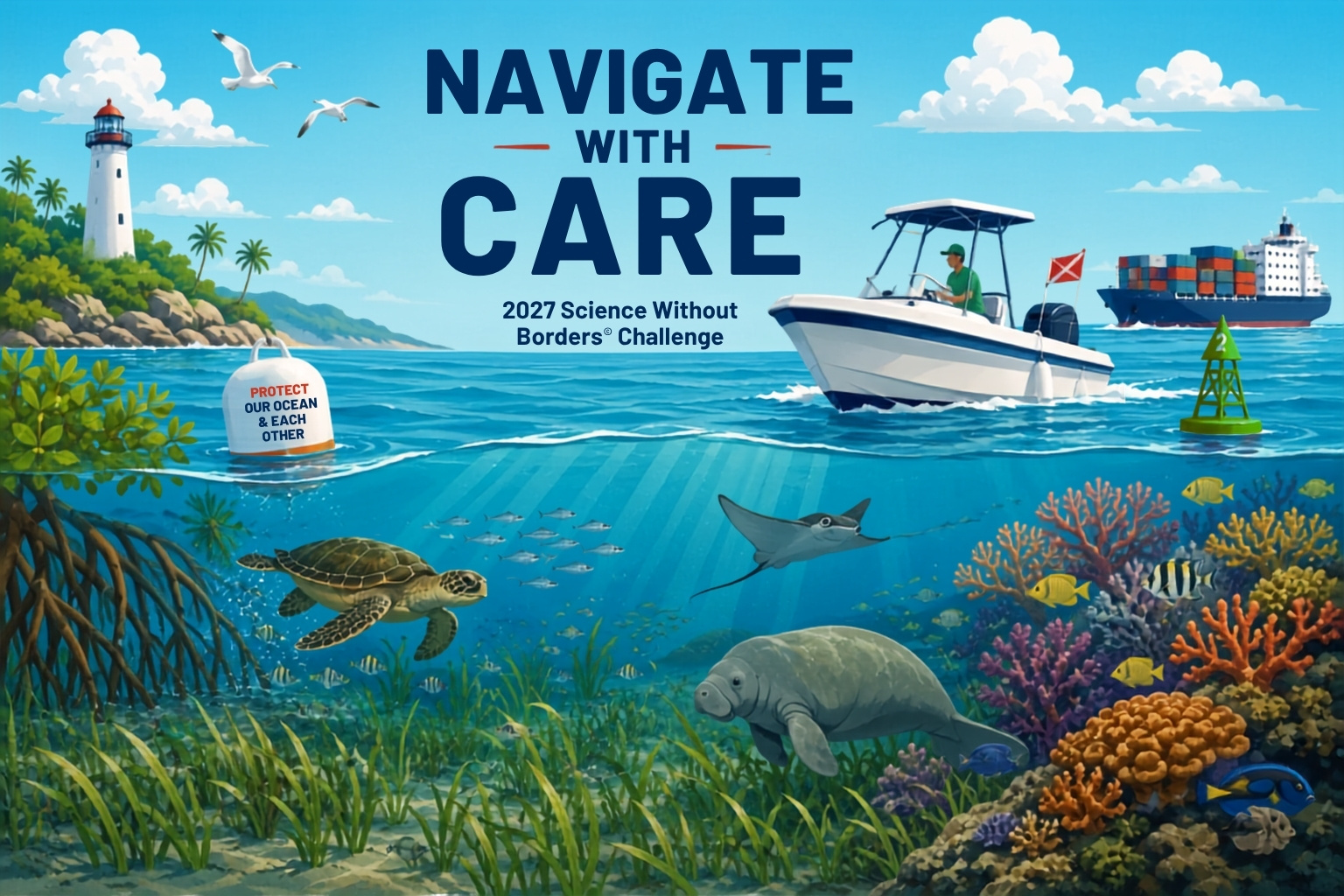
Announcing the 15th Annual Science Without Borders® Challenge: Navigate with Care

Every day, fishing boats, ferries, sailboats, kayaks, research vessels, cargo ships, whales, sea turtles, dolphins, seabirds, and countless other marine animals share the same waters. While people rely on the ocean for transportation, recreation, research, fishing, and exploration, it is also home to some of the most diverse and important ecosystems on Earth.

That simple but powerful idea is the inspiration behind the 15th Annual Science Without Borders® Challenge.

Read More
Privacy Overview

This website uses cookies so that we can provide you with the best user experience possible. Cookie information is stored in your browser and performs functions such as recognising you when you return to our website and helping our team to understand which sections of the website you find most interesting and useful.  You can view our complete Privacy Policy here.

Strictly Necessary Cookies

Most of our cookies are used to improve website security and reduce spam. These cookies should be enabled at all times. They also enable us to save your preferences for cookie settings.

3rd Party Cookies

This website uses Google Analytics to collect anonymous information such as the number of visitors to the site, and the most popular pages. Keeping this cookie enabled helps us to improve our website.