Expedition Log: Palau – Day 3
Today we surveyed reefs in the Ngeruktabel complex of the Rock Islands, which are located south of Malakal harbor. The area is known locally as the “bait grounds” because local fishermen use small nets in the surrounding waters to capture bait fish for skipjack tuna fishing. Unlike the islands to the north, these are limestone outcrops without a basalt (volcanic) core, and many are highly eroded, with an undercut notch, caves, arches and interconnected chambers. The sheltered habitat surrounding the islands is up to 35 m deep. Narrow fringing reefs form a perimeter around most of the rocks, with some shallow sandy sills crossing between the islands.
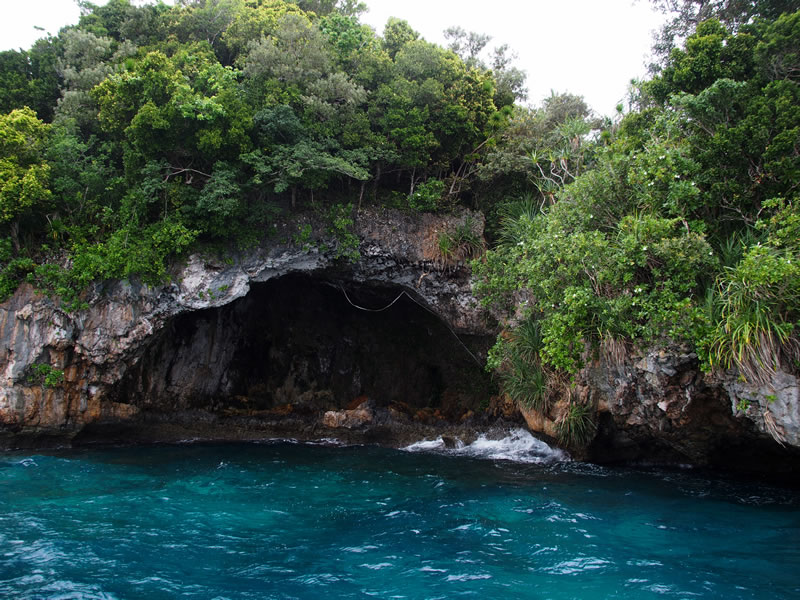
Neberuktabel Rock Island
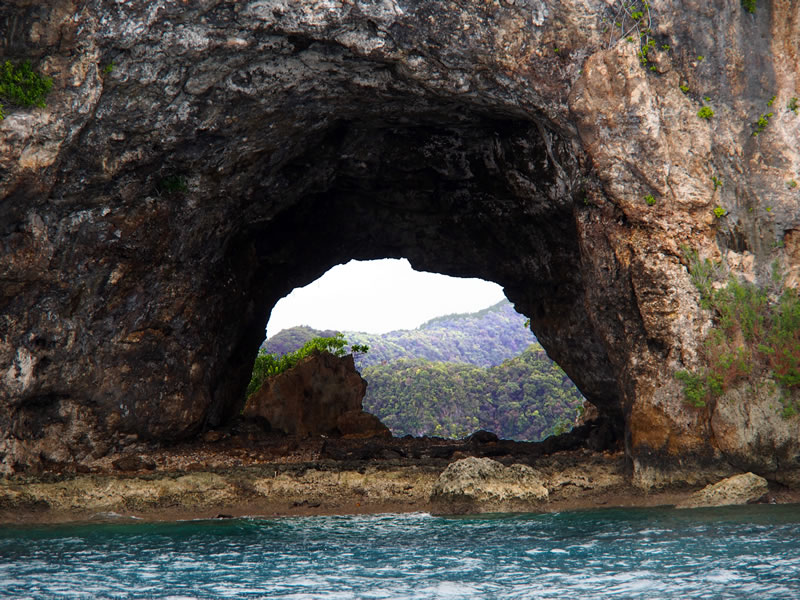
Erosion of the sea level notch has led to the formation of a cave that extends through this island.
The coral community differed dramatically from Nikko Bay. The reef framework was built by massive Porites colonies and there was very high living cover of three different species of Porites. One of these formed overlapping shingles that ran down the shallow slope (Porites rus), one had thick, erect branches (Porites cylindrica) and a third formed hemispherical heads up to 3 m in diameter and height (Porites lobata).
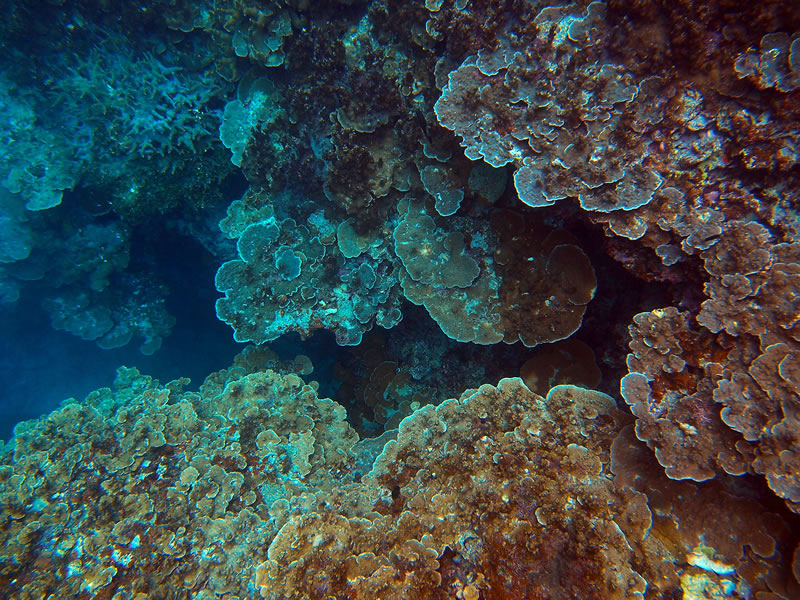
Looking down the reef slope at the shingles of Porites rus.
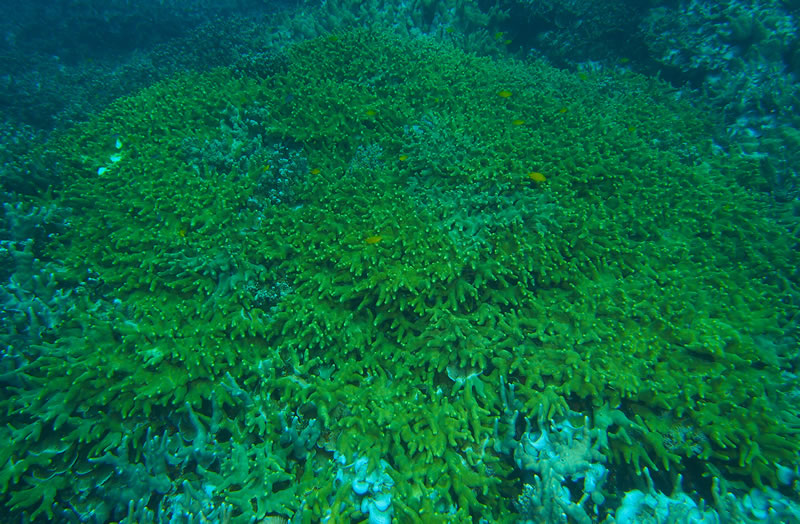
A single colony of finger coral, Porites cylindrica
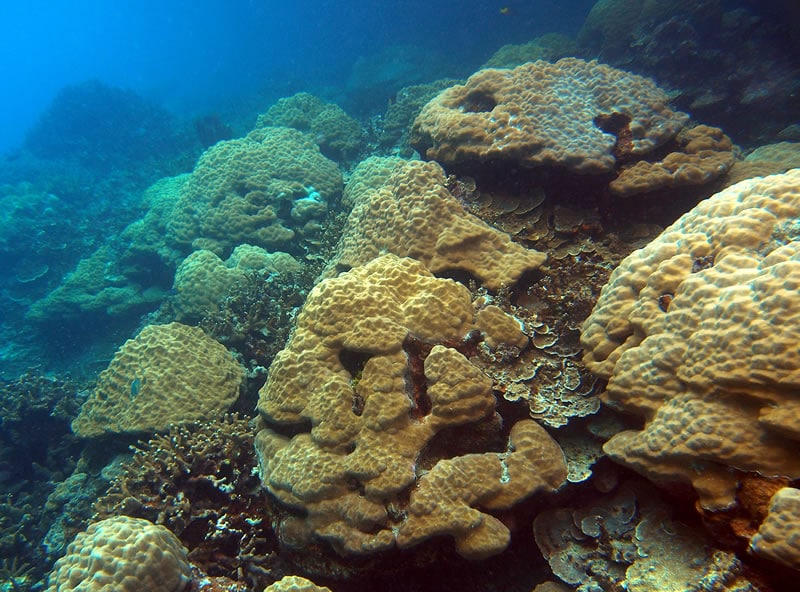
Large, massive colonies of lobed coral (Porites lobata), the main framebuilder found on these lagoonal fringing reefs
There also was a lot of fleshy brown algae between the branches and in areas without coral, something which was much less common prior to the 1998 coral bleaching event. Scattered throughout these reefs were many other species of corals, many with an unusual growth form which allows them to tolerate the murky water (a high sediment load and low light levels) characteristic of the area. Sponges, soft corals, tunicates and oysters are also very common because of the abundant food for these filter feeders.
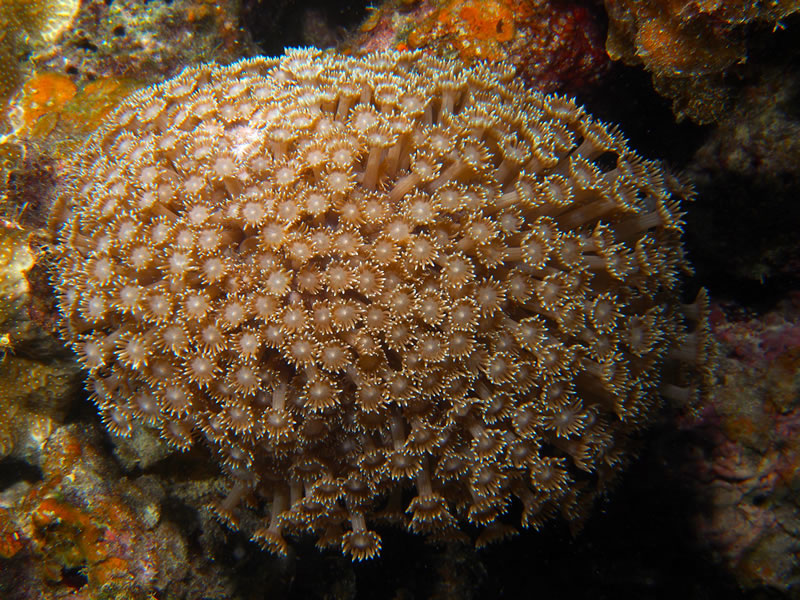
A typical sediment tolerant coral (Goniopora) found on turbid lagoonal reefs that extends its tentacles during the day.
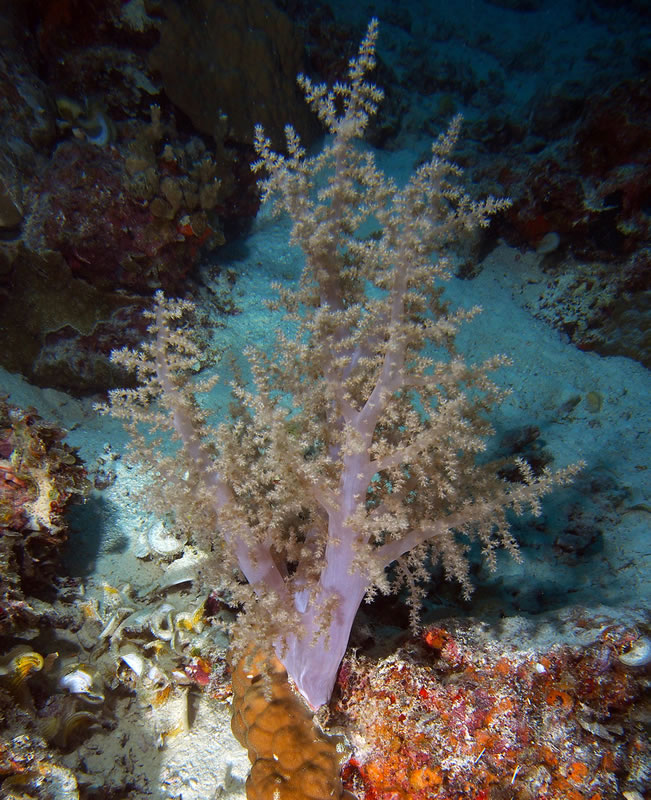
One of the characteristic soft corals (Dendronephthya) found on these reefs.
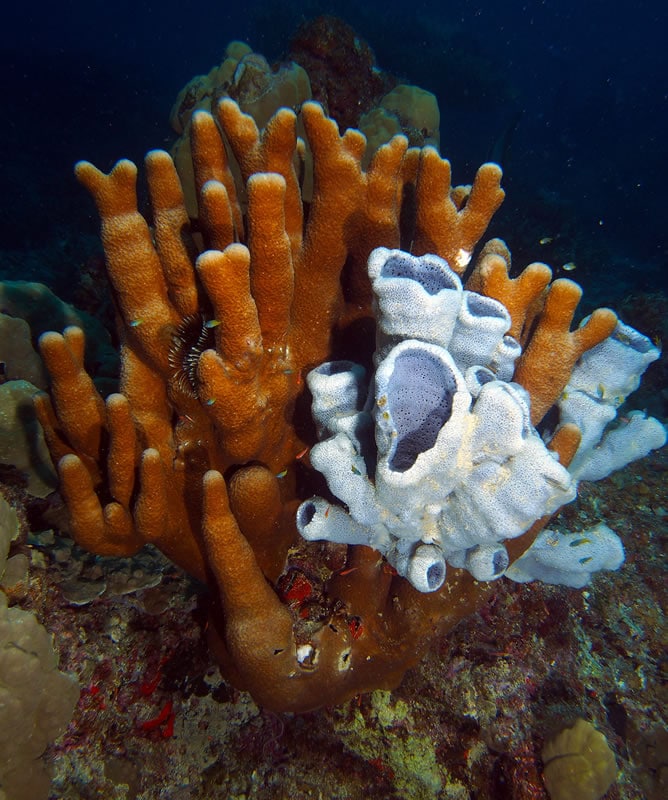
The blue tube sponge Cribochalina olmeda settled and grew on the side of a columnar Psammocora digitata coral.
Photos by Andy Bruckner.