Mangrove Education & Restoration Blog
By Ryann Rossi
Participating in outreach is one of the greatest joys of being a scientist. Sometimes outreach is as simple as creating a pamphlet with information about your research or giving an informal talk to a large group. The best outreach is when you can involve a group in an activity and watch them learn in person.
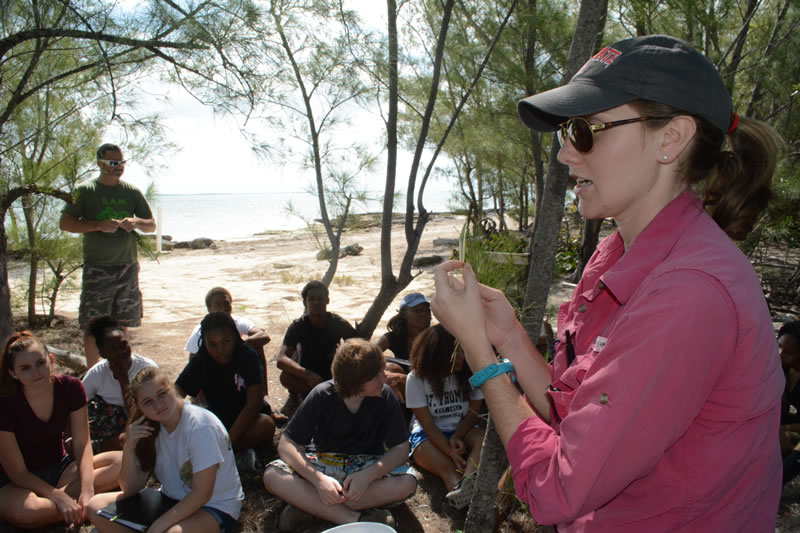
Ryann explains to students how to identify diseased red mangrove leafs at field trip site.
Working with the Khaled bin Sultan Living Oceans Foundation and FRIENDS of the Environment has provided me the opportunity to do my favorite kind of outreach – directly engaging with a group of people, specifically students. Through the Bahamas Awareness of Mangroves (B.A.M.), I worked with high school students at Forest Heights Academy in Abaco, The Bahamas. The students helped collect data on plant disease in mangroves by doing both field and laboratory activities.
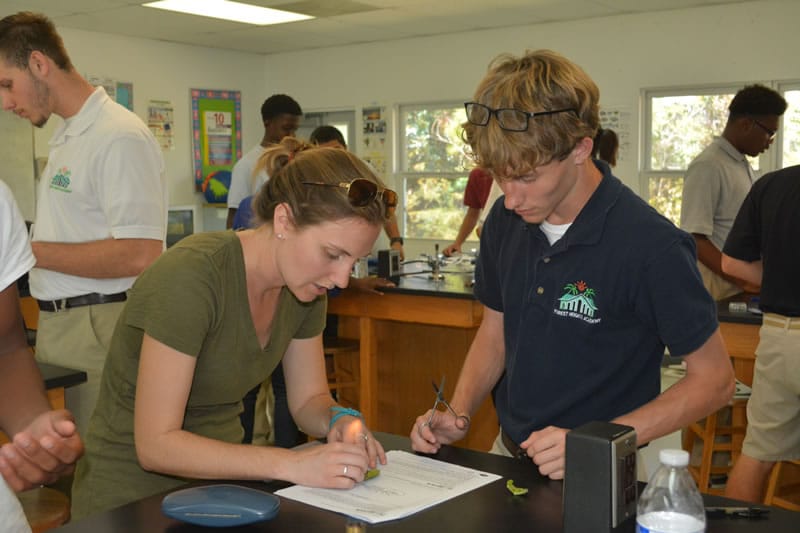
Ryann Rossi helps student at Forest Heights Academy to remove a small diseased portion of his mangrove leaf.
In the field, students collected diseased leaves within their mangrove plots that they had previously established during the first phase of the B.A.M. program with the Director of Education, Amy Heemsoth. Students surveyed the mangroves to record the approximate number of diseased leaves in their plots. Many students were surprised at how many leaves exhibited signs of disease in their plots as they had not noticed them before our short lesson on identifying diseased leaves. After completing their survey, each student collected one diseased leaf to bring back to the lab for further investigation.
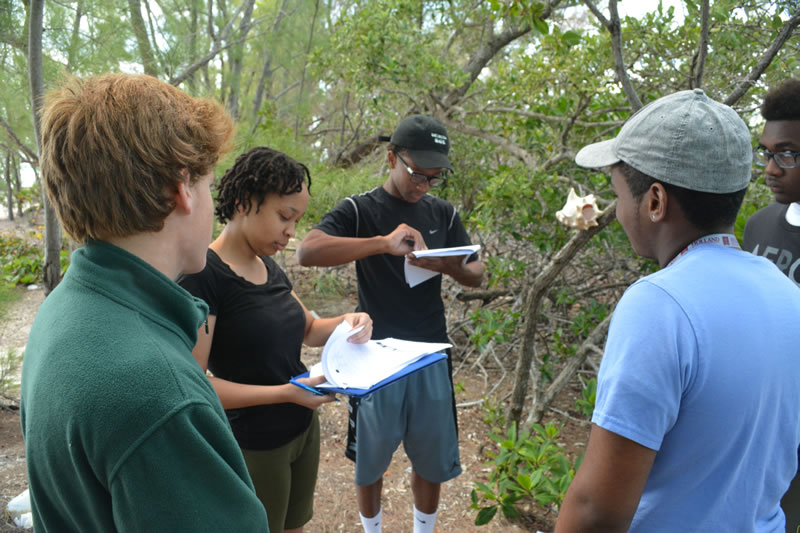
Students collect mangrove leaves and write their data in their mangrove journals.
Upon return to the lab, students drew their diseased leaves being sure to carefully note where lesions were located. Students then began the process of isolating the pathogen from the leaves. Each student cut two small pieces of infected leaf tissue from their leaf, sterilized it in a dilute bleach solution, dried it, and then placed it onto agar to grow it in culture. After inserting their leaf piece onto the agar plate, students sealed their plates and set them in a cool place to await growth of fungi and bacteria. The sealed plates were left sealed and unopened for three weeks to prevent contamination and allow growth. The students will check their plates for signs of growth after 3 days, 1, 2 and 3 weeks and record their data in their Mangrove Journals.
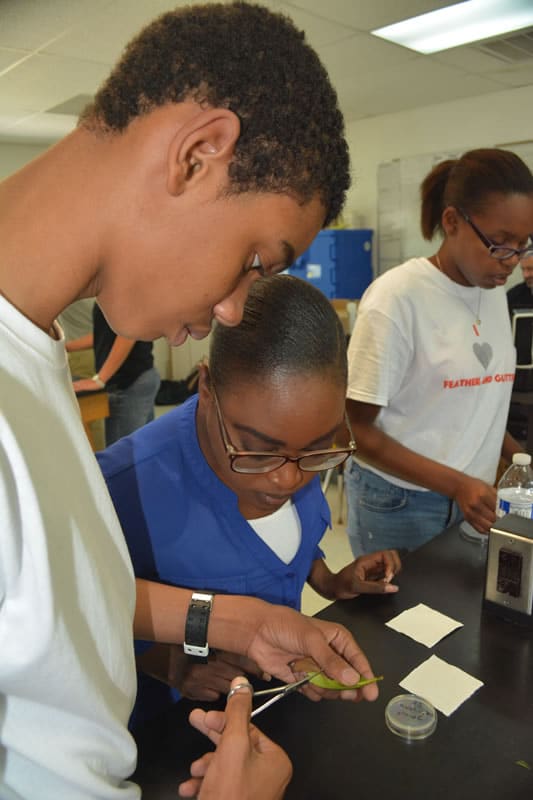
FRIENDS Outreach Officer, Cassandra Abraham assists student while he carefully cuts his two diseased leaf pieces.
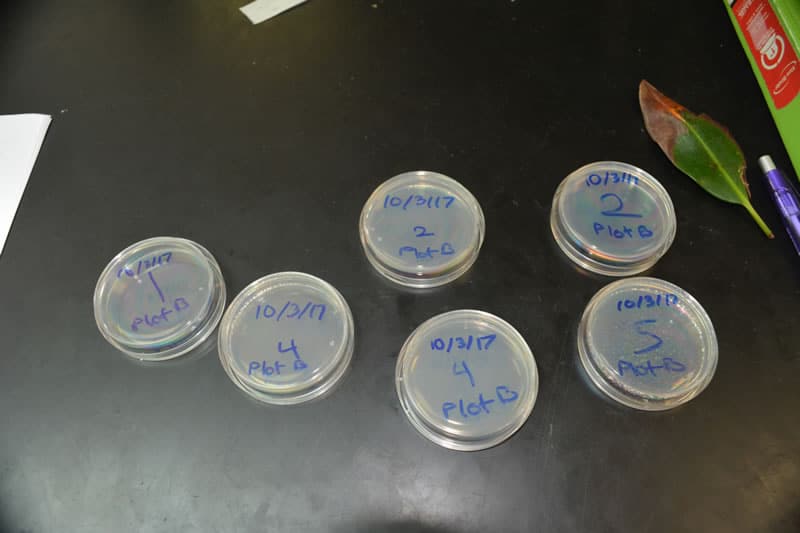
Students’ completed agar plates.
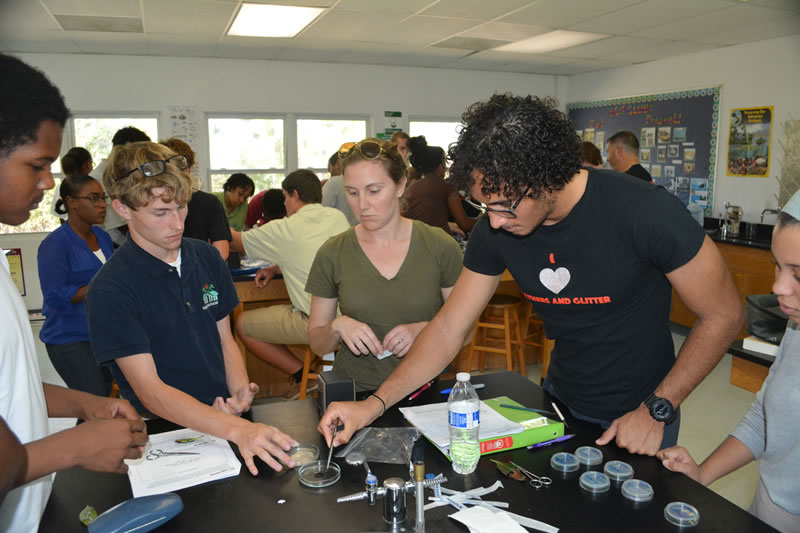
Students sterilize diseased leaf pieces in bleach solution.
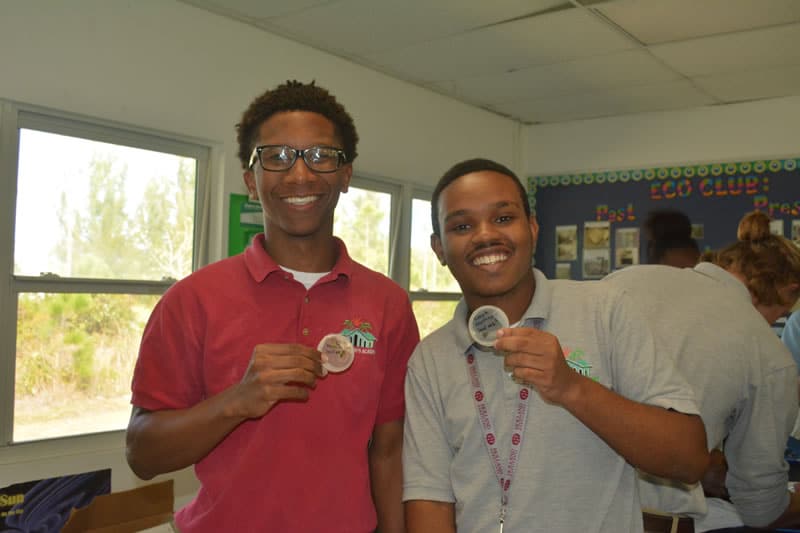
Proud students at Forest Heights hold up their “plated” diseased mangrove leaves.
Once enough growth of fungi and/or bacteria has occurred, I will Skype with the students to help them to identify what kind of organisms have grown from their leaves. Students will use microscopes to look for smaller and more specific structures such as mycelia, spores, and hypha that will help them to identify if the organism as bacteria or fungus. They will also use identification keys that were developed as part of the lesson plan.
During both activities, watching students think and act in accordance to the protocols and the overarching goals of the activities was fun to see. I enjoyed watching students most during the laboratory portion of the activity as they learned some skills I did not learn until graduate school! I also noticed students were so careful and thoughtful throughout many of the lab activity steps – from drawing their diseased leaves and the regions from which they cut small pieces, to ensuring they sterilized their forceps/tweezers for the whole 5 seconds. I am certainly looking forward to meeting with them all again to discover what organisms grew from the diseased leaves!
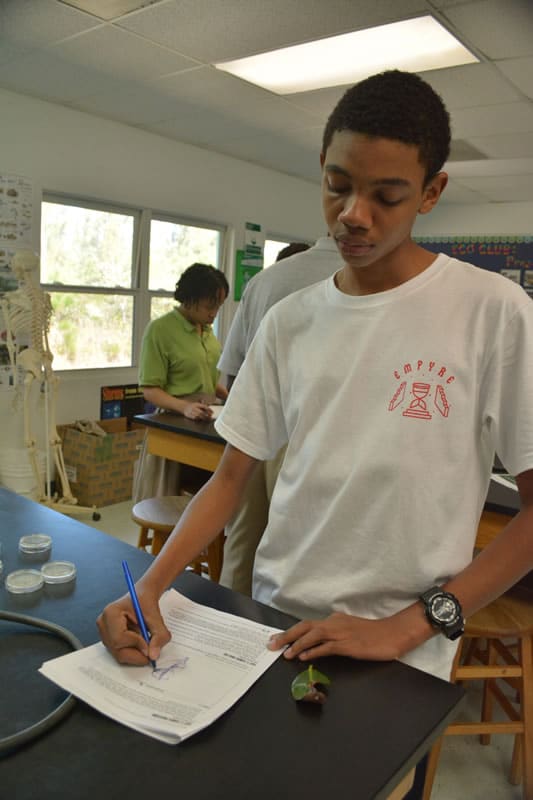
Forest Heights Academy student drawing diseased mangrove leaf.
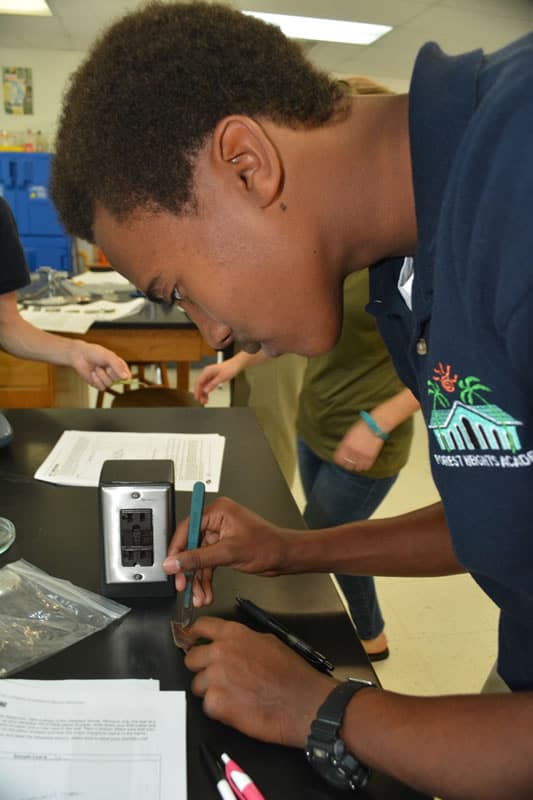
High school student from Forest Heights Academy meticulously cuts a piece of his diseased mangrove leaf out.
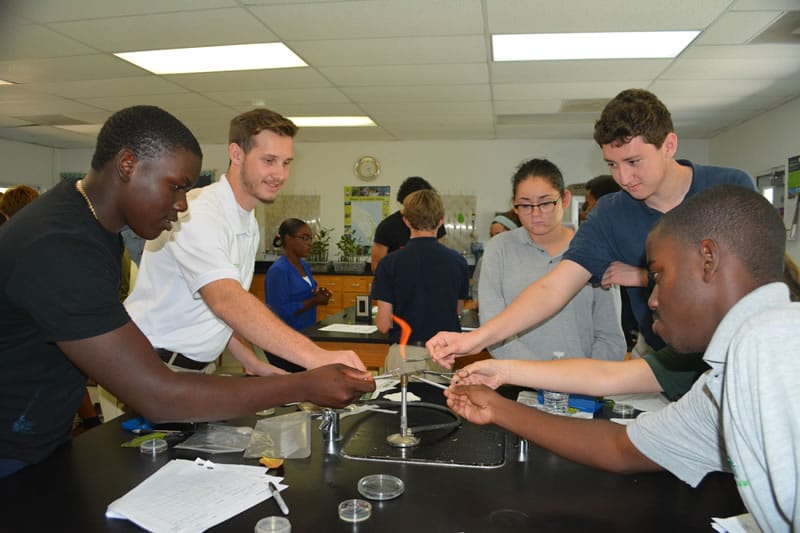
B.A.M. year 2 participants sterilizing their tweezers and scissors for the activity.