search-icon
Sea Cucumber Craze – Part 1

They have cylindrical bodies, leathery skin, and generally are peculiar looking creatures. You may or may not have noticed these slow moving animals on the bottom of the sea floor. They are sea cucumbers, and they are considered a delicacy in most Asian countries. They are used fresh or dried in many culinary dishes.
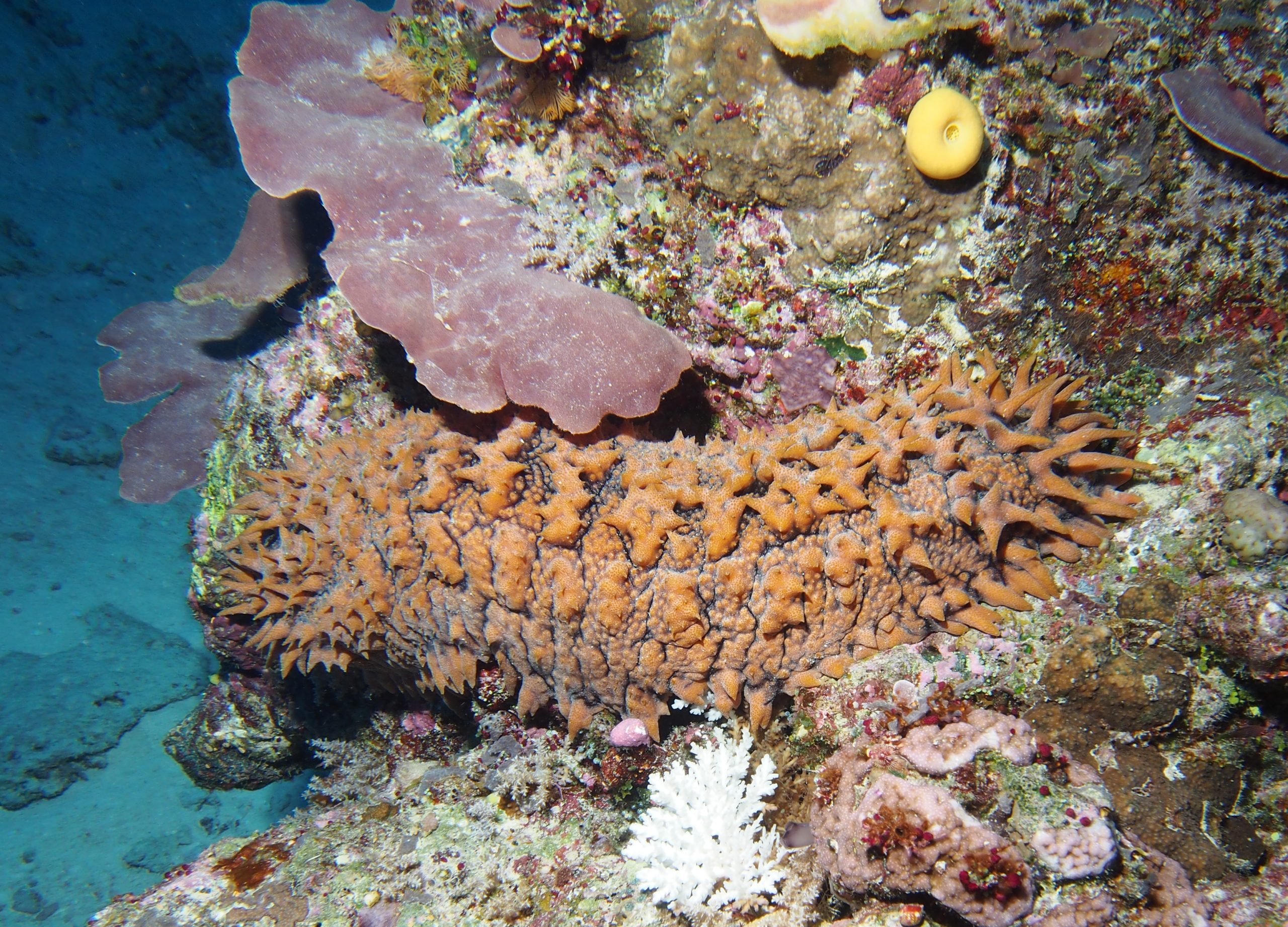
Pineapple sea cucumber, Thelenota ananas.
Pineapple sea cucumber, Thelenota ananas

In Fiji, sea cucumbers or sasalu are harvested and sold to Asian countries. With a market value upwards of $50 (US) each, they are highly prized for anyone who can find them.  However, herein lies the problem. With such high incentives, Fijians are now overharvesting these vulnerable, slow-moving sea cucumbers (about 10 feet an hour) that don’t stand a chance against speedy free divers.

Sea cucumbers are sometimes called the “earthworms of the sea,” as they cultivate the seafloor in much the same manner as earthworms cultivate the soil. Tube feet around the mouth are covered with a sticky mucus that traps detritus (decaying matter) from the seafloor’s sediment. In areas where overfishing has reduced the population of sea cucumbers, the seafloor hardens and bacteria accumulates which has harmful effects on the adjacent coral reef.
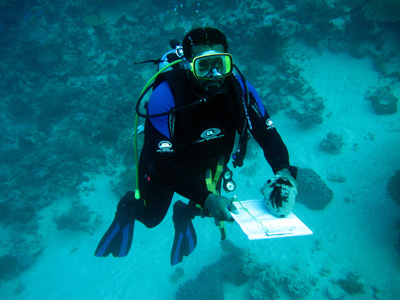
Fijian Fisheries Officer, William Saladrua, conducting sea cucumber surveys.

Sea Cucumber Surveys Aim to Provide Information to Local Communities

This is where the Fiji Department of Fisheries, University of South Pacific and Wildlife Conservation Society come in. For several years these entities have been conducting sea cucumber surveys throughout Fijian waters. Now, representatives from each organization have joined the Global Reef Expedition to conduct sea cucumber surveys of the remote islands we are visiting and communicate with the local villages in the Lau Province.
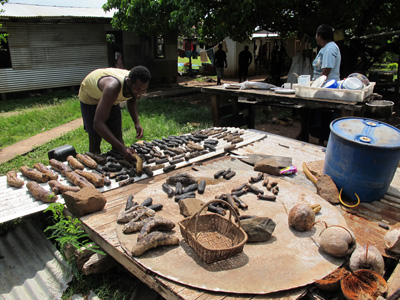
In Fiji, sea cucumbers are dried before sold.

Ron Vave, Senior Scientific Officer at the University of the South Pacific explains, “We are really excited to be able to conduct sea cucumber surveys in these remote areas and gather more information. In turn, we will be able to communicate the current status of local species, and provide recommendations for management to the local communities. They will then have the most up to date information so they can make informed decisions that benefit their communities now and into the future.”

Stay tuned for more information on sea cucumber surveys and overfishing.

(Photos/Images by: 1 Andrew Bruckner; 2,3 Stacy Jupiter)

To follow along and see more photos, please visit us on Facebook!
Related Posts

Introducing Our New Website: A Fresh Look for the Foundation’s Future

As we celebrate the Khaled bin Sultan Living Oceans Foundation’s 25th anniversary, we are proud to unveil our newly redesigned website—a modern home for our science, conservation work, and educational programs. This launch marks an important moment for the Foundation as we honor our long history and look toward the future of ocean conservation.

For more than two decades, the Foundation has worked tirelessly to improve the health of our living oceans. We have advanced ocean science, led one of the largest coral reef research missions in history, restored mangrove forests with local communities, created award-winning education programs, and shared the wonders of the ocean with people around the world. Our new website reflects the organization we are today—focused on conserving coral reefs, restoring mangrove forests, and improving ocean literacy—while still highlighting the legacy of work that brought us here.

The redesigned site…

Read More

Connecting People, Art, and Oceans: Championing Conservation at the 2025 IUCN Congress

The IUCN World Conservation Congress brings together thousands of leaders and decision-makers from governments, non-profit organizations, civil society, Indigenous groups, and the private sector to shape global conservation policy and action. This influential gathering serves as a platform to share knowledge, build partnerships, and advance initiatives that protect our planet’s biodiversity.

As a member of the International Union for Conservation of Nature (IUCN), the Khaled bin Sultan Living Oceans Foundation was honored to take part in the Congress, joining a global community of leaders, organizations, and changemakers committed to protecting nature and advancing sustainable futures.

Read More
Privacy Overview

This website uses cookies so that we can provide you with the best user experience possible. Cookie information is stored in your browser and performs functions such as recognising you when you return to our website and helping our team to understand which sections of the website you find most interesting and useful.  You can view our complete Privacy Policy here.

Strictly Necessary Cookies

Most of our cookies are used to improve website security and reduce spam. These cookies should be enabled at all times. They also enable us to save your preferences for cookie settings.

3rd Party Cookies

This website uses Google Analytics to collect anonymous information such as the number of visitors to the site, and the most popular pages. Keeping this cookie enabled helps us to improve our website.