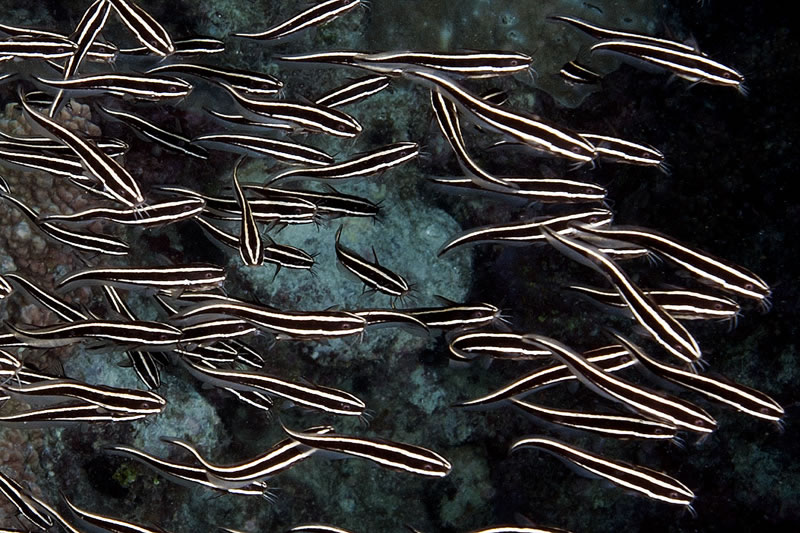
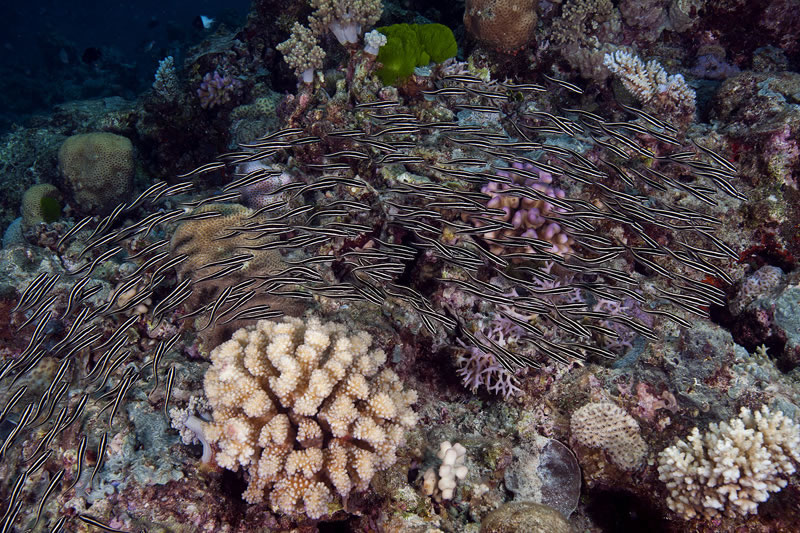
The Great Barrier Reef… home to thousands of marine species. Dazzling coral reefs, majestic sharks, elegant manta rays, imposing groupers and cods, ancient giant clams, and rainbow coloured reef fish such as butterflyfish, angelfish and damsels. These are some of the most sought after highlights of divers who visit these reefs. But there also are a great number of cryptic species of fish that are seldom seen or noticed. One such fish is the whitelipped eel catfish (Paraplotosus albilabris). The eel catfish is nocturnal and unlike is close relative, the striped catfish (Plotosus lineatus), is it less often seen on reefs.
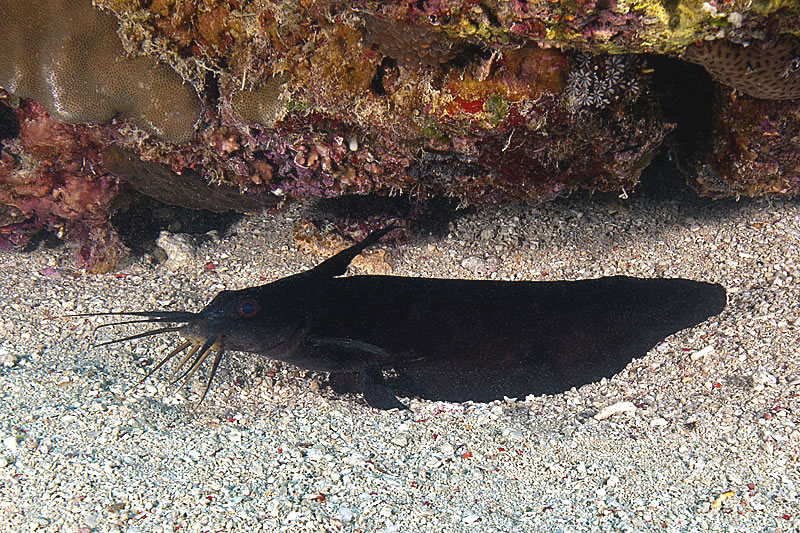
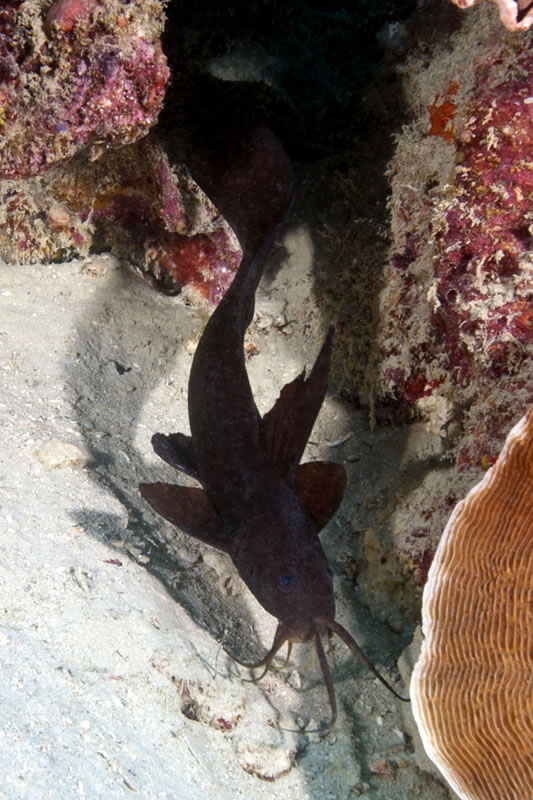
Whitelipped eel catfish are found in tropical areas, in clear and turbid coral reefs, usually in areas with mixed sand, seaweed, and coral. They hide under dark ledges or caves during the day, but sometimes can be observed in open sandy areas close to their refuge. Their color can vary from pale grey or yellowish brown to dark brown, nearly blackish, sometimes with pronounced dark mottling. Their favorite foods are gastropod mollusks and crustaceans.
During this mission, only a handful of members of the science team had seen the eel catfish in the first few days. As the expedition continued, more and more people noticed the catfish, due in part to the shared knowledge about its behavior and habitat. But a few of us have been very unlucky to not see any catfish yet, and it has become a joke of sorts.
As fish surveyor, this reminded me to take notice of the less conspicuous species on the reef. No matter how “lowly” and unpopular they may be, they do play unique and important roles in the reef ecosystem and as such are just as important as the other more well-known and charming species. In the case of the Global Reef Expedition (GRE), who would have thought that the lowly whitelipped eel catfish would have its day in the sun as the most sought after fauna of the Great Barrier Reef (GBR). At least for a little while.
Photos by Ken Marks.