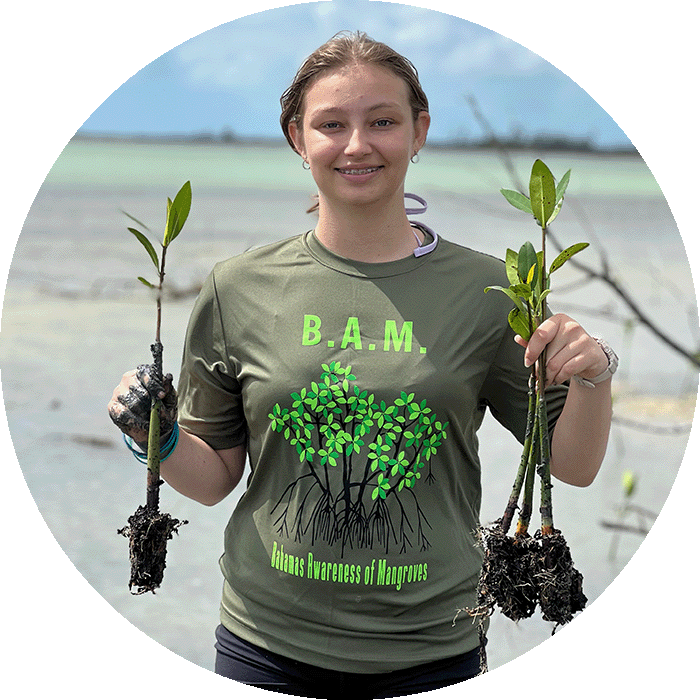
Saskia is a student at the University of Bremen, Germany, currently doing her master’s degree in International Studies in Aquatic Tropical Ecology (ISATEC). For the next several months, Saskia will be working on her master’s thesis in Jamaica, studying the effectiveness of our Jamaican Awareness of Mangroves in Nature (J.A.M.I.N.) program.
Six months ago, I was certain that I would be travelling to Indonesia to research mangrove crabs for my master’s thesis. The project was funded, and I was prepared to leave for Indonesia when suddenly, I received information that local fishermen could not catch enough crabs for me to conduct research. With only a few months left to find a project for my master’s thesis, this was incredibly stressful news!
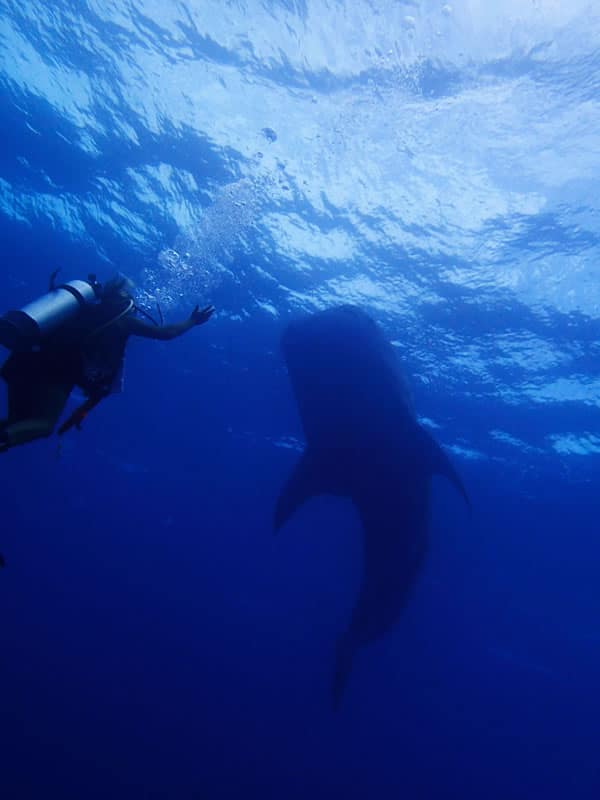
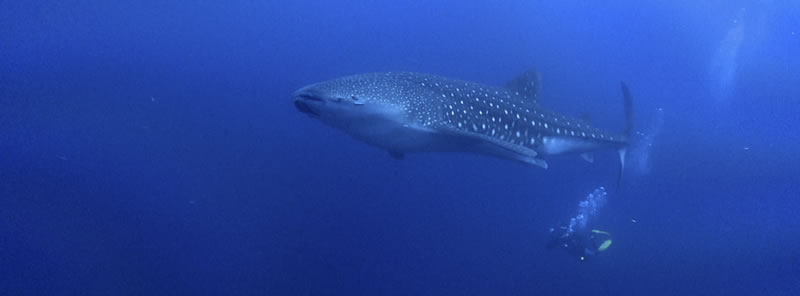
Around this time, I began to wonder if I could picture myself in the biological sciences or if I should make a step towards the field of social science. During my travels around the world, I was always interested (and often shocked) to observe the interaction between humans and nature. A few years ago, I travelled to southeast Asia to study whale shark populations. While studying these majestic creatures, I noticed the interactions occurring between tourists and the whale sharks. I had moments where I was frustrated, angry, and emotional, seeing whale sharks startle tourists who would fearfully kick and hit the whale sharks. Not only did I get angry at the tourists but at the local people working in this industry; however, after getting to know the locals and seeing their dismal economic situation, I began to think differently. I wanted to understand local people and their problems. I realized that in order to make a difference, you need to incorporate social sciences into environmental science, so that both can find a way to live in harmony.

Around the same time that my project in Indonesia was cancelled, I had a class on environmental management which included information about evaluating how people engage with the environment. This further encouraged my interest in the social sciences and helped me to realize that I wanted to enter this field of study.
A week later, I had the chance to volunteer at the International Coral Reef Symposium, which was held in Bremen. Considering my renewed interest in social science, I spent my last day attending talks that discussed incorporating education in conservation. When Amy Heemsoth, the Director of Education at the Khaled bin Sultan Living Oceans Foundation, gave her talk which included information about the J.A.M.I.N. program, I immediately wanted to find out if I could work with her to conduct research about the program. I noted her contact details and reached out to her.
To my surprise, she responded to my inquiry, and we were set to meet virtually! Before the meeting, I was nervous that she may say no due to the short notice. Of all the projects that I was interested in, this is the one that I wanted to work on the most. After meeting with Amy, it was only a short time later that she agreed to mentor me. You can imagine my relief when Amy made every effort to make it possible for me to come to Jamaica. She set up a meeting with her J.A.M.I.N. partners at the Alligator Head Foundation who also agreed to mentor me and provide support throughout the three months that I’ll be living in Jamaica.
Only a few weeks after discussing my research with Amy, I’m in Jamaica researching the J.A.M.I.N. program. I’m looking into how students’ knowledge, attitude, and behavior towards science and the mangrove ecosystem changes during the program and comparing these results to students from schools, who are not participating in the program. This will hopefully stress how important education is to conserve the environment.

Looking back, I am beyond happy that my research in Indonesia didn’t work out and that I had the chance to find a topic for my master thesis in a field that I see myself working in the future.