
search-icon
AI for Earth
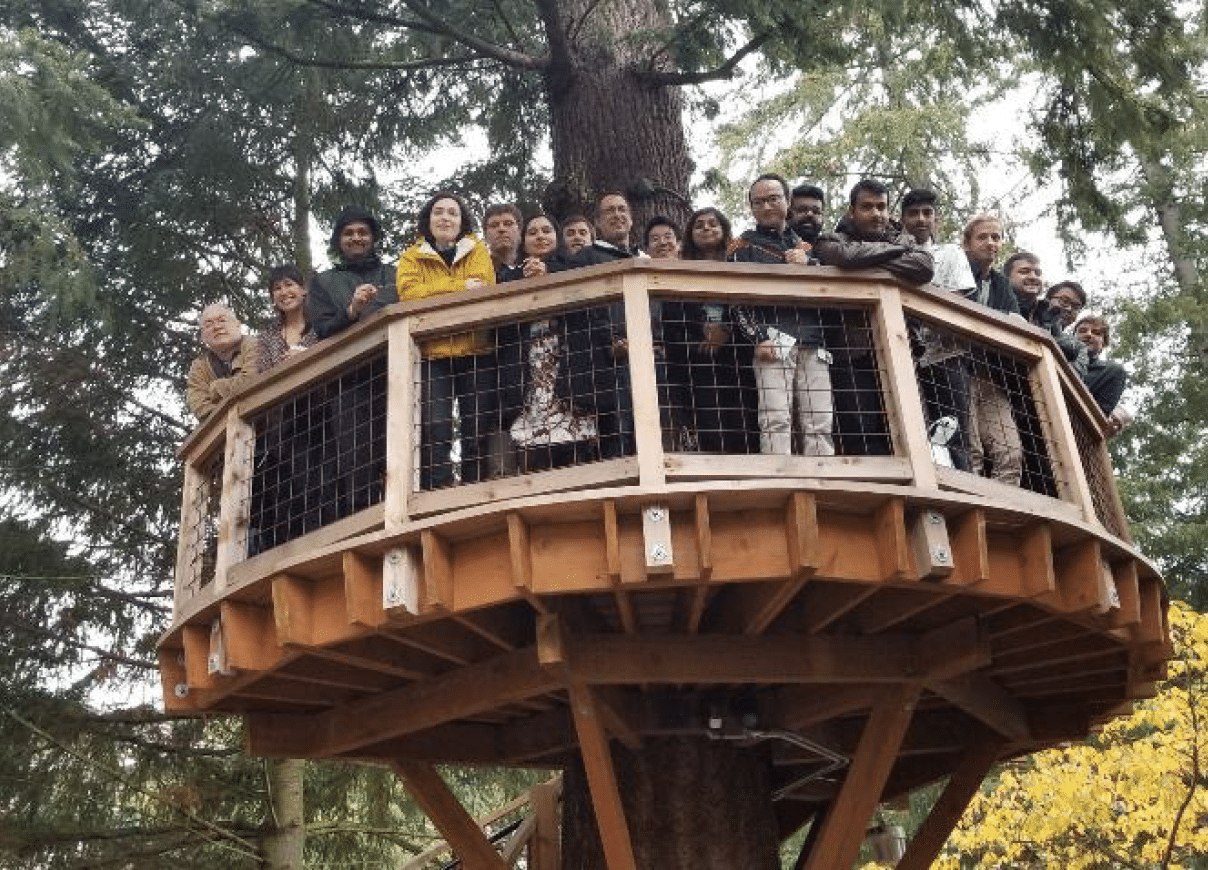
Anna Bakker with the 2018 AI for Earth awardees

Microsoft’s Artificial Intelligence (AI) for Earth program is harnessing the power of the Global Reef Expedition dataset to build a predictive model of global coral reef health and resilience. Anna Bakker, a Ph.D. student working with KSLOF’s Chief Scientist Dr. Sam Purkis on remote sensing of coral reefs, was awarded the Microsoft AI for Earth Grant for the duration of her Ph.D. This program will grant us access to use the immense power of AI, machine learning, and cloud computing to analyze the data collected during the Global Reef Expedition.

AI for Earth is a $50 million 5-year program that aims to financially support projects focused on using cutting edge technology to address problems in biodiversity, climate change, water, and agriculture. Using Global Reef Expedition (GRE) scuba diver data and remote sensing data, Anna is in the process of building both statistical and predictive models to measure coral reef health and resilience for the thousand islands surveyed during the 5-year GRE. Participation in the program grants her with unlimited access to Microsoft’s cloud computing platform, Azure, which will allow her to scale up her models and use them as a global metric for coral reef health. 

“Without the remarkable GRE dataset collected by the Living Oceans Foundation, we would not be in a position to mount a response to the reef crisis on a global scale,” said Anna. “These in situ data are invaluable inputs to a model showing the complex interactions between biophysical and anthropogenic variables in determining future health of tropical coral reefs worldwide.” 

Anna recently attended an AI for Earth Summit at Microsoft in Redmond, Washington, where she was able to meet with, and learn from, the AI for Earth team and other awardees. At the Summit she learned about new tools and how to visualize the steps and results of the model on a website platform. Anna was also selected to participate in the Summit’s day-long Hackathon where she learned how to present the model outputs on a website via an API. She also had the chance to network with other scientists and see how they are using AI for Earth for their own research. Anna plans to continue to work closely with the AI for Earth team as this project develops and present the results of her model at a future AI for Earth Summit. 

Image Caption: Anna Bakker, second from left, in the Microsoft Treehouse with the 2018 AI for Earth awardees.
Related Posts

Ten Years of B.A.M.: Rooted in Partnership, Growing in Purpose

Ten years ago, the Bahamas Awareness of Mangroves (B.A.M.) program began with a simple but meaningful commitment: to connect Bahamian students with the mangrove ecosystems that shape and protect their island home.

Since 2015, B.A.M. has been implemented in partnership with Friends of the Environment, whose dedication to environmental stewardship in Abaco has made this program possible year after year. Together, we have worked alongside Patrick J. Bethel High School and Forest Heights Academy to bring hands-on mangrove science into classrooms and out into the field.

What makes ten years remarkable is not just longevity — it is consistency…

Read More

From Mangrove Mud to Meaningful Work: Desta’s J.A.M.I.N. Journey

Some students I remember for their grades, their quick answers, or a moment that made the whole class laugh. Others I remember for the way they stepped into the mangroves.

Desta was the kind of student who thrived outdoors. While some students hesitated at the edge of the mud, he walked right in. And when he inevitably got stuck — because everyone does — he didn’t get frustrated. He laughed. Covered in mud, holding mangrove propagules in his hands, he embraced the experience fully.

Even then, it was clear that he was connecting with the environment in a way that went beyond the lesson plan…

Read More