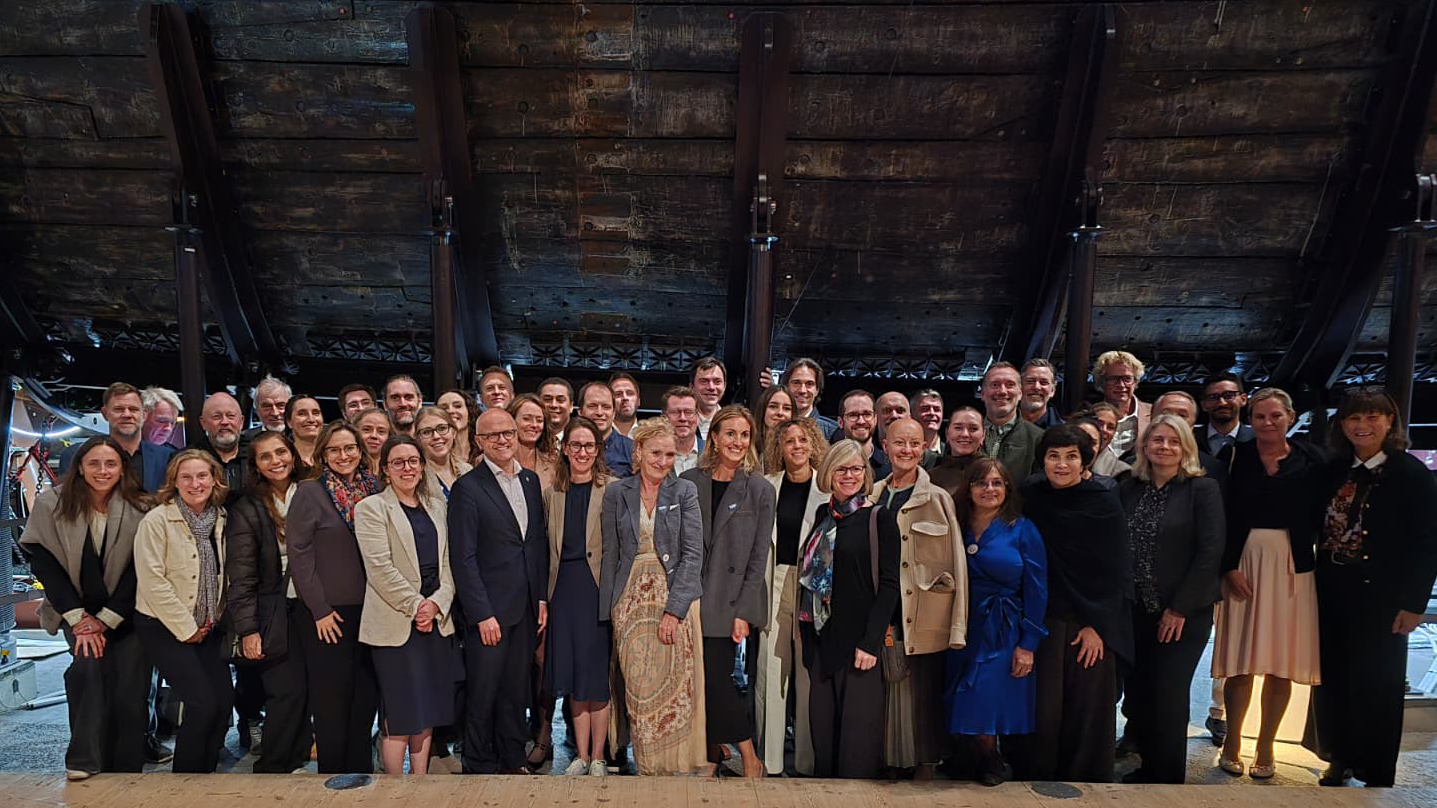


Last week, the Khaled bin Sultan Living Oceans Foundation (KSLOF) participated in the Third Foundations Dialogue Meeting, coming together with other ocean-focused foundations from around the world in an effort to align our efforts to support the science needed for ocean conservation.
Organized jointly by the Intergovernmental Oceanographic Commission of UNESCO and the Prince Albert II of Monaco Foundation, the Foundations Dialogue Group provides a platform for the philanthropic community to collaborate and work together to move the needle towards ocean conservation. Specifically, the group seeks to address how the foundations could align their efforts to achieve the bold ambitions of the United Nations Decade of Ocean Science for Sustainable Development, better known as the ‘Ocean Decade’.
The event was held in Monaco from June 14-16, 2023, and presented a unique opportunity to discuss how to enhance the role of the philanthropic community in co-designing the ‘science we need for the ocean we want.’ We also discussed how we can work together to support existing and future projects of the UN Ocean Decade.
Our Foundation’s president, HRH Princess Hala bint Khaled bin Sultan, spoke at the opening session of the Foundations Dialogue meeting, along with HSH Prince Albert II of Monaco; Mrs. Audrey Azoulay, Director General of UNESCO; and Their Royal Highnesses Princess Lalla Hasnaa of Morocco. In her speech, Princess Hala noted that since her father established the Foundation in 2000 to protect, preserve, and restore ocean health, that “we have made great progress over this period, but we have always known that to accomplish this great and noble mission, we could not work alone.” This was part of the reason we participate in the Foundations Dialogue, to work with others to advance ocean conservation initiatives worldwide.
In her speech, Princess Hala discussed one of the Foundation’s principles when it comes to ocean conservation, one that has been embraced by the Foundations Dialogue group. “Co-design is a powerful approach to marine conservation. It allows us to forge alliances and design sustainable solutions that benefit both the environment and the communities that depend on it. This approach has always been the cornerstone of our work, which is guided by our motto Science Without Borders®. Since the Foundation’s inception, we have embraced this principle of co-design, recognizing that our work can only be effective if it is aligned with the needs and aspirations of the communities we serve. We have strived to build bridges, foster collaboration, and work hand-in-hand with coastal communities around the world, in both large countries and small island nations, on coral reef conservation.”
KSLOF’s CEO, Alexandra Dempsey, and our Chief Communications Officer, Liz Thompson, also attended this high-profile meeting to share the Foundation’s knowledge of coral reef science, outreach, and conservation. Alex spoke in a session outlining the work members of the Foundations Dialogue are doing in the South and Western Pacific, and Liz participated in Communications Working Group sessions on how foundations can help to support the goals of the UN Ocean Decade through communications. One of the common themes that came up in the three days of Foundations Dialogue meetings is how we can ensure that the research we are supporting is equitable and supports local capacity building, especially when working in small island nations and least developed countries.
The Khaled bin Sultan Living Oceans Foundation is a proud member of the Foundations Dialogue Group and is grateful for the opportunity to collaborate with like-minded organizations to preserve, protect, and restore our living oceans. As catalysts, conveners, and risk-takers, foundations have been at the forefront of exploring emerging research areas and fostering collaborations amongst diverse partners. By working together with other philanthropic organizations, we have the potential to generate and disseminate the transformational science and knowledge needed to address the Ocean Decade Challenges and make a meaningful difference in ocean conservation.
For a closer look into the Third Foundation’s Dialogue Meeting, watch the opening session, which includes Princess Hala’s speech: